
One palm is flat against the pressure gauge board in the mudroom, the other is holding a hen who has decided my forearm counts as a roost, and I'm doing the math on whether the tomatoes can skip tonight's watering — because apparently drought preparedness now includes arithmetic with a chicken parked on your arm.
Off-grid water is the whole premise of this site, and most of what counts as homesteading basics around here, I've learned by getting it wrong first. Quick disclosure while we're at it: a few of the links coming up are affiliate links, and if you buy through them I get a small commission at no extra cost to you. I'm not an engineer, not a plumber, and not anyone's idea of an expert — just someone with muddy boots and enough stubbornness to keep going.
Someone at the Eugene Saturday Market told me flat out, unprompted, that a countertop atmospheric water generator meant she'd never have to trust her well again. That's the myth I want to take apart here, because I believed a softer version of it myself for longer than I'd like to admit. These systems are NOT a well replacement. They're a supplement for small, high-value water needs, and once you stop expecting them to run a garden hose, the whole category makes a lot more sense.
A Backup System Is Not a Replacement Well
Atmospheric water generation sounds like something out of a science fiction movie, but the mechanism is closer to your air conditioner than a spaceship — air passes over a cold surface, moisture condenses out, and the water gets filtered before you drink it. The catch is humidity. Below roughly 30 percent, there isn't enough moisture in the air for a small home unit to pull much out, full stop, no amount of clever engineering changes that math. Rural Oregon usually sits comfortably above that line, which is part of why the guide behind the Water Freedom System keeps circulating in homestead circles out here — it actually has air worth working with.
Can You Actually Water a Garden With Air?
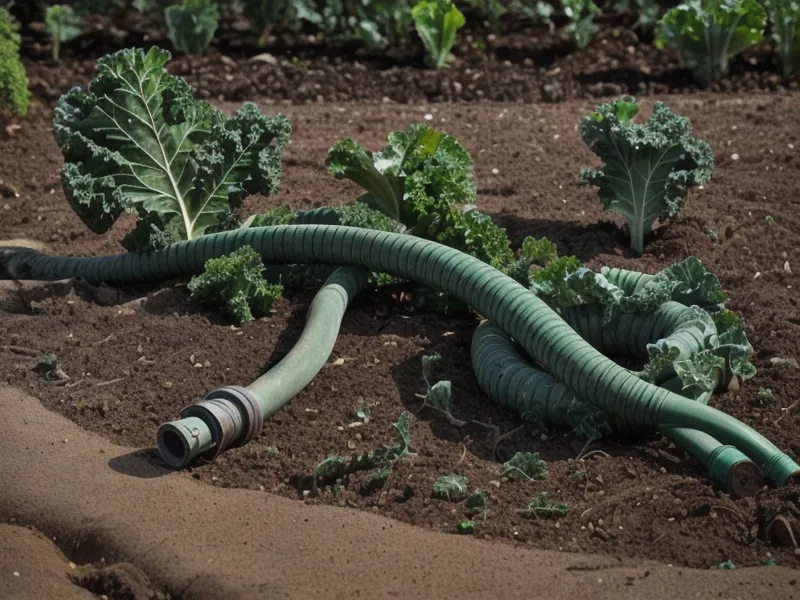
Here's where the math gets uncomfortable. A vegetable garden needs something like an inch of water a week to stay alive — that's the standard figure, not something I made up — and an inch across even a modest garden bed adds up to more gallons than a small condenser unit is going to produce in a day. If you're picturing this thing replacing a hose long enough to reach the squash, you're going to be disappointed. I was, the first summer I looked into it, before I adjusted what I actually expected from it.
Where an Atmospheric Unit Actually Earns Its Keep for Garden Irrigation
Where it earns its keep is in the small, constant draws — not anything that needs a tank monitor or a dashboard, just a countertop unit quietly doing its job. My hens go through roughly a pint of water apiece a day, which sounds tiny until you're hauling it across a frozen yard in January, and pulling a few gallons out of the air instead of the ground took real weight off the well during the driest stretch of last August. It meant the "good" well water stayed for showers and the greenhouse trays, while the generated water went to the birds.
Neither one of us is particularly handy, and most of that stretch was already spent on smaller fires — keeping the chicken water from freezing the winter before, chasing the goats off the siding, that kind of thing. So when I found the SmartWaterBox, a version that arrives ready to plug in instead of built from a blueprint, it felt like the right trade for people who'd rather spend their weekends somewhere other than a hardware store aisle.
Keep the Chickens Away From the Intake
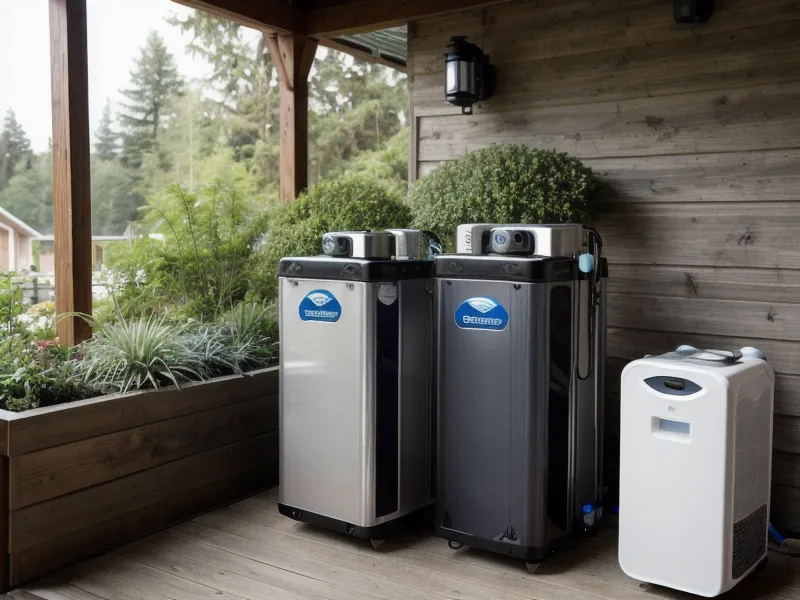
Chickens treat any new object on the property as either a threat or a toy, and our backup unit got filed under toy almost immediately. My lead hen figured out that the vents rattled faintly whenever the compressor kicked on, and she spent the better part of a week trying to peck her way in to find out why. I ended up building a small hardware-cloth cage around the base just to keep her out of the wiring, which is not a modification anyone mentions in the marketing photos.
Wrapping Pipes in Bath Towels Taught Me Nothing Works Like It Should
Not everything I've tried out here has worked, and the towel incident is a good example. One November, with a hard freeze coming and no foam pipe insulation on hand, I wrapped the exposed line near the pump house in a stack of old bath towels and called it done. It was not done. The towels held just enough moisture against the pipe to make things worse, and I spent a cold morning thawing a section I'd basically iced on purpose.
I texted my friend Priscilla a photo of the frozen, towel-wrapped mess, and her reply was something like "this is exactly why I keep telling you you're not actually the disaster you think you are" — which is generous, but also exactly what you need to hear after out-engineering yourself with laundry. Foam pipe insulation exists for a reason, and freeze protection generally is its own long conversation I won't try to finish here.
A Reader Named Corinne Is Why I Still Explain the Obvious
A reader named Corinne emailed me after I wrote about the summer our pump ran dry, and she's been writing back ever since — her well runs shallow, her nerves run shallower, and between the two of us we've probably overexplained pressure switches more than any two people strictly need to. I bring her up because she's the reason I don't apologize for spelling out things that sound obvious once you already know them. If a countertop unit or a guide full of blueprints sounds like magic instead of physics, that's not a dumb question — that's just where everyone starts.

Rainwater Still Wins the Volume Game
None of this replaces a proper rainwater collection system, and I'd rather say that plainly than let the marketing muddy it. A single good rain in April can fill a 2,500-gallon tank in a matter of hours, while an atmospheric unit builds its supply the way a jar fills with spare change — slowly, steadily, never all at once. Think of it as padding your budget, not replacing your paycheck.
The blueprints behind the Water Freedom System actually spend real time on buffering and reserve capacity, which is what pushed me toward adding potable water storage tanks as the buffer between the well and the garden, instead of treating any single source as the whole answer.
Guide or Device: Picking Your Starting Point
So which one is actually worth buying, if either? If you've got more weekends than budget, and you genuinely enjoy losing a Saturday to a hardware store run, the guide gives you the real physics and lets you build something custom, backed by a 60-day money-back guarantee with instant digital access if condenser coils turn out not to be your idea of fun — the printed edition tacks on its own shipping if you go that route. If you'd rather skip the trial and error, the assembled version gets you the same basic result without a workshop.
There's a longer list of related rabbit holes I haven't tried to solve in this post — how fast a well actually recovers after a heavy pull, whether a pressure tank is sized right for what's running on it, what a sediment filter is actually catching before the water reaches the washing machine, how you'd test the water quality without hiring a lab, and whether you'd shock the well with chlorine after a flood or lean on UV disinfection after a hard rain instead. Each of those is a full conversation on its own, and I've had most of them the hard way.
Whole-house filtration, stripping iron out without dumping in chemicals, running a pump on solar instead of the grid, how deep a well actually needs to be, how far it has to sit from the septic line before the county signs off, gravity-fed lines that skip the pump entirely, and whether greywater is worth plumbing in at all — those are each their own long answer, not a paragraph tacked onto a post about pulling water from the air.
That said, none of this is medical or legal advice, and it doesn't replace an actual well or irrigation professional if your aquifer is already stressed — that part isn't optional, and I say that as someone who is not a licensed anything. If you're tired of watching the well pressure gauge like it owes you money, the Water Freedom System is a reasonable place to start looking, and the assembled version is the one for people who'd rather not build anything at all. Just keep the chickens away from the intake — trust me on that one.