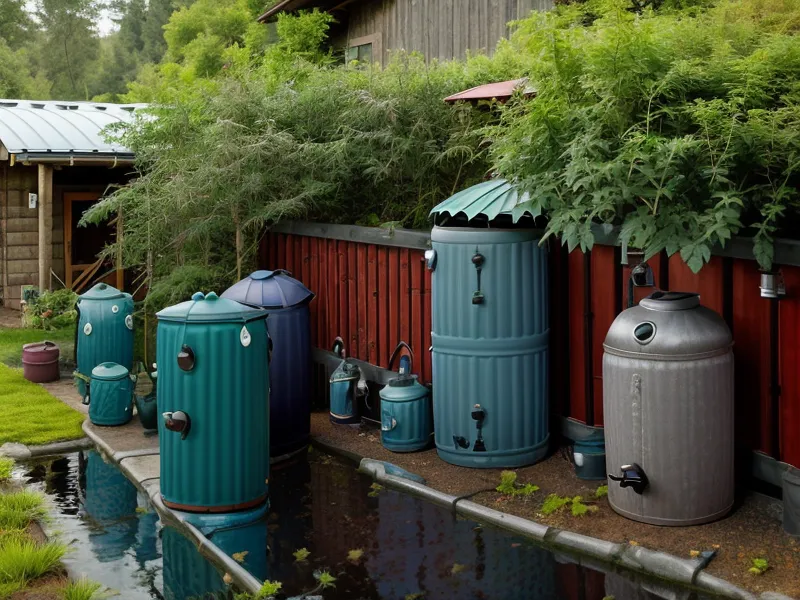
Fifty-five gallons. That was the entirety of our off-grid backup water plan for the first year on this place — one drum wedged into a corner of the barn, filled once, then mostly forgotten about. It sounds like plenty until you count what two dogs, a flock of very opinionated chickens, and one increasingly stubborn woman actually go through in a single dry week. It wasn't close to enough.
Update (September 2026): Aqua Tower is no longer available for purchase; this article is kept for reference. Our current alternative pick in this category is Water Freedom System.
Quick disclosure before we get into the comparison: a few of the links below are affiliate links, and if you buy through them I earn a small commission at no extra cost to you. I'm not a water engineer or a licensed well contractor — three years of doing this on our own five acres has taught me plenty, but not everything, so check with a real professional before you make any major changes to your own system.
Moving from a Portland apartment to five rural acres was the plan for years before it actually happened, and nothing about apartment living prepares you for the reality of finite potable water. In the city, the tap just works. Out here, you're the utility company, the plumber, and the person standing in the dark trying to remember which valve does what. Our well's recovery rate crawls every August, which is exactly the kind of detail nobody warns you about until you're the one waiting on it — and that's the moment off-grid water storage stops being a hypothetical and starts being the thing standing between you and a dry kitchen tap.
One Big Tank or a Bank of Smaller Ones for Off-Grid Water Storage?
Every homesteading forum will tell you to buy the biggest tank you can manage and bury it in the yard. There's logic to that — fewer connections, fewer seams to fail, one big reserve instead of several small ones. But on a small operation like ours, a single massive tank creates its own problem: stagnant water that just sits instead of cycling through. Running one huge tank is a little like cooking a stockpot of soup so big you'll never finish it before it goes off, instead of a smaller pot sized to what you'll actually eat. That tradeoff is the whole reason I started looking at modular setups instead, and it's worth weighing seriously before you commit a permanent slab to your side yard.
Whatever size you land on, the tank itself has to earn its spot. Anything meant to hold drinking water should carry an NSF/ANSI 61 rating — the certification for anything allowed to touch water people will drink — and it needs a UV-8 rating so the plastic doesn't turn brittle after a few Oregon summers. Then there's weight. Water runs about 8.34 pounds a gallon, so a five-hundred-gallon tank is closer to parking a loaded truck than setting down a lawn ornament, and your foundation has to be built for that from day one.
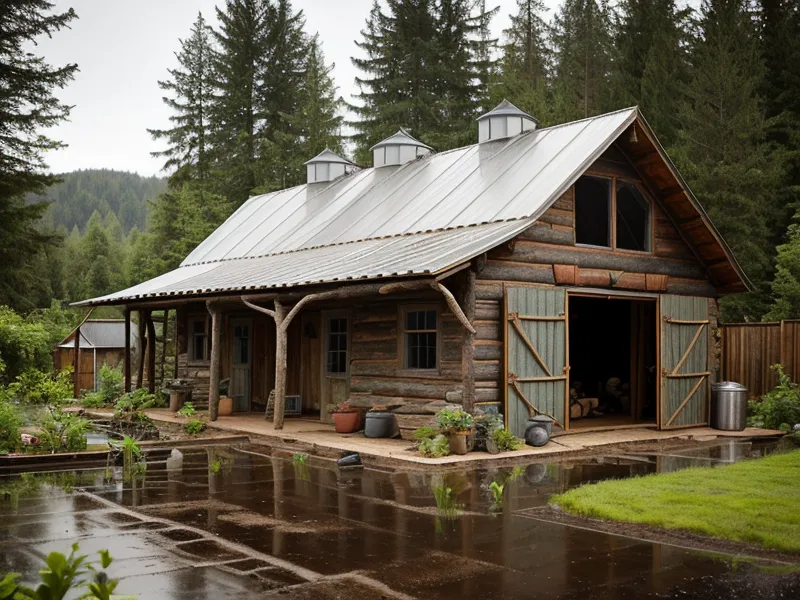
I did most of my comparing in person at Coastal Farm & Ranch in McMinnville, standing between two very different setups and trying to picture either one wedged next to our garden fence. The Aqua Tower won me over first because it's tall and slim instead of round and sprawling — it fits in a footprint a full-size tank never could, and installing it didn't require renting a backhoe. If one section ever gets compromised, you're not staring down the loss of your entire reserve at once, which matters more than it sounds like it should when you're the one who has to fix it.
What a Single Barn Drum Taught Me
That barn drum I mentioned earlier is exactly the kind of shortcut a setup like the Aqua Tower is meant to fix. We'd stored a single fifty-five-gallon drum in the barn and called it our backup plan, which felt reasonable right up until the day it actually needed to work. It did NOT work. The water inside had gone flat and faintly off after months of sitting untouched, and the first person I called was my neighbor Ruthanne Dalby, who's lived out in this county her whole life and is the one I ring whenever something smells wrong before I do anything else. She didn't sugarcoat it — one sealed drum with no rotation plan isn't a backup system, it's a science experiment with a lid on it.
Ruthanne's fix was blunt but correct: rotate what you store, and don't lean on a single point of failure for something you can't live without. That lesson carried over into how we think about pressure, too — a pressure tank does a different job than storage entirely, smoothing out demand instead of holding a reserve, and it's not something I can do justice in a paragraph here. If you're dealing with a well that struggles to hold pressure steady, especially once the power gets involved, I wrote up what actually fixed ours in my post on how I switched to a solar powered well pump.
SmartWaterBox vs. Aqua Tower: Two Different Jobs
The Aqua Tower solved storage. It didn't solve the plumbing between the tank and the kitchen sink, which is a completely different headache. That's where the SmartWaterBox came in — it handles filtering and pressure together, so I wasn't standing in the yard trying to puzzle out a system with more valves than I had patience for. It also tracks the tank level on its own, which sounds minor until you've spent a summer squinting at a sight gauge in bad light. What I like about it isn't that it's fancier than the alternative — it's that it's built for someone who wants water to just show up at the faucet, the same instinct that had us holding our rainwater harvesting barrels together with mismatched fittings and stubbornness.
Neither tank fixes what's already dissolved or growing in your water, though — that's a separate problem, and it's why we added David's Shield as a second layer of treatment. Well water out here gets unpredictable after a hard storm, and running it through a UV pass before it hits the tap isn't a step I'm willing to skip; I wrote the long version of that decision in my UV disinfection guide if you want the details. Sediment is its own fight too — a good pre-filter ahead of the tank saves you from scrubbing grit out of a UV unit every few weeks, and it's one of those unglamorous upgrades that pays for itself the first time you don't have to take anything apart.
Modular Tanks Have Real Limits
Modular tanks aren't magic, and it's worth being honest about where they lose to one big tank. You still need a real foundation under every single one — that 8.34-pounds-a-gallon math doesn't care how many tanks you split it across, and a base that isn't level and compacted will let a tank lean, and a leaning tank is a tank that eventually splits. Chickens are a factor nobody warns you about either: ours treat any flat tank lid as a roosting platform, and one of them once pecked a hole clean through a cheap seal on a fitting, which is its own kind of Tuesday out here. Freeze protection gets harder too, since more tanks means more exposed valves, and I learned that one the hard way our first winter here — if you're anywhere that gets a real cold snap, it's worth reading my notes on tips for keeping water from freezing before the next one hits. And keep every tank dark, no matter how many you're running. White or clear plastic lets in enough light to grow algae inside of a few weeks of summer sun.
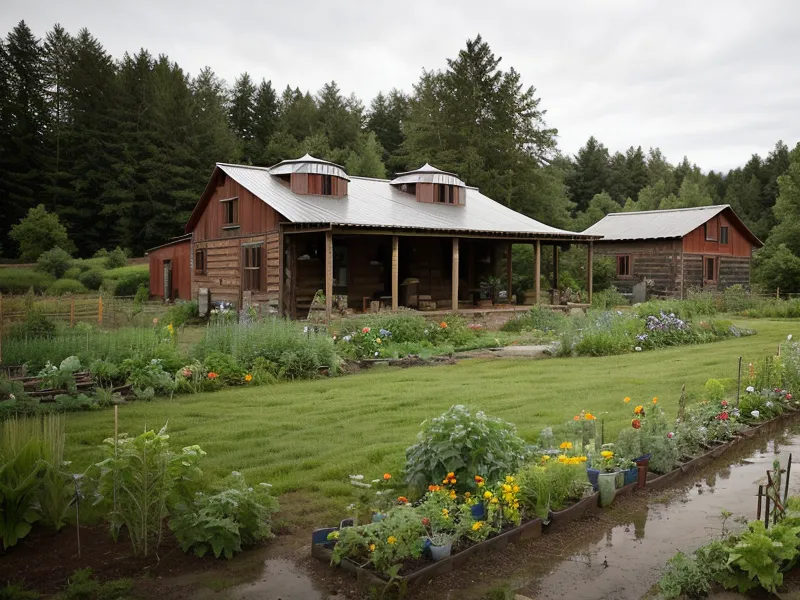
Choosing Potable Water Storage That Fits Your Acreage
These days I can glance at the gauge on our Aqua Tower and know exactly where we stand. The real test is running the washer, the dishwasher, and an outside hose bib all at once and watching the pressure hold steady instead of sagging — that's the moment you know a system is actually doing its job instead of just looking impressive sitting there. The dogs stay hydrated, the chickens have water even the clumsy ones can't tip over, and the vegetable garden isn't one dry week from wilting.
My friend June Abernethy, who I met at a rural water co-op meeting and who's been running her own twelve-acre place for years, is a good example of what this looks like further down the road. She splits her setup between a bank of modular tanks for daily use and one large buried cistern for deep reserve, and hers is the system I study when I want to see this done well instead of done fast. She's also the person who talks me through the parts I still find intimidating — shock-chlorinating a well after something goes wrong, testing water properly instead of just eyeballing it, and running a gravity-fed line out to a distant trough without a pump doing all the work. None of that replaces good storage. It just rounds it out.
Power is the other variable in all of this, since none of these tanks fill or pump themselves without it. We keep a Dark Reset unit on hand specifically so the well pump and the SmartWaterBox keep running on the days the grid drops out longer than we'd like, which happens more out here than it ever did in the city. I go into how we use it in my Dark Reset survival strategy post, but the short version is that storage without power to move it around is only half a plan.
So which way should you go? If your place is small, your budget's tight, or you like being able to isolate a problem without losing your whole reserve, start modular — the SmartWaterBox paired with something like the Aqua Tower to manage filtering and pressure is where I'd point a brand-new homesteader. If you've got the space, the equipment to install it properly, and you're confident you'll actually cycle that much water instead of letting it stagnate, one large buried tank still wins on simplicity. There's no universal right answer here — just the one that matches the acreage and the patience you actually have, not the one you wish you had.