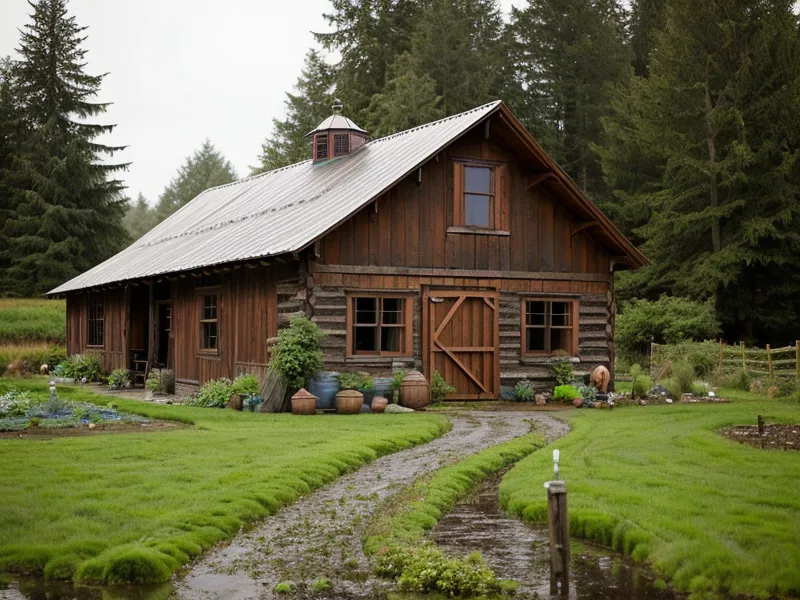
A city water outage means a call to the building super. A well water outage means you are the super, the plumber, and the entire emergency response team — with nobody to dispatch but yourself. That is the blunt reality behind off-grid water and well-water solutions on five acres: when the grid quits, the reserve sitting in your pressure tank is not going to last long, and nobody local is coming to fix it for you.
Quick disclosure before we get into it: this post contains affiliate links, and if you buy through one, I earn a small commission at no extra cost to you. I only mention gear we have actually put through its paces on this farm, mud and cold snaps included. Full details live on my disclosure page.
Why Your Well Cares About the Power Grid
Here's the part almost nobody explains before you move to a property with a well: the pump runs on your home's regular household electricity, not some separate emergency circuit. Cut the power and the pump stops, full stop — no click, no thrum, nothing. Whatever water happens to be pressurized in the tank at that exact moment is what you get, and it is NOT much. A few flushes. Maybe a full glass. Then the tap just sighs at you like it's disappointed you didn't plan better. That single fact is the entire emergency-preparedness lesson for anyone living off a well: your backup plan has to start from the assumption that the pump is offline, not from hoping the power comes back before dinner.
The Water Math Nobody Does Until the Lights Go Out
So what does that actually mean in gallons? For two people, basic drinking, cooking, and hygiene works out to around ten gallons a day if you are not taking long showers — call it five gallons each. Add two dogs and a flock of chickens, and animal water bumps the total up another four gallons or so. That puts a two-human, multi-animal household at roughly fourteen gallons a day just to function, not thrive. Stretch that across a five-day outage, the kind ice storms love to cause out here, and you are looking at close to seventy gallons of stored water before things even start to ease. Carrying that by hand, one five-gallon bucket at a time, uphill, while a dozen chickens shriek at you for their breakfast, is not a workout — it is a math problem with a very sore lower back attached.
Well-Water Solutions That Don't Need Electricity
Gravity does not care whether the grid is up. Get stored water even a little higher than the tap that needs it, and it flows on its own, which is the whole idea behind gravity-fed distribution. Our own rainwater harvesting setup, built more out of stubbornness than planning, turns into drinking and flushing water during an outage instead of just garden water. Neither trick solves everything by itself, but stacked together they buy real time without asking the grid for permission first.
Do You Need a Full Backup System, or Just a Bridge?
This is where budget homestead logic actually matters: you do not need a whole off-grid power system on day one just to keep water moving during an outage. After a multi-day ice storm outage that had us melting snow on the woodstove just to flush a toilet, I picked up the Dark Reset kit, priced at $39.86, cheap enough that I did not feel like I was gambling grocery money on it. The logic sold me more than the price did: it is a simple way to move water from storage to the tap once the pump is dead and the pressure is gone, without needing a generator loud enough to wake the chickens.
I have also looked at the SmartWaterBox, which handles higher volume and makes more sense if you want one system covering the whole property instead of just a stopgap. But for a lights-are-out, toilet-needs-to-flush situation, the Dark Reset is built for people who are tired, mildly frazzled, and do not want an engineering degree just to get water moving again. Ask yourself what you are actually solving for — a five-day bridge until the power comes back, or a permanent hands-off system — because those are two different budgets and two different pieces of gear.
Bath Towels Are Not Pipe Insulation
One hard freeze, convinced I was being resourceful, I wrapped an exposed pipe run in every old bath towel I could find instead of buying proper foam pipe insulation. My logic was that if a towel keeps me warm, it would keep a pipe warm. It did not. The towels froze solid, turned into ice logs stuck to the pipe, and I spent an afternoon with a space heater and some very unkind words for past-me instead of the twenty minutes proper foam sleeves would have taken. If your place gets real Oregon winters, insulate the actual pipe — not the general vicinity of the pipe — before the next freeze, and if you want the fuller, uglier version of that first winter, I wrote it all up in my winterizing checklist.
Checking Your Setup Before You Need It
Knowing your setup works matters as much as owning the gear. A pressure tank is really a topic worth its own deep dive elsewhere, so I will not half-explain it here beyond saying it is worth understanding on its own terms. What you can check now is your well's recovery rate — basically how fast it refills after use — because that number tells you whether seventy gallons of storage is overkill or barely enough. A basic water test, done before anything goes wrong, tells you things a clear glass never will, and if your outage came with flooding or heavy storm runoff, that is also when questions about shock chlorination, sediment filtration, or UV disinfection start showing up — each one its own separate rabbit hole worth reading up on later.
My reader Corinne, who has sent me more follow-up questions about her shallow well than anyone else, asked almost exactly this after her own outage last month: how do you know if you are storing enough without going overboard? Her answer, after working through every possible scenario the way she always does, landed close to mine. Figure out your daily number first, then size storage to it. Tank-level monitoring, whether that is checking manually or with a sensor, only matters once you already know that baseline.
The Real Lesson: Simple Wins
None of this needs to be complicated to work. Three years into running this place, panic and research still coexist just fine around here. Case in point, my friend Priscilla, who left Portland for rural property around the same time we did. She texted me in a full panic during last winter's outage, convinced her pipes were about to burst, then spent the next two hours quietly researching pressure tanks instead of calling anyone, which is very on-brand for her. That really is the whole approach: panic a little if you need to, then go figure out the actual number you are working with. You do not need a ten-thousand-dollar backup system on day one. Start with your daily gallons, find the simplest tool that covers that number, and build from there.
For us, the version of that tool is still the Dark Reset. It's not glamorous, not a Pinterest-perfect solar-and-copper setup, just something that has worked every time the grid has quit on us since. I still think about turning on the kitchen tap early one morning not long after we got all this sorted, half-braced for a rust-tinged trickle, and getting a clean, cold stream instead. Nothing orange, nothing off. Whatever you land on, size it to your own gallons, not to what looks good in a photo, and your lower back — and your socks — will thank you later.
The information on this site is based on personal homestead experience for informational purposes only. Off-grid water systems including wells, cisterns, and rain collection carry real health and safety risks including waterborne illness, contamination, and structural failure. Always test water quality, follow local regulations, and consult licensed professionals for well, septic, and water system work.