
A pump house wrapped airtight in plastic and one left half-open to bad weather can fail for the exact same reason — trapped moisture just finds a different way in. That's the part nobody mentions about winter prep on a well system: more insulation isn't automatically better insulation, and plenty of diy homesteading advice pushes "seal every gap" without warning you that a sealed box through a wet Oregon winter turns into a greenhouse for mold and rust. Well maintenance out here, on the rural side of things, means matching the fix to the climate — not just piling on more foam and hoping.
Our own pump house sits at the edge of the five acres we moved to in the Douglas County foothills of southwestern Oregon, and it took one burst pipe and three days without water to teach us the difference between "insulated" and "insulated correctly." Our well water also runs hard enough that skipping a kettle cleaning for a week leaves a crusty white film across the bottom — nothing to do with insulation, but it's a decent reminder of how much this water matters once it's actually flowing.
Winter Prep Doesn't Mean Sealing It Airtight
Once the ground temperature drops toward the freezing point, moving water usually protects itself — it's standing water that turns into a problem, and the pump house is where well water sits still, waiting in the pressure tank for someone to turn on a faucet. That stillness is exactly why the pump house needs more protection than the rest of the plumbing, and why the depth of the frost line around here matters less than most people assume — the vulnerable spot isn't buried, it's sitting a few feet off the ground in a wooden box at the edge of the property.
The obvious instinct is to seal the whole thing shut and call it winter-proofed. Before that could happen, though, the old insulation had to come out, and what was waiting behind it wasn't insulation anymore — it was somebody else's home.
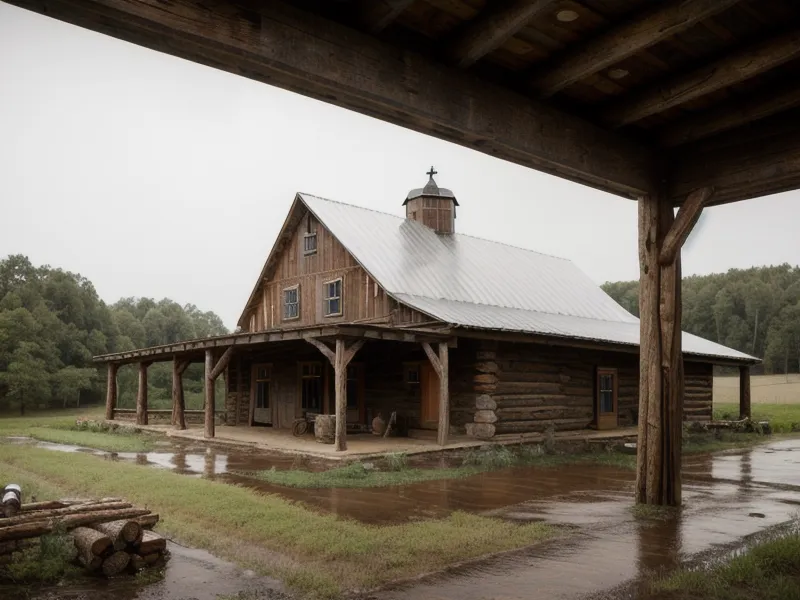
What I Found Behind the Old Insulation
Mice treat thin, old fiberglass like a five-star comforter, and the batts behind our access panel had been shredded into a nesting site, packed with a hoard of acorns and stolen chicken feed. Cleaning it out took the better part of an afternoon, crouched in a cramped, spider-laced box with a shop vac, trying not to think too hard about what else spends winter in there. Damp, compressed, rodent-packed insulation doesn't hold its R-value no matter what the packaging promised, so scraping all of it out was non-negotiable before anything new went up.
Sealed Airtight or Vented: The Key Decision
Here's the actual comparison, side by side. Option one: wrap the pump house tight, foam every gap, treat it like a cooler. Option two: insulate it well and leave a small, screened vent near the roofline so damp air has somewhere to go. I went with fiberglass batt rated R-13 for the walls — enough insulating value for a standard wall cavity without needing anything exotic — and sealed the gaps where pipes rise through the floor, because mice fit through a hole the size of a dime and cold air is even sneakier. That much lines up with the sealed-tight approach. Where it splits is the vent, which I left open on purpose.
Standard insulation traps heat rising from the ground, which is good, but a fully sealed box traps moisture right along with it. In a wet Oregon winter, an airtight pump house turns into a small sauna of condensation, and that moisture eventually rots the framing and corrodes anything metal — including the well pressure switch, which is not a part you want failing during a snowstorm. Anyone who has gone down the rabbit hole of replacing a well pressure switch without calling a plumber already knows it's not a repeat performance worth risking over trapped humidity.
A friend of ours, the kind who spends every free weekend competing in disc golf tournaments at Milo McIver State Park instead of doing anything sensible with a Saturday, is the one who talked me out of wrapping the whole structure in plastic like a Christmas present. She'd watched a neighbor do exactly that and open the pump house in February to a wall of black mold. I heard a version of the same warning secondhand, too, from another vendor at the Corvallis Saturday Farmers Market who'd lost a winter's worth of pressure-switch reliability to a pump house sealed tighter than a submarine.
It's the same all-or-nothing instinct that gets people into trouble with the rest of their water system. I know someone who, convinced their well water smelled off, poured bleach straight into the casing without testing the water first — no baseline, no idea what they were actually treating, just a gut reaction to an undiagnosed problem. Airtight insulation is the pump house version of that same impulse: doing the maximum instead of the correct amount.

Installing the Batt Without Losing a Sleeve
The pump house itself is barely bigger than a phone booth, built tight around a pump and a tank with no spare room for a grown adult. Wrestling a four-foot batt of insulation into a gap that size is closer to gymnastics than construction. Crouched with a headlamp, reaching into the darkest corner to seal a gap where wind was whistling through, I heard a satisfied ka-chunk from the staple gun — and then realized my left arm would NOT move. I'd stapled my own jacket sleeve straight to the wall stud. There's a specific kind of stillness that comes from being physically pinned to a wall by your own tool, wondering how long you'll sit there before someone comes looking.
Once I unstapled myself, sealing the floor penetrations with spray foam went faster — small, satisfying, none of the drama the wall batts had put up. That part, at least, went the way the instructions promised it would.
What Insulation Won't Fix
None of this solves the rest of a homestead water system — an insulated pump house won't complete the job. It won't speed up a well with a sluggish recovery rate, and it won't extend the life of a pressure tank that's already failing. It has nothing to do with testing your water in the first place, or with a proper round of shock chlorination if there's an actual contamination problem — that bleach-in-the-casing story above is exactly the shortcut that skips both steps. It won't filter sediment before it wrecks a washing machine, disinfect anything with UV after a hard rain, or keep a gravity-fed line to the garden running through a freeze. The rain barrels are their own separate project, and a remote tank-level monitor is still sitting on next year's list, not this year's. Insulating the pump house solves exactly one problem: keeping the water moving when the temperature drops. Everything else on that list needs its own fix, on its own day.
Vented Insulation Wins Where Airtight Fails
In a bone-dry climate with hard freezes but almost no ambient moisture, a fully sealed pump house can work fine — there's nothing around to condense. In the wet foothills of western Oregon, or anywhere with a genuinely damp winter, vented insulation is the one that survives, because the moisture has to go somewhere, and a sealed box just makes it your problem. That's the actual rule: match the seal to the humidity, not to how cold it gets.
The proof, for us, showed up before six one morning — I ran the kitchen tap before coffee and the water came out clear and cold, no rusty ring ghosting the bottom of the glass the way it does when a line has been sitting wrong. The well pump kicked on with its usual distant hum a few seconds later, which meant the pressure switch hadn't frozen and the pipes hadn't split. It was a quieter kind of relief than the summer we ran the well dry and got nothing but silence — no drama, just water where water should be.
I'm not an engineer and I'm not a licensed plumber, and if your setup involves high-voltage heat tape or anything more complicated than a staple gun and a can of spray foam, that's a job for someone licensed, not a blog post. For most rural households just trying to keep water flowing to the chickens and the coffee pot, a properly vented layer of insulation and a little stubbornness covers it. Wear long sleeves you don't mind stapling to a wall, just in case.
If the rest of your water system still makes you nervous, I've also written about testing well water for heavy metals after we first moved out here — another one of those tasks that feels bigger than it is until you actually start. A pump house that survives winter is one less thing to worry about once the frost actually shows up.