How do you actually tell the difference between a well that's truly running dry and a well that's just recovering slower than you're using it? I didn't have an answer to that for most of my first stretch as a homesteading beginner, and every time the garden hose sputtered I assumed the worst. Well water management is one of those rural-infrastructure skills nobody teaches you before you move out here, you just find out the hard way, usually standing in wilting tomato rows wondering if you're about to lose the whole garden.
Update (September 2026): Aqua Tower is no longer available for purchase; this article is kept for reference. Our current alternative pick in this category is Water Freedom System.
Quick disclosure before I get into it — this post has affiliate links, and if you buy through them I earn a small commission at no extra cost to you. I only mention things we've actually run on our own five acres, usually after trying two worse options first. Full disclosure here.
Moving from a Portland apartment out to five acres in rural Oregon was the dream — nobody mentions that the dream runs on a motor buried in the ground that you can't see or hear until it fails. Our first summer out here, we ran the pump dry and burned it out completely. It cost us a small fortune and a week of hauling buckets from a neighbor's place just to flush the toilets. Ever since, any dip in water pressure sends me straight into worst-case-scenario mode.
Why I Started Watching the Well Instead of Guessing at It
The hardest part about well water is that you can't see your own supply. In the city, water just exists — you turn the tap, it's there, end of thought. Out here it's a hidden variable you have to go looking for. I spent way too many hours one fall hovering near our well casing, the pipe that sticks up out of the ground over the well head, trying to listen my way to an answer. It told me exactly nothing, no matter how long I stood there.
I'm not an engineer, and I'm not even particularly handy — my first attempt at being "scientific" about it involved a weighted string tied to some twine and way too much optimism. I figured if I felt the weight hit water, I'd know how much we had left. Instead I learned an early lesson about maintaining rural systems: never drop anything down your well. The string snagged on the pump wires about halfway down, and I spent two hours coaxing it back out, apologizing to nobody in particular the whole time.
That mishap was the turning point. As much as I love the DIY-or-die spirit of homesteading, I didn't want to keep risking a service call that would wreck a month's budget just to find out what was happening underground. It matters even more if you're homesteading on a short-term land lease. You can't exactly drill a new well on a property you don't own, so knowing exactly how much water you've got left is the whole game.
Was the Well Actually Low, or Just Slow to Refill?
By fall I finally installed the SmartWaterBox, after reading about it in a few off-grid forums and being fairly skeptical — most smart-home gadgets hate Oregon mud, and our chickens will peck at anything with a wire hanging off it. But I needed real numbers instead of a feeling in my chest. What I found surprised me: the water table wasn't the problem, the recovery rate was. The well was basically a bathtub refilling slower than we were draining it during peak summer heat, nothing more dramatic than that.
Shifting my irrigation to the middle of the night, when nobody in the house was running water, kept the level steady. There's a much deeper breakdown of how that actually works in this guide to well recovery rates if you want the full mechanics — I'll stick to what changed for us.
Oregon's dry stretch usually runs through the hottest months, and that's when the stress shows up fastest. Pumps do not appreciate running dry. I used to put my palm flat on the pipe and feel that hollow vibration that meant it was straining for suction, a feeling I still notice in my sleep some nights. Now I just glance at my phone before I even turn the hose on. Sediment getting pulled up when a well runs low is a separate headache I deal with on its own terms, not something I'll get into here.
Renting Doesn't Have to Mean Zero Water Security
My friend Priscilla Hartung — someone I've known since before either of us left Portland — is renting a small farmhouse on a two-year lease not far from here. I ran into her at the Eugene Saturday Market a few weeks back, and she was mid-spiral about her well again, because her landlord is, let's just say, hard to reach. Priscilla panics first and researches second, in the most Priscilla way possible, so by the time we'd finished our coffee she already had three tabs open on her phone.
We didn't talk about drilling anything, though — you can't justify a huge infrastructure upgrade on a house you don't own. We landed on the Aqua Tower instead, a buffer she could actually take with her if she ever moves. If you know your well runs slow, you fill a tank when the well's flowing well and water the garden from the tank later — it takes pressure off the pump and gives you a cushion that doesn't require owning the dirt underneath it.
Learning the Rain Math (and What Didn't Work) the Hard Way
Mid-winter in Oregon flips the whole problem around — suddenly there's too much water, which is exactly the moment to start planning for the next drought. I've been supplementing our well with a rain collection setup held together with zip ties and pure stubbornness, and a small roof can fill a decent-sized tank in a single weekend during a good January downpour. I won't get into the exact math of roof-to-barrel yield here, but it's more water than you'd think, and every gallon collected off the roof is a gallon we don't have to pull out of the ground come August. The barrels feed the garden beds by gravity alone, no pump involved, though setting that up properly is its own project entirely.
Winter also taught me what doesn't work. Before I understood any of this, I wrapped the exposed pipes near the pump house in old bath towels because we didn't have proper foam pipe insulation on hand, and I figured towels were better than nothing. They were NOT better than nothing. The first hard freeze turned them into soggy, useless bricks, and I spent a miserable morning thawing a split fitting with a hair dryer and a lot of regret.
For the barrels themselves, especially after a big storm sends runoff into them, I've had good luck using David's Shield for basic disinfection. That's a much lighter touch than actually shocking a whole well after contamination, which is its own project entirely. I've also been messing around with a DIY greywater system to keep the ornamental beds alive without touching the well at all.
Where the Panic Actually Went
Somewhere around the fourth week of actually paying attention to the numbers instead of my nerves, I filled the dogs' water bowls without pausing to sniff the water first, a habit I didn't even realize I'd built until the morning it just wasn't there anymore. That's not the same as actually testing the water itself, which is its own separate routine I keep on its own schedule, but it told me something real had shifted underneath the mood.
A reader named Corinne Specht started emailing me a while back, after I wrote about the summer we ran the pump dry, and we've traded dozens of messages since about her own shallow well and her pressure tank. She overthinks everything, in a way I find weirdly comforting, because it means she reads the whole guide before she touches a single valve. If you're anywhere near her level of anxious about your own setup, that's not a character flaw — that's just what happens before you get a real number to look at instead of a guess.
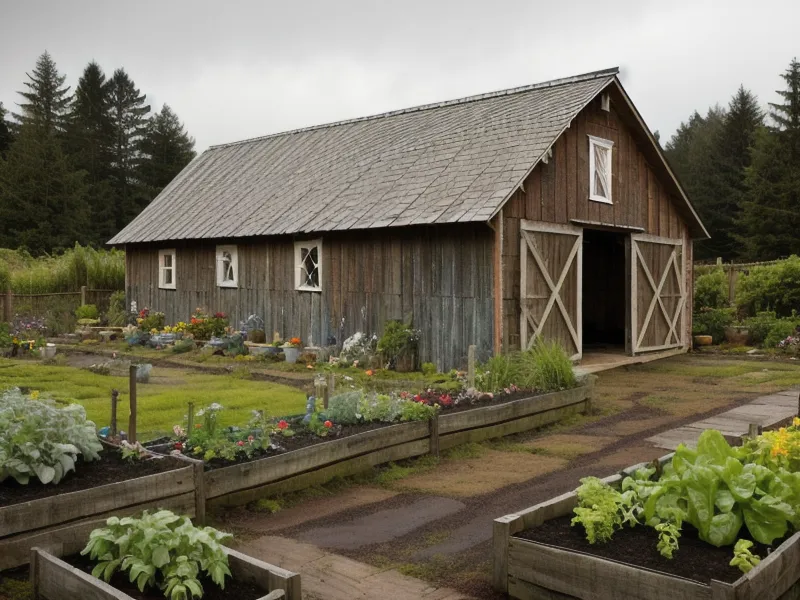
Walking out to the garden last week, I noticed the specific absence of well-anxiety for maybe the first time since we moved out here. The chickens were screaming for breakfast like always, their waterer was topped off, and I checked the monitor and saw exactly how much buffer we've got before the real dry stretch hits. No more guessing, no more dropped strings, no more cold sweat at the kitchen sink.
If you're standing at your own faucet right now wondering whether that gurgle was nothing or the start of a bad summer, here's the actual lesson: you don't need to become a hydraulic engineer to manage a well. You need one reliable number you can check instead of a feeling you keep having to talk yourself out of. Whether you own five acres or you're renting a backyard on a two-year lease, something like the SmartWaterBox gives you the one thing city living hands you for free — knowing that when you turn the tap, water is actually going to come out.
Now if I could just figure out how to keep the chickens out of the kale, I'd really be winning at this. That's a problem for another day. For today, the water's flowing, the pump's happy, and for once I'm not standing over the well casing holding my breath.