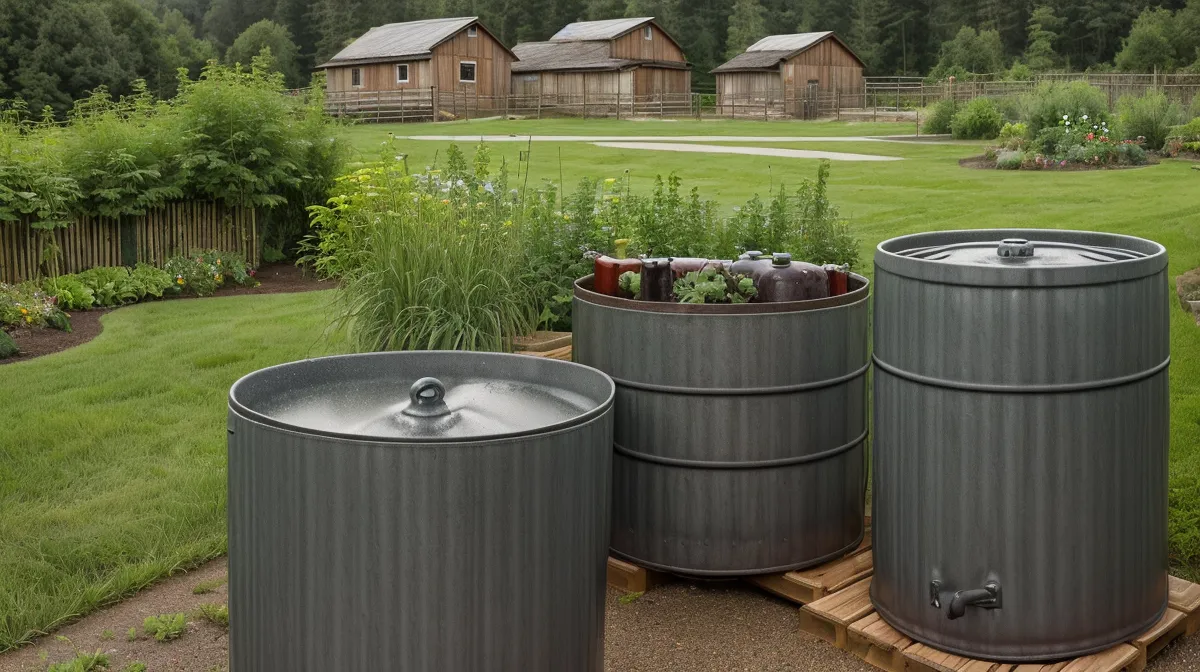
Two Jobs, Two Very Different Water Rules
Four days. That's roughly how long a clear plastic tank takes to turn green with algae once the Oregon sun gets a straight shot at it, and it's the detail that finally taught me our off-grid water needs are not one single problem; they're at least two. Our drinking water gets tested, filtered, and backed up like our lives depend on it, because they sort of do. Our garden water gets a forty-two dollar gravity fed water system built from a used plastic tote and a stack of pallets, because kale does not care about water pressure. If you are new to homesteading for beginners, this is the first thing nobody tells you: the DIY garden irrigation project you actually need is almost always simpler than the one you think you need.
Before the tote and the pallets, watering the back garden meant two five-gallon buckets and a very personal argument with my own spine. The dogs would just watch, unbothered, while the chickens pecked at my boots for being too slow with their water. None of that solved anything — it just embarrassed me twice a day.
Here's the split that actually matters: the water at the kitchen tap runs through a pressure tank, gets tested, and — most mornings — comes out clear and cold with no rust ring waiting in the kettle, as long as I don't get lazy about the sediment filter. Skip that filter for too long and the kettle grows a chalky white ring instead. The water going to the garden doesn't touch any of that machinery. It sits in a tote, drops through a hose, and lands on soil that has never once asked for a lab report.
We had the county health lab test that well water a while back, and I'm slightly ashamed to admit the results sat in a kitchen drawer for months before I actually read through them. That's a homesteading confession for another day. What matters here is that testing, filtering, and worrying about well recovery rate between fills are all drinking-water problems. My kale has never once needed a lab report.
The Simple Physics Behind a Gravity Fed Water System
PSI (pounds per square inch) used to sound like a new brand of athletic shoe to me, not a unit of pressure. Water is heavy, and if you lift it, it wants to fall — the higher it starts, the harder it pushes when it lands. For every 2.31 feet you raise a tank, you gain about 1 PSI at the outlet. My back garden sits roughly fifty feet from the house and slightly uphill, so buying enough elevation to make gravity do the work became the whole project.
A 275-gallon IBC tote — one of those plastic cubes wrapped in a metal cage — sitting four or five feet off the ground turned out to be exactly enough pressure for a soaker hose. It will never power one of those oscillating sprinklers that throws water thirty feet in the air, and that's fine. Soaker hoses want a slow, steady drink, not a blast, and low pressure happens to be the one thing a gravity fed water system does better than a pump ever could.
What Forty-Two Dollars Actually Bought
Forty-two dollars sounds suspicious until you see the parts list. A bulkhead fitting ran about fourteen dollars, a brass ball valve about sixteen, and a fifty-foot lead-in hose that happened to be on sale covered the rest. Everything else came out of the scrap pile behind the barn, which grows a little more chaotic every season. Compare that to the five-hundred-dollar all-in-one irrigation kit sold at the big box store, and the case for a gravity fed water system gets a lot more obvious.
The tote itself came free from a local nursery, which is worth checking before buying anything — Craigslist and Facebook Marketplace both turn up food-grade totes if you are patient, and a tote is only fit for a garden if it never held anything you would not want near tomatoes. My first attempt at sealing the bulkhead used a waterproof sealant that turned out not to be very waterproof once the Oregon sun got to it, and I ended up with a small swamp in the chicken run and one very confused rooster who seemed to think I had built him a private pool.
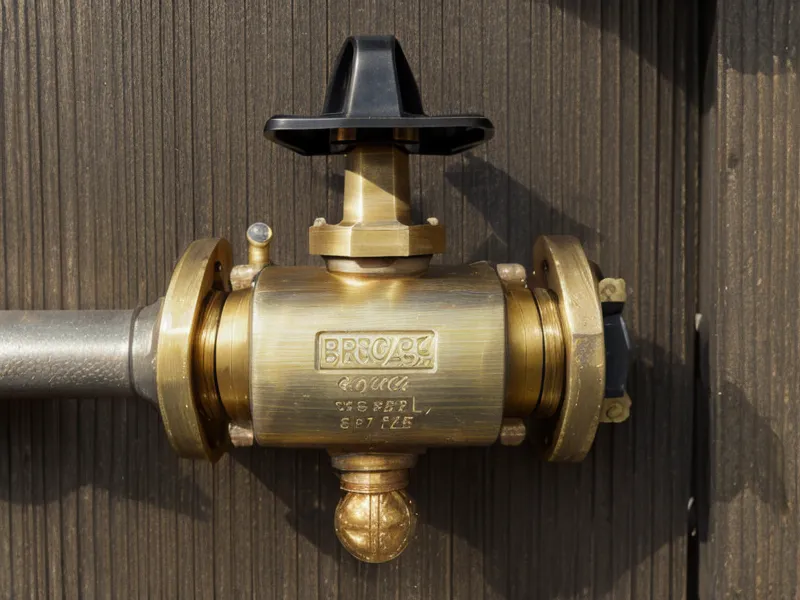
That bulkhead fitting is the real trick — a plastic nut and bolt with a rubber gasket that lets you put a hole in a tank without the tank leaking everywhere. Tighten it more than feels necessary, then tighten it again. I learned that the hard way, standing outside in a rainstorm with pliers, trying to stop a slow drip that was wasting water I had worked to collect.
Building the Tower Where Pumps Would Have Failed
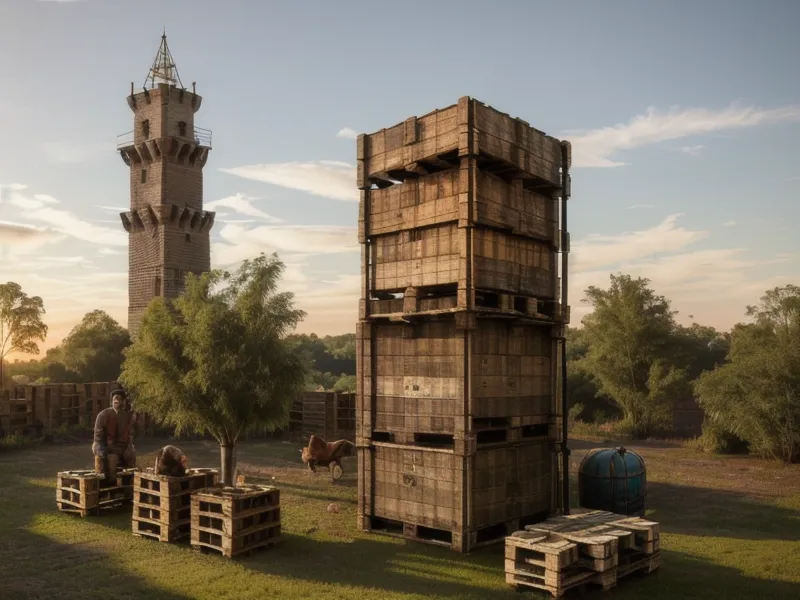
Four heavy-duty pallets, braced with leftover 4x4 scraps from an old fencing project, make up the stand. It looks like a set piece from a post-apocalyptic movie, and it works anyway, held together partly by carpentry and partly by an unreasonable number of zip ties. My partner calls it the Tower of Terror. Since it has not fallen over yet, I am calling it a win.
Bert Yamamoto, a retired irrigation engineer three properties over, walked the tote's trench line with me for a few minutes and pointed out — kindly — that it ran slightly uphill in one spot. He is the kind of neighbor who keeps a notebook of every fix ever made on his property, and I suspect somewhere in it is a page about my trench.
While I built the stand, the dogs made it their personal mission to steal every scrap of wood I set down and run it into the treeline. It took twice as long as it should have. Once the tank was full and I turned the brass lever, nothing happened at first — air trapped in the line — and then, after some shaking and a few choice words, the water started moving in a slow, steady pulse instead of a rush.
One post covers the messier full story of everything that led up to this, including the well-pump scare from that first rough summer — how we built our off-grid water system from scratch, mistakes and all.
Why This Counts as Off-Grid Water, Not a Pressure System
No electricity means the garden still gets watered even when the power goes out, which around here happens whenever a squirrel so much as sneezes near a transformer. Low pressure is a genuine advantage rather than a compromise, since soaker hoses want water to seep instead of blast, and blasting is what strips soil away from roots. Filling the tote slowly during off-peak hours also asks a lot less of the well than running a sprinkler at full pressure for two hours in the afternoon heat — one more reason the two systems in this comparison do not actually compete with each other.
Where the Comparison Falls Apart
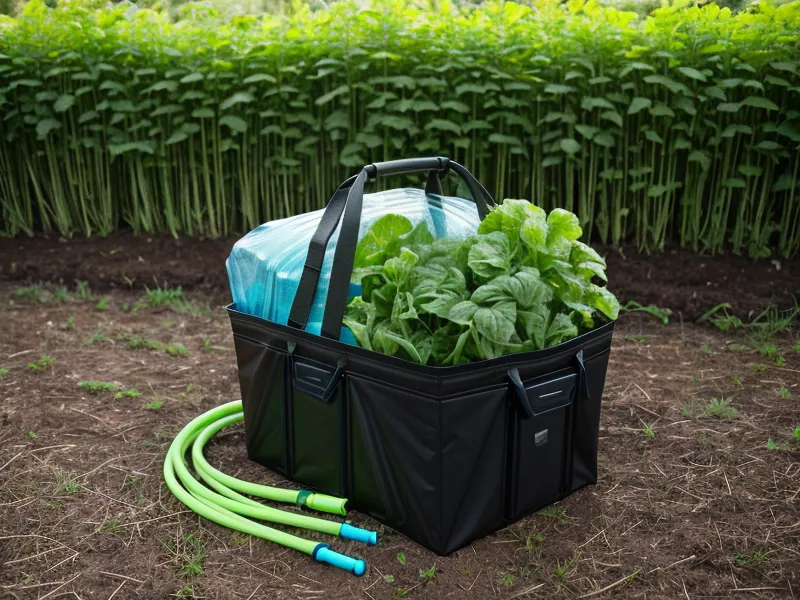
Algae is the first place gravity-fed simplicity meets its limit. A clear tank sitting in direct Oregon sun turns green in about four days, the same number from the start of this. It just took one ruined batch of water to actually learn it firsthand. Wrapping the tote in a cheap black tarp blocks the light and solves the problem completely, though a drinking water system would reach for UV disinfection instead, since algae is not the only thing you would be worried about in a tank meant for the kitchen.
Expanding hoses are the second lesson. They need real pressure to open up and let water through, and a gravity system cannot provide it, so mine just sat there shriveled and useless until I gave up and swapped in a plain rubber hose — because I was fighting gravity itself, not the hose.
Chickens found the tower's slow drip before I fixed it and turned the mud underneath into a dust bath so deep it started undermining a pallet leg. Chicken wire around the base solved that. On a homestead, something is always quietly trying to dismantle your infrastructure, and usually it has feathers.
So Which System Does Your Homestead Actually Need?
None of this makes a gravity fed water system a replacement for a proper pressurized supply — it is NOT that, and it is not trying to be. It is definitely not the same project as shock-chlorinating a well after a flood, which is its own emergency with its own rules. Choose gravity and a tote when the job is irrigation, livestock troughs, or anything that never has to pass through your body: no pump, no electricity, no fuss. Choose a pressure tank, filtration, and a fully tested setup when the job is anything coming out of a tap you plan to drink from.
Filling the tote from the well works fine most of the year, though on wetter months I have filled it straight off the downspouts instead — the same low-tech approach from how I built my rainwater collection system, and one more way this setup avoids leaning on the well. There is no remote tank-level monitoring gadget attached to any of it either, just a glance at the tote from the porch on the way to the coffee pot.
The extra time is the part I did not expect to matter this much. Two bucket trips before coffee turned into one brass lever, and most weekends now leave enough daylight to get out to the Tillamook State Forest trailheads instead of babysitting a hose all afternoon. Every homestead water problem eventually sorts itself into one of these two categories, and once that is sorted, gravity ends up doing more of the work than most people give it credit for.