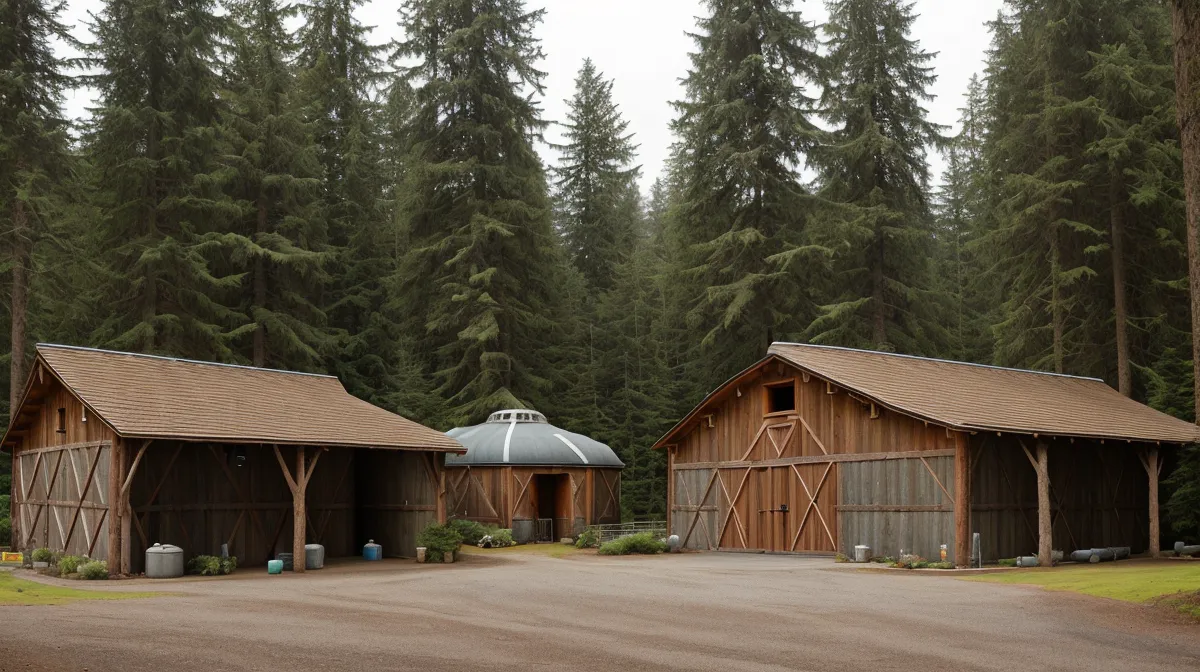
Both boots are stuck in the mud somewhere between the wellhead and the porch, and I'm holding a wrench that doesn't fit anything on this system, when Ruthanne's truck door slams behind me. She doesn't say hello; she yells "IT'S THE PRESSURE TANK, KATE, NOT THE PUMP" across the yard, because apparently my panicked hammering is visible from her kitchen window. Three years into running our own homestead water system on this patch of Oregon dirt, I've learned that a good neighbor who's lived rural her whole life is worth more than any manual, but I still had to learn the well water and rainwater collection side of Oregon homesteading myself, one very muddy mistake at a time.
Update (September 2026): Aqua Tower is no longer available for purchase; this article is kept for reference. Our current alternative pick in this category is Water Freedom System.
Quick disclosure before the mud gets any deeper: this post has affiliate links, and if you buy through them I earn a commission at no extra cost to you. I only mention gear that has actually survived our freeze-thaw cycles, my dogs' chaos, and at least one direct hit from a wayward chicken. None of this is professional advice; I'm not a hydrologist and I'm not a plumber, just someone who ran out of water once and never wants to again.
Portland didn't prepare me for any of this. City water is a switch you flip, not a system you build, and off-grid living doesn't care how confident you were before you got here. I found that out the hard way, more than once.
Our Well Ran Dry Before I Understood Recovery Rate
The math finally caught up with us the August after we moved in. I'd left the hose running for hours trying to keep a row of new blueberry bushes alive while I baked bread inside, and by the time I went to rinse my hands, the kitchen faucet just coughed at me. Our well had gone dry; not broken, just outpaced. Cooper and Bella, our dogs, stared at their empty water bowl like it was somehow my fault, which, in fairness, it was.
That was the afternoon I learned about recovery rate; it's the first number you're supposed to nail down before you design anything else on the property, because getting it wrong makes the size of your tank or the strength of your pump completely beside the point. A storage tank became non-negotiable after that: something that fills slowly off the well and lets the house draw from a reserve instead of straight from the ground, so a hose left running too long doesn't take the whole household down with it.
When the pump finally kicked back on that evening, the hose bib gave off this faint, almost-sweet mineral smell, like an old penny, right before the water ran clean again. These days the mudroom doubles as mission control, with a scrawled map of every pipe, valve, and the wellhead pinned above the utility sink, and the pressure numbers penciled in at eye level so I don't have to remember them under stress.
If you're fighting the related symptom (water that trickles instead of flows), I already picked apart what fixed our pressure problems in How I Fixed Low Water Pressure from My Well This Past Summer.
What Happens When October Rain Turns Your Well Water to Soup?
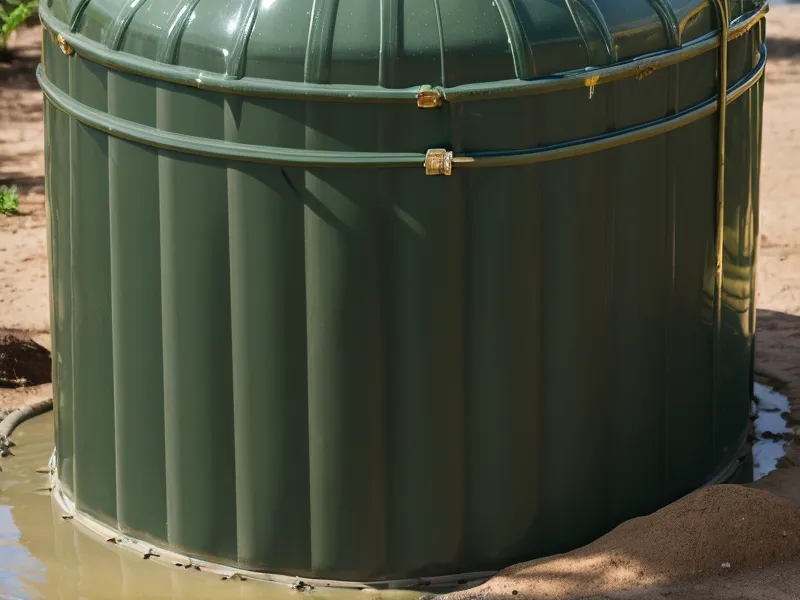
October delivered the next lesson, a year later. The gravel path out to the wellhead turns to mud every November like clockwork, but that particular year it started early, and the water coming out of our taps turned the color of weak coffee right along with the ground; not dangerous exactly, just deeply unsettling to watch fill a glass.
My first instinct was to run every faucet in the house to flush it out, which did nothing except waste water we'd need later and confirm that panic is not a filtration method. The surge cleared on its own after a few days, once the ground stopped shoving water sideways into the casing, and it convinced us to add a sediment stage before anything reaches a tap, cheap insurance against exactly that kind of surprise.
The Single Drum That Wasn't Actually a Backup Plan
Before any of that, our first attempt at a backup water source was almost embarrassing to admit. I stored a single 55-gallon drum in the barn and called it a backup plan, as if one drum could carry a household through a dry well or a frozen pipe. It couldn't. It emptied in about a week of ordinary use and then just sat there, an expensive reminder that backup means capacity, not just possession.
The real fix came from a trip to Coastal Farm & Ranch in McMinnville, where I finally bought fittings sized for something bigger than one drum. We ended up with three forty-gallon blue barrels stacked under the porch eave, tied into the gutters, and three years later that setup is still our original rain rig; still running, still ugly, still doing its job. Rainwater harvesting sounds fancier than three barrels tucked under a porch roof, but at this scale that's really all it is: catch it, store it, use it before the next storm tops it off again. Eventually we added a sturdier tank as a real backup instead of relying on barrels alone, and I wrote about that upgrade in Why the Aqua Tower Is My Top Emergency Water Storage Pick.
Losing the Rain Rig to Algae in August
August found the flaw in that same rain rig, right when we needed it most. The water in one of the barrels turned a shade of green I'd never seen outside a neglected fish tank, and the smell that came off the lid when I opened it was enough to make me reconsider every decision that led to homesteading.
Scrap plywood over the top was my first fix, meant to block the sun, and it mostly just blew off in the first real wind and taught me nothing except that plywood is not a lid. What actually worked was swapping in barrels that don't let light through and screening the inlet so leaves and debris can't feed whatever was growing in there. Now the rig sits in more shade than it used to, and I check the color before I trust it for anything beyond the garden.
Filtration, Testing, and the Parts I Still Don't Trust to Guesswork
Once you've got water sitting in a barrel or a tank, keeping it safe to drink is its own project. Between bird droppings on the barn roof and whatever ends up in well water after a surge like that October one, I got serious about filtration faster than I expected to. UV treatment comes up constantly as a chemical-free way to handle whatever's living in stored water, though that's a deeper rabbit hole than I'll go down here.
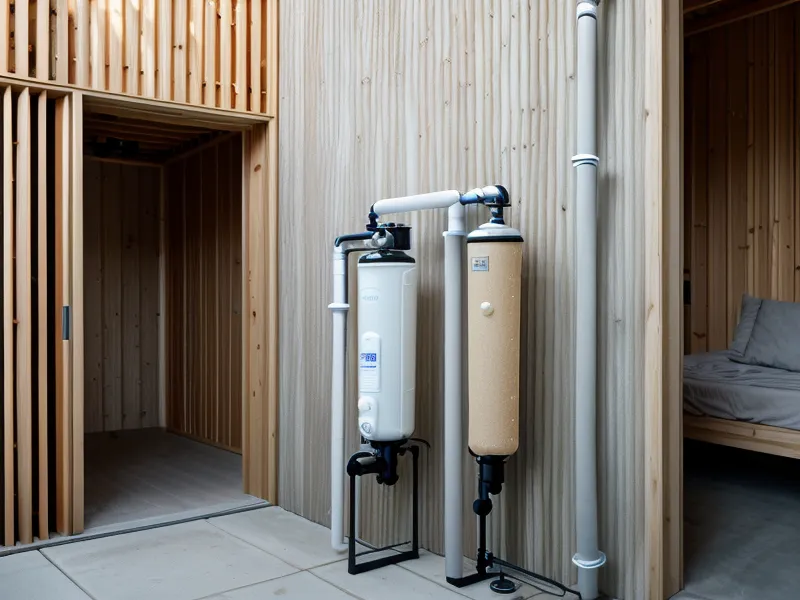
We ended up adding the SmartWaterBox after a power outage made it obvious that anything requiring electricity out here is a liability. What sold me is that it keeps working when the grid doesn't, and given that a squirrel on a transformer can take out our power for a day, that matters more than it probably should.
June Abernethy, a fellow homesteader I met at a rural water co-op meeting, emails me her water test results without me ever asking, which is a good nudge that testing isn't optional just because the water looks fine at a glance. Shock chlorination gets mentioned constantly for well contamination too, and while I respect it, it's not something I've walked through here; treat it as a job worth researching properly or handing to a professional. As for tank levels, I still check them the unglamorous way, climbing up and looking, though I know remote monitoring setups exist that would save me the walk.
Our First Winter Pipe Burst Somewhere We Never Insulated
Winter number one taught us the same lesson everyone learns eventually, just more expensively. We'd insulated the pipes we could see, the run along the outside of the barn and the one under the porch, and completely forgot a short section tucked against an exterior wall in the mudroom that nobody thought to check. It froze solid during a cold snap and split open when it thawed, spraying water across the floor before anyone noticed.
Foam insulation had worked everywhere else, which is exactly why we assumed it would work everywhere, and that assumption cost us a soaked subfloor and an afternoon with a shop vac. What replaced the cracked section was PEX, which flexes instead of splitting when it's under pressure and cold at the same time. We used the same material to run a gravity-fed line out to the garden, no pump, just elevation doing the work, which still feels like a small magic trick every time water shows up at the spigot with no electricity involved.
The lesson from that winter wasn't really about pipe material, though. It was that "insulated" has to mean every single run, not just the ones you can see from the yard.
The Great Henny Penny Coop Flood
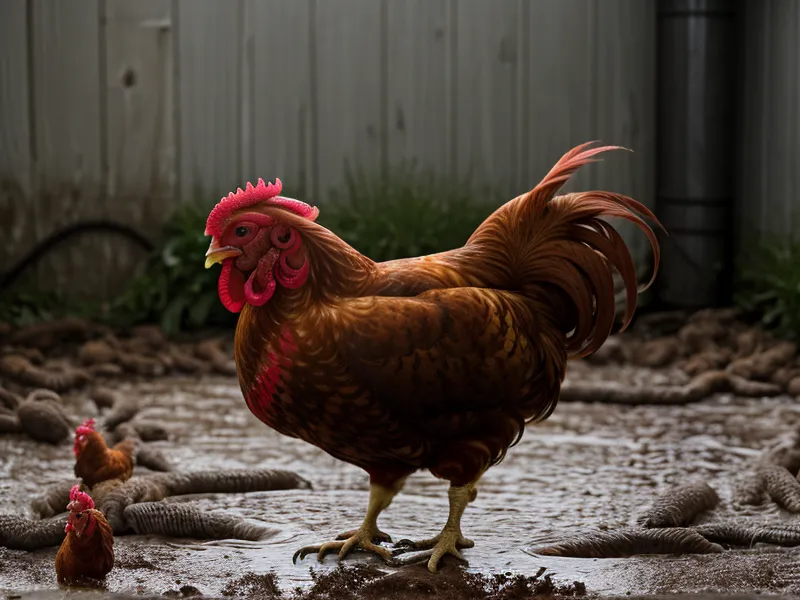
Chickens complicate everything, and Henny Penny, our most opinionated Rhode Island Red, complicates it more than most. Clear vinyl tubing seemed harmless when I ran it out to the coop waterer, right up until I remembered that a chicken will peck at anything that looks even slightly like a worm. She found it within a day and put a hole straight through it, and by the time I noticed, the barrel feeding that line had drained into the bedding and turned the coop into a small swamp.
Every exposed line out there gets a sleeve of cheap rigid pipe now, not for the water's sake but as armor against the flock. Winter makes the whole chicken-water problem worse anyway, since a frozen waterer is its own special kind of morning chore, and I've written separately about what's actually kept ours from icing over in Best Ways to Keep Chicken Water from Freezing in an Off-Grid Winter.
Redundancy: Three Backups Because Everything Eventually Fails
Between the muddy well surge, the algae, and the burst pipe, I stopped trusting any single part of this system to work on its own. That's why we run three layers now: the well as the primary source, the barrel rig for the garden and light backup, and a physical, no-electricity option in the kitchen drawer for the kind of day where the first two don't cooperate. We keep David's Shield on hand for exactly that scenario, and I wrote up the details in My Honest Review of David's Shield for Chemical Free Water Treatment.
Redundancy sounds like overkill until the day the power's out, the well pump won't kick on, and the only working tap is whatever you stored in advance. That happened during the same cold snap that split our mudroom pipe, and having a chemical-free option we already understood meant we weren't improvising water treatment in the middle of it. Three layers isn't paranoia on a five-acre property without a landlord to call; it's just standard practice now.
Four Weeks Into Trusting the Tap Again
Four weeks after we'd sorted out the last of these problems, new tank, barrels reworked, PEX running to the garden, and the SmartWaterBox steady in the shed, I filled a glass at the kitchen sink one morning before the dogs were even up, and it didn't occur to me to check it first. The drain looked clean, no orange tint creeping in from the pipes, and the water ran cold the whole time it took to fill the glass. That's a low bar to call a milestone, but out here, an unremarkable glass of water is basically an achievement.
If there's one thing I'd tell someone starting this same process, it's to build for the worst week you've had, not the average one. Every fix on this list came from something going wrong first, not from careful planning, and the system that finally works is really just a stack of responses to past failures. Start with a decent storage tank and a filtration setup you actually trust; I still can't recommend the SmartWaterBox enough for that piece specifically, and expect to rebuild at least one part of it after your first real season.
Ruthanne still thinks I overthink all of it, and she's probably right. But you're not failing at homesteading when something breaks; you're just collecting the data you need for the next fix, one muddy boot print at a time.