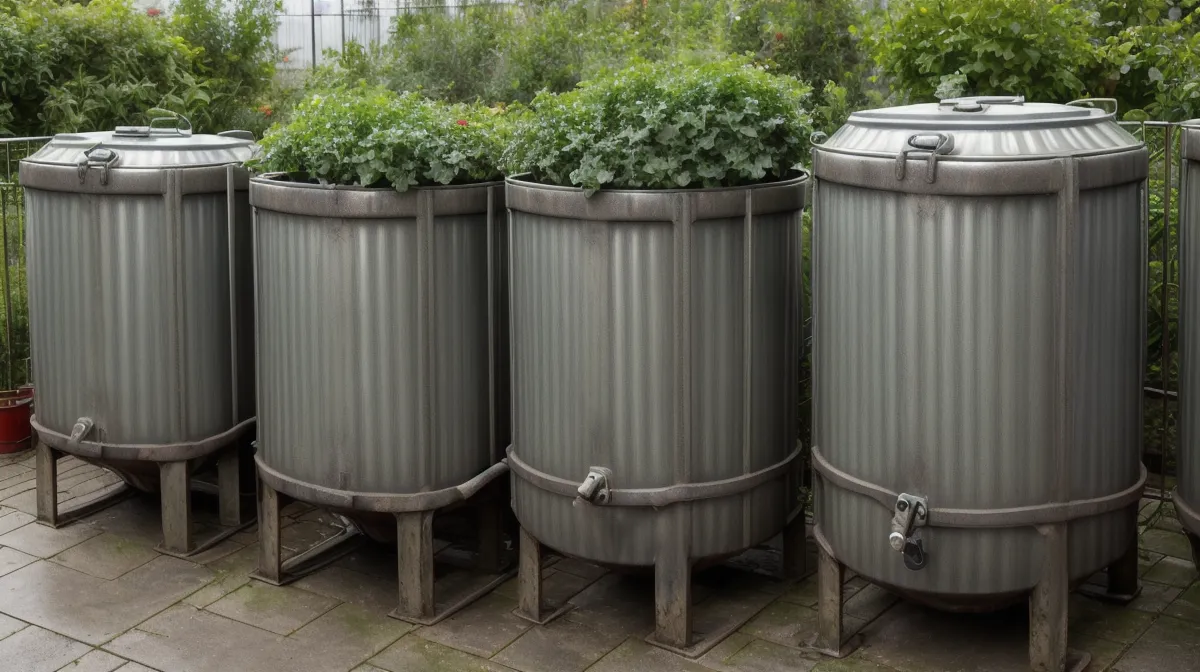
Two feet of height above the ground gives you less than 1 PSI at the tap — nowhere near enough to push water through a garden hose, let alone a drip line. That single number is the whole reason my first attempt at a gravity-fed IBC tote system for the garden failed before it ever watered a single tomato.
Well water management on this place has always come down to timing — pulling water when the well can spare it, storing it for when the garden actually needs it. Running the pump all afternoon to keep tomatoes alive through a heatwave is exactly the habit that burns out a pump early, and paying someone to replace one isn't a line item this homestead's budget has room for.
Sourcing an IBC Tote for a Garden System
An IBC tote is one of those industrial plastic cubes wrapped in a steel cage, built to hold roughly 275 gallons, and secondhand ones turn up on farm classifieds constantly because dairies and food processors cycle through them fast. I found mine from a guy selling a few off a barn along the McKenzie River Valley backroads, and the only real homework before buying is asking what was stored in it before — anything food-grade rinses out fine for irrigation water, anything that held chemicals is a hard pass no matter how good the price looks.
How Much Does a Full Tote Actually Weigh?
Water weighs about 8.34 pounds per gallon, so a full 275-gallon tote comes in around 2,300 pounds — the weight of a small car balanced on a footprint roughly four feet square. That's the number people skip past when they're excited about scoring a cheap tote off a farm board, and it's the number that matters most once the thing is actually full.
The Foundation Matters More Than the Tank
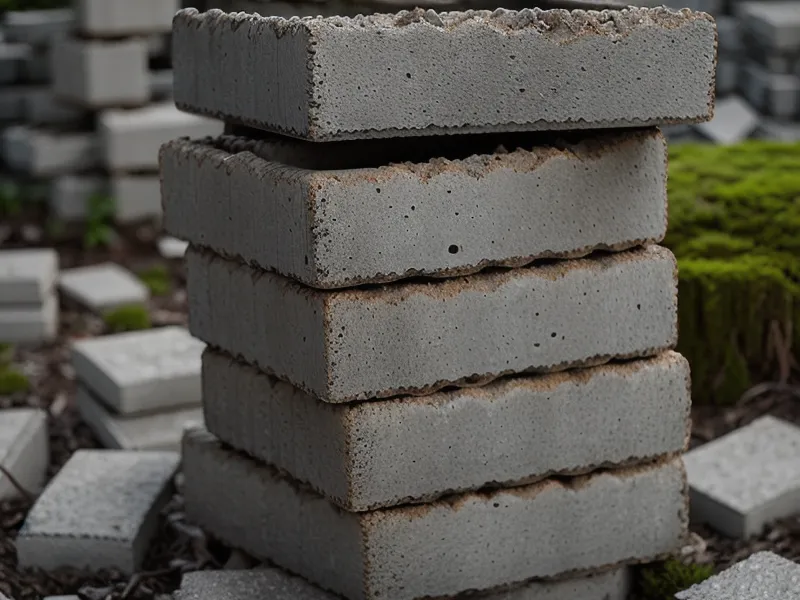
A stack of cinder blocks looks sturdy right up until 2,300 pounds is sitting on it unevenly, and a tote that leans on a soft or sloped base is a real hazard — for the tank, for anything nearby, and for whoever happens to be standing under it when it lets go. I'm not a structural engineer, and if you're setting one of these up, an actual professional opinion on the base is worth more than anything written here. My first attempt leaned enough at dusk that I tore it apart and started over on compacted gravel instead, wide and level enough that the load sits square across all four legs of the cage.
Why a Garden Hose Won't Move This Water
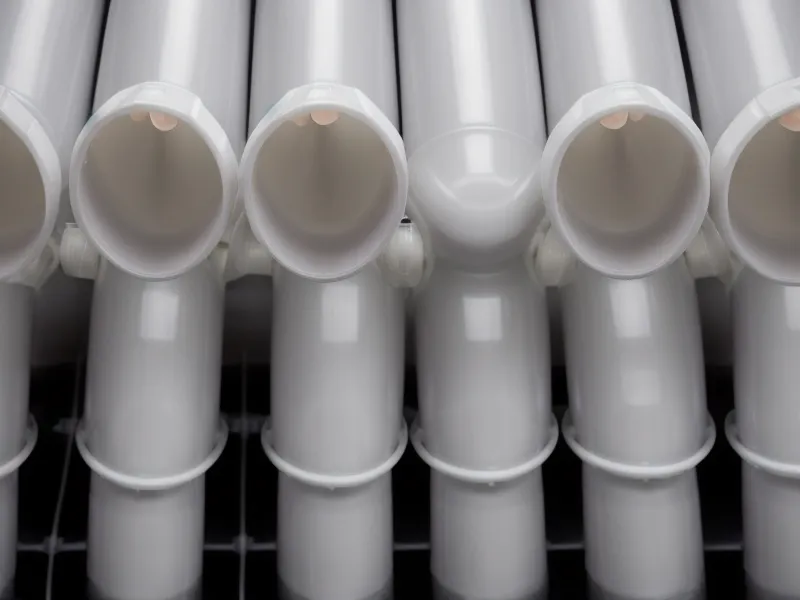
The math behind this is called static head pressure, and the rule is simple: every 2.31 feet you raise a tank above its outlet buys you roughly 1 more PSI. Standard garden hoses and sprinklers need somewhere between 40 and 60 PSI to work the way they're designed to, and my tote sat barely two feet off the ground. Why does two feet make that much difference? Because it works out to less than 1 PSI at the valve, and that's the physics equivalent of trying to water a garden through a coffee straw — technically something comes out, but NOTHING lands where it needs to. Getting a usable flow meant raising the platform considerably higher and swapping the skinny garden hose for a 1-inch Schedule 40 PVC manifold, since a wider pipe moves far more volume at low pressure than a hose ever will.
My friend June, who I met at a rural water co-op meeting and who trusts nothing that needs a battery, was the one who talked me out of cutting corners with a small transfer pump when I was debating platform height. Her logic won: raise it high enough and gravity does the entire job — no charger, no controller, nothing to fail when the power's out.
Keeping Stored Water Clean Enough to Use
Water quality is the part everyone skips past when they're excited about the size of the tank, and it's the part that bites hardest later. Piping gutters or a hose straight into an open tote without a first-flush diverter and a mesh pre-filter turns 275 gallons into a slow-motion compost of roof grit and bird droppings, and once sediment settles it clogs valves in a way that's miserable to clean out of a full tank. Painting the totes black mattered more than I expected, too — clear plastic lets in enough light to grow an impressive coat of algae inside, and nobody wants that running through a drip line.
Long before the totes, three old forty-gallon rain barrels under the porch eave were my first pass at gravity storage, and they taught the same lesson on a smaller, more forgivable scale. I'd already learned a version of it the hard way with drinking water — a countertop pitcher filter I bought early on and told myself was doing enough for our well water. It wasn't, and the gap between water that's fine for irrigation and water that's safe to drink is bigger than it looks from a farm supply catalog.
What a Working Gravity System Actually Looks Like on This Homestead
The pressure gauge for the well sits just inside the mudroom door, roughly at eye level, taped up there years ago out of habit more than necessity. It reminded me of when the well runs low and I used to check that gauge every couple of hours out of pure anxiety — these days it barely gets a glance, because the totes are doing the afternoon's work instead of the pump. One morning the needle read exactly what it had the evening before, no dip, nothing to chase, nothing to explain to anyone waiting on water. That's the actual payoff of a gravity-fed system: not a dramatic before-and-after, just a needle that stops moving.
Chickens found the drip emitters within a day, because chickens find everything eventually, and pecking at the line has turned into a strange little ritual that mists them mid-peck — not part of the design, but nobody's stopping them. Ruthanne, who tends her own flock with the same stubborn loyalty she saves for old grudges, wandered over once the lines were running and admitted, grudgingly, that the setup held up better than she'd bet on.
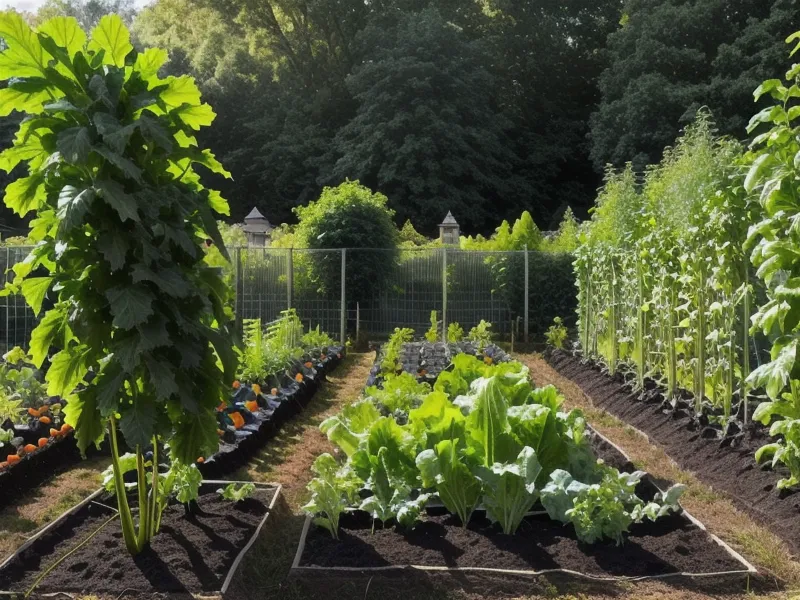
None of this needs to be pretty to work. It needs a base that won't lean, enough height above the outlet to move water without a pump, and a filter screen someone actually checks instead of forgets. Gravity is free. A burned-out well pump is not, and that trade-off is the entire reason to build one of these before the next heatwave, not during it.