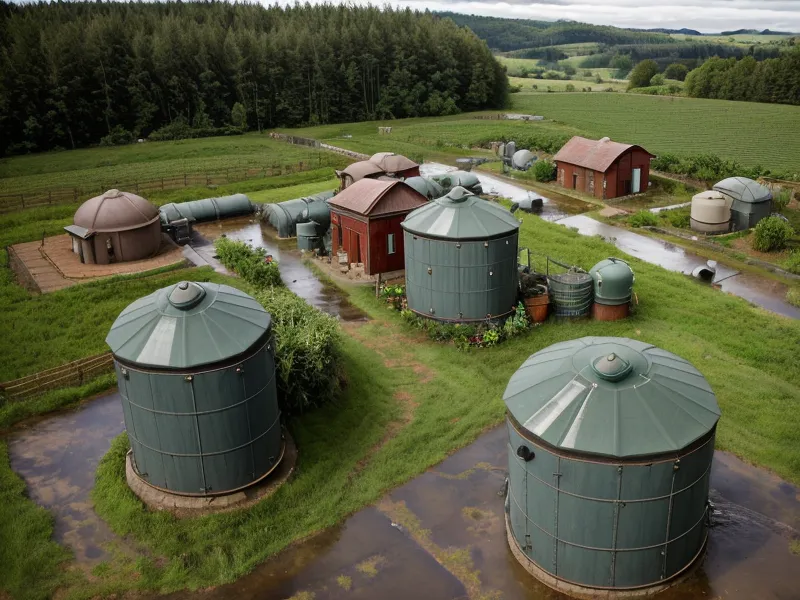
A case of gallon jugs from the grocery store and a hundred-gallon tower both get filed under "emergency water storage," and that shared label is doing real damage on off-grid homesteads. They solve two completely different problems, and mixing them up is how a lot of well-dependent properties get caught flat the moment the power blinks and the pump goes silent.
Update (September 2026): Aqua Tower is no longer available for purchase; this article is kept for reference. Our current alternative pick in this category is Water Freedom System.
Quick disclosure before anything else: this post contains affiliate links, and if you click through and buy something, I earn a small commission at no extra cost to you. I only recommend gear that's actually earned a spot on our five acres in the Douglas County foothills, gear I haven't managed to break yet. I moved here from a Portland apartment knowing nothing about how an aquifer actually works, so take my opinions as hard-won rather than expert.

The Real Myth Behind Emergency Water Storage
Most advice about backup water assumes you're prepping for one bad week — an ice storm that knocks the power out, a boil order, a few dusty jugs pulled from the pantry until the grid comes back. That mindset makes sense for someone in town with a grocery store two miles away. It makes a lot less sense once your only tap runs through a pump that needs electricity to pull water out of the ground at all.
On our place, "emergency" isn't a once-a-decade scenario, it's a Tuesday. A friend of mine who trains for trail marathons on the Ridgeline Trail above Eugene keeps two jugs in her trunk and calls her water plan finished, and honestly, that's plenty for how she lives. Ours needed to hold enough to run a kitchen, two dogs, and a flock of chickens through however long the pump stays quiet. How do you size a tank for that? Not by guessing.
How Much Backup Water Does a Well-Dependent Homestead Actually Need?
The rule of thumb that gets repeated everywhere is about one gallon of potable water per person per day, just for drinking and basic hygiene. Add two dogs who drink more than you'd think, and the number climbs faster than most people plan for. None of that accounts for how fast your well can actually recover once you start pulling from storage instead of the tap, which is its own separate question from how much you're storing in the first place.
Pressure matters just as much as volume — a full tank does you no good if your pressure tank can't push the water where you need it, and that's a whole separate rabbit hole I won't get into here. Before any of this mattered to me, I sent a water sample to the Yamhill County OSU Extension Office just to know what I was actually dealing with, and I'd recommend that step to anyone before they buy a single gallon of storage.
Two Different Kinds of Backup Water
Not every gallon on this property is meant for drinking. My rainwater collection guide covers the barrels that keep the vegetable garden alive, and that water is fantastic for squash and terrible for coffee — birds sit on that roof all day. Our actual well water isn't much cleaner-looking after it's sat a while, either; a run of hard well water leaves a pale, chalky crust creeping up the inside of the kettle, which is exactly why sediment filtration is its own topic worth reading up on separately.
Sanitizing standing water is a different animal too. If you've ever had to shock a well after a flood, you already know that chlorinating a whole system is not a five-minute chore, and it's not something I'm covering in a post about storage tanks.
Going Vertical Instead of Wide
I looked at plenty of heavy-duty options before landing on a tower. The SmartWaterBox is built for people with room to spare and a bigger budget — remote monitoring, serious capacity, the works. David's Shield leans hard into disinfection, which matters if you're worried about what's living in stored water after months of sitting, though the actual UV disinfection process is a deeper topic than I can do justice to here. Neither one solved my actual problem, which was square footage.
Then there's the Aqua Tower, which solves space by going up instead of out — it holds a full 100 gallons in roughly the footprint of a floor lamp. Height also means gravity does some of the work pushing water toward the spigot, the same basic idea behind the gravity-fed distribution systems people build for barns and greenhouses, just in a much smaller package.
Respect the Weight Before You Trust the Floor
I picked the tower over the budget-friendly Dark Reset mainly because of stability. A tall, narrow tank needs to feel solid, not wobbly, and I had real doubts about how the Dark Reset's plastic would hold up over time under that kind of vertical load.
Water itself is heavier than most people expect — a gallon of potable water weighs about 8.34 pounds, so a full 100-gallon tower comes in well over 800 pounds sitting in one concentrated spot. That's NOT a number you can eyeball your way around. Before you set anything that heavy on a raised floor, get someone who actually understands load limits to look at the spot first, whether that's a contractor or just a genuinely handy friend.

None of this is complicated once you know to ask the question, but it's exactly the kind of detail that gets skipped in glossy product photos. My Survival Water Guide goes into more of what I wish someone had told me before we started building out our water setup, if you want the fuller version.
Weighing the Aqua Tower Against the Rest of the Lineup
For a straightforward, cash-strapped setup, the Dark Reset still earns its budget-pick reputation — it does the basic job without frills. For a full-scale system with room to spare, the SmartWaterBox is hard to beat. But on a hobby farm where the chickens investigate anything new left within pecking distance, the tower's sealed, self-contained shape won something the other two couldn't touch: it just disappears into a corner and stays out of trouble.
What a Boring Power Outage Actually Proved
Before settling on any of this, I tried the cheap version first — setting phone alarms for three checks a day so I'd walk out and eyeball the tank level myself. That held up for about as long as most resolutions do. A chicken chore or a sink full of dishes would eat the alarm, and I'd realize hours later I'd forgotten to look at all.
These days a basic tank monitor handles that job, and the difference showed up on an ordinary morning — checking the level from bed on my phone and watching it barely move while a full load of laundry ran downstairs, no trip to the mudroom required. That's the whole feature in one sentence, and I won't pretend there's more nuance to add without turning this into a review of a completely different gadget.
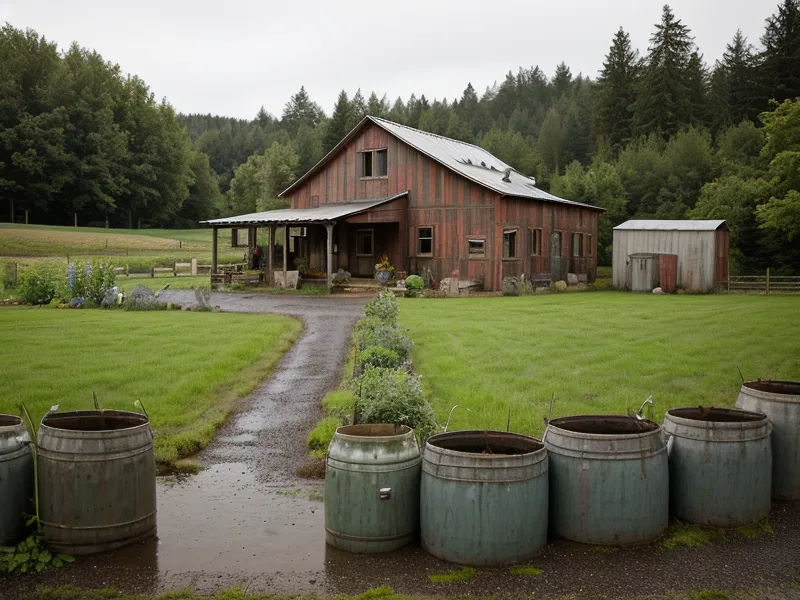
The actual test came during a late-spring outage — a tree limb three miles off took out power for the whole ridge, which usually means no pump and no water at all. Instead, I walked to the mudroom, turned the spigot on the Aqua Tower, and filled a pitcher for coffee like it was any other morning. If power outages specifically are what worry you, here's how I handle grid failures in more detail.
That's really the whole pitch — not a miracle, not a lifestyle statement, just a boring, unremarkable non-event where the tap still worked. If a shelf of gallon jugs is currently your entire plan, it's worth looking at something built to actually carry the load. You can check out the Aqua Tower here and decide for yourself whether the vertical approach solves your specific version of this problem.