The needle on my mudroom pressure gauge sits at the exact same mark it did before I went out to feed the chickens. No drop in our well water pressure, no hiss, nothing.
Update (September 2026): Aqua Tower is no longer available for purchase; this article is kept for reference. Our current alternative pick in this category is Water Freedom System.
That's the whole reason I have opinions about backup water systems worth sharing now — because ours have failed in enough different ways that I've stopped being precious about brand loyalty. Quick disclosure before we get into it: some of the links below are affiliate links, and if you buy through them I earn a small commission at no extra cost to you. I only recommend homesteading gear that's actually earned a spot in our mudroom, well water systems included, and this is the honest version, not the sponsored-sounding one.
Off-grid living sounds romantic until the well pump quits mid-shower, and every homesteader I know has a version of that moment somewhere in their first year here. What follows isn't a chemistry lecture on well water — it's the plain answers to the questions people actually ask me about backup water systems, the gear that held up, and the stuff that flat-out didn't.
Do I Need a Whole-House Water System, or Just a Backup?
People ask me this constantly, usually right after their own pump has already died once. The honest answer depends on how much risk you can stomach — a whole-house system filters everything running through your pipes, while a backup is just there for the days the main system can't be trusted.
A simple at-home water test, not a full lab work-up, just enough to flag bacteria or nitrates, tells you more before you spend a dime than any five-star review ever will. Once you actually know what's in the water, the shopping part gets a lot less confusing.
I'm not a water engineer, and I'm not going to pretend otherwise here — everything in this piece comes from running our own well systems ourselves, and anything that touches your actual health still deserves a call to a real water professional, not a blog post. It also helped enormously once I finally sorted out how I fixed low water pressure from my well — turned out the pressure tank was the actual problem both times I panicked about it, not the filter I kept blaming.
The SmartWaterBox Earns Its Spot as the Hero Pick
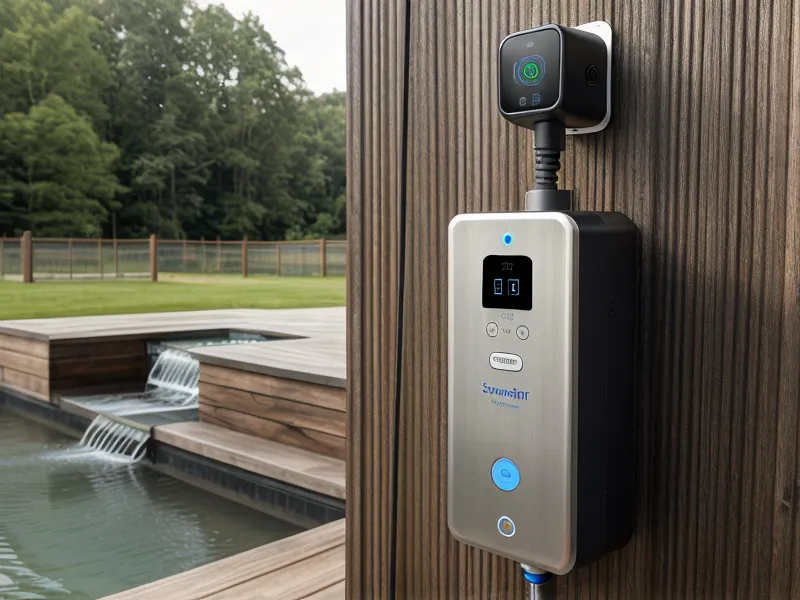
This is the piece of gear that actually changed how I sleep at night now.
The SmartWaterBox watches your well's behavior and flags trouble before a pump gets pushed hard enough to burn out, which is exactly the kind of expensive mistake I'd rather read about than live through twice. Tank-level monitoring is the feature people ask about most, and it's worth having even if the app is the only part you ever touch.
My mudroom has basically become the control room for the whole property, gauges taped up at eye level, a scribbled map of every valve and pipe run tacked over the utility sink, the sort of thing that would look unhinged to anyone who didn't live here.
There's a particular thunk the check valve makes when it seats after a long pull of water, and after enough seasons out here, that sound has gone from alarming to oddly comforting.
I wrote up the longer, messier version of this as a full review of how the SmartWaterBox saved my well, if you want the whole story.
The Reality Check here is that it does take some initial fussing before it stops flagging every normal thing as an emergency. Mine kept insisting we had a leak the first few days, which just meant the sprinkler and the dogs' tub were both running at once.
Gravity Filters Don't Need Electricity: That's the Whole Point
Power outages are where gravity filters earn their keep, since nothing about them depends on a working outlet or an app.
The Aqua Tower relies on gravity-fed distribution. Water dropping from the top chamber through the filter into the clean one below, so there's no pump and nothing to troubleshoot in the dark.
Sediment filtration is the first job any gravity system has to handle well, since both well water and rainwater carry grit that clogs anything downstream if it isn't caught early.
Rain collection is the other half of this setup for us. Three forty-gallon blue barrels still catch runoff under the porch eave, the original rain rig and still the one we actually use, and that water runs through the Aqua Tower before it touches a glass or a teakettle.
It sits in the mudroom, tall enough that I need a step stool to fill it, which is its own small indignity every single time.
That sulfur smell phase is when this unit earned its keep hardest. A stretch when we had a sulfur smell in the well water that made the whole kitchen smell like a hard-boiled egg factory, and the Aqua Tower was the only thing standing between us and drinking rotten-egg tea.

What About Well Water After a Big Storm?
Storm runoff changes everything downstream, especially when some of that water comes off a roof chickens treat as their personal perch. Brenda, the hen currently obsessed with the collection gutter, is exactly why we never trust rainwater straight off the roof, storm or not.
The David's Shield is built for exactly that scenario. It targets sediment, odor, and whatever else rode down with the rain, plus it runs a UV disinfection stage on top of the filtering, which is a light doing the work rather than a chemical, and a bigger topic than I can do justice to here.
Some people follow storm cleanup with a full well shock chlorination treatment, which is a bigger, more careful project that deserves its own dedicated write-up rather than a rushed paragraph tacked onto this one.
My friend Priscilla, who's got her own cursed plumbing on twenty acres near Roseburg, texted a photo of her frozen spigot last winter and asked which single filter she'd want if she could only buy one for storm water. This is the one I told her to get.
It feels built for actual farm use rather than a bathroom countertop. The tradeoff is that it's the priciest option on this whole list, and you do have to stay on top of changing the filter. I let it slide once and watched the flow rate slow down to something closer to a drip than a stream.
The Budget Pick for a Weekend Emergency
Money runs thin fast out here, between fence repairs and vet bills that show up out of nowhere.
The Dark Reset is the answer for anyone who needs something that works without needing to think about it much. Compact, no-frills, and cheap enough not to agonize over.
We keep one in the truck's go bag and a second out in the barn, since redundancy costs less than another emergency vet visit ever does.
It won't run a whole house or handle a load of laundry, but it'll keep two thirsty dogs and one stressed homesteader hydrated until whatever's actually broken gets fixed. The flow rate is slow enough that filling a full bucket turns into its own small chore, but for a single glass of water on a bad day, it does the job without complaint.
Stacking These Four Systems Together
None of these four does everything, and that's sort of the whole point of running more than one at a time.
Rating them against each other happens on what I privately call the Frustration Scale. A 1 means easy enough to set up half-asleep, a 10 means you're ready to pack up and move back to city plumbing.
(Note: Frustration Scale 1 is 'Easy Peasy', 10 is 'I'm Moving Back to Portland')
Whether Your Well Actually Recovers in Time
Corinne, a reader a couple of time zones east of me, is the person who keeps asking me the question this section is really about, and her well runs shallower than mine does, which makes her anxiety about running it dry its own particular flavor.
The question she keeps circling back to is whether a well recovers fast enough between heavy draws, and the honest answer is that recovery rate depends on your specific well and aquifer, not on anything a blog post can promise anybody.
Watching the pattern over time, not guessing, is what actually settles the nerves, which is the whole reason the SmartWaterBox earns its keep here, tracking how fast our well bounces back after the garden, the animals, and a full load of laundry all pull from it in the same afternoon.
The first winter here, I wrapped every exposed line in old bath towels instead of buying proper foam pipe insulation, telling myself cotton was better than nothing. It froze solid by the next hard freeze anyway, and I spent an ugly afternoon with a hair dryer learning that towels are for drying dogs, not pipes.
Start Here If You're Overwhelmed
Overwhelmed is the normal state for anyone new to rural water systems, so here's the short version if you don't want to read back through all of this twice.
Start with the SmartWaterBox if the budget allows it at all, since long-term well health matters more than any single filter you'll buy this year.
Go for the Aqua Tower first if you just want something dependable for the day the power drops, no electrician required, no app to learn.
Homesteading was never going to be about getting everything right on the first try. It's about having enough backup in place that one bad week doesn't turn into a full-blown crisis.
Right now, Brenda is clucking at the pressure tank again, which is never a good sign, so that's where I'm headed next.
Ready to stop worrying about your well? Check out the SmartWaterBox here and give yourself one less thing to panic about at 3 AM!