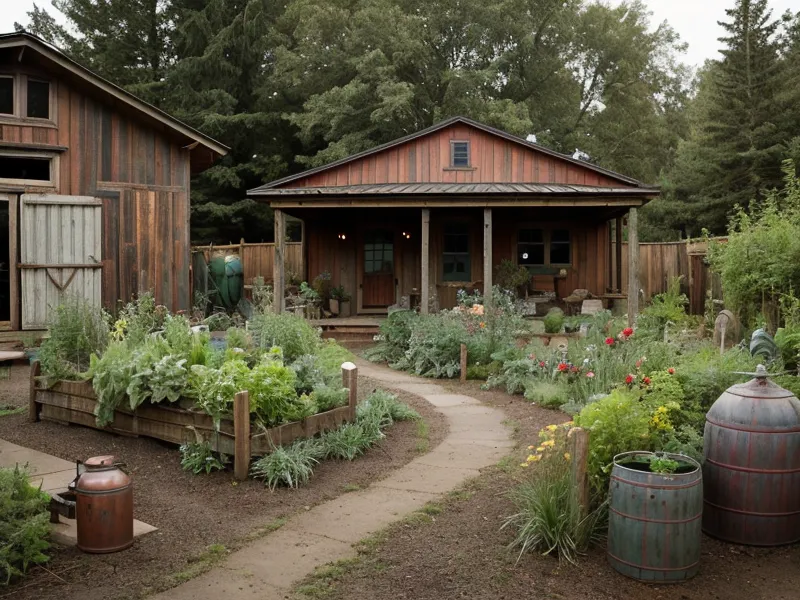
Why Pasta Water Started Feeling Like a Waste
How much water do you think disappears down a kitchen drain before breakfast is even over? I never gave it a single thought back in my Portland apartment, where a faucet was just a faucet — turn it, and the infinite void provides. Move onto a five-acre hobby farm in the Douglas County foothills of southwestern Oregon and that math changes fast. Standing at the sink one night, tilting a pot of hot pasta water toward the drain, I felt an honestly ridiculous stab of guilt about where all of it was headed. That stab of guilt is pretty much the whole reason this DIY greywater project exists, and why water security has quietly become part of daily Oregon homesteading life for me, right up there with locking the coop before dark.
Our first summer out here, we ran the well pump bone dry trying to water the lawn like suburbanites — an experience that turned into The Honest Survival Water Guide: What I Learned After Running My Well Dry. Nothing prepares you for the sound of a well pump sucking air. It's the sound of your bank account draining right alongside your sanity. So when I started noticing how much perfectly good water — dish rinse, hand-washing, one very sad pot of pasta — was heading straight into the septic tank for absolutely no reason, it started bugging me in a way I couldn't shake.
Building something to fix that felt like the obvious next step, though I want to be clear about what I actually built. Not a fancy, engineered, five-thousand-dollar system — I'm not an engineer, and I use zip ties as a legitimate structural component more often than I'd like to admit. I wanted something cheap, something simple, and something that wouldn't require a permit or a professional to install.
Forty-Seven Dollars and a Toddler's Treasure Map
A trip to the local hardware store came first, drawing in hand — and that drawing looked exactly like a toddler's attempt at a treasure map. Half the parts on the shelf didn't have names I recognized. I spent something like forty-five minutes in the plumbing aisle deciding whether a Y-junction beat a T-junction, which, spoiler, it usually does if you actually want water to flow instead of fight itself.
Total damage: forty-seven dollars. Twelve for pipe, fifteen for fittings, twenty for two bags of wood chips — and that's before I got home and realized I'd forgotten the purple primer. Gluing PVC without primer, for the record, just gets you an extremely expensive slip-and-slide. A friend of mine, the one who spends weekends grinding out trail-marathon training on the Ridgeline Trail above Eugene, told me I was insane for caring this much about a sink drain. They're probably not wrong.
What I was actually trying to divert is called Type 1 greywater — sink water, basically, nothing that's touched grease or the toilet. Oregon has its own rules about how much of that you're allowed to send straight into the yard before you need a permit, and I made sure to stay well under the line without memorizing every clause of it. Between kitchen prep and hand-washing, I was tossing somewhere around five gallons a day, which made the whole project feel less like a hobby and more like an obvious fix.
Crawling Under the Sink for a Little More Water Security
There's a specific kind of silence that happens lying on your back in a mudroom, head jammed under a sink, holding a dull hacksaw — the silence of knowing there's no landlord to call if this goes sideways. Mess it up, and we go without a kitchen sink until a plumber agrees to drive out here on a weekend. My partner stayed in the next room mostly because my swearing was upsetting the dogs, who take any raised voice personally.
Cutting into your own plumbing is genuinely terrifying the first time. Old pipes didn't want to move, a diversion valve seemed determined to point the wrong way, and every time I set my wet work gloves down on the edge of the utility sink they made this flat, wet slap that somehow got more irritating with every hour. By the time the pipe was poking through the exterior wall, I was covered in dust, dried glue, and an amount of pride that probably wasn't earned yet.
Diverting five gallons a day, I figured, would work out to about thirty-five gallons a week — not much when you say it fast, but on a well during a dry spell, thirty-five gallons is a lifeline for a thirsty vegetable bed. Over the eight weeks I planned to track it, that penciled out to roughly two hundred and eighty gallons total, redirected from the septic tank into actual soil instead.
The Fitting That Popped and What It Taught Me
Everything ran fine for the first few weeks, long enough that I started feeling like a homesteading queen who'd solved something real. Then, doing dishes on an ordinary evening, I heard a sound I can only describe as a thwump-gurgle, followed by the specific cold horror of feeling the kitchen rug go squelchy under my sock.
A loose fitting had popped clean off because I hadn't seated the gasket properly — I'd spent so much energy on the glamorous outside half of the project that I got lazy about the boring inside half. The mudroom turned into a genuine, ankle-deep LAKE. The dogs, naturally, thought this was the best afternoon of their lives and started drinking dishwater straight off the floor.
Giving up and going back to the old way was tempting for about ten minutes. Instead I spent the rest of that afternoon cleaning up the mess, finally using the purple primer I'd gone back to buy, and re-seating every connection with a level of patience I usually reserve for coaxing a sick hen back onto her feet. It taught me that homesteading isn't really about expertise — it's about being willing to fix your own mess the moment your socks get wet.
Do You Really Need to Filter Greywater?
No, and that surprised me more than almost anything else in this whole project. People obsess over filtering greywater until it looks like bottled water before it ever touches dirt, but the soil itself is the filter, and stripping out the organic matter beforehand can do more harm than good — it's the very stuff your soil needs to break contaminants down naturally.
My actual filter is a mulch basin — a shallow trench packed with wood chips at the end of the pipe — and the chips do the real work, hosting bacteria and fungi that break down bits of food or biodegradable soap before the water ever reaches the soil underneath. A mechanical filter would've clogged within days and thrown away exactly the gunk the ground actually wants. The only real rule is speed: greywater has to get used within about a day, or it turns anaerobic and starts smelling like something died in a swamp.
None of this happens in isolation, either. I still don't have a great read on our well's actual recovery rate — how fast it recharges after a long draw — so I try to take pressure off it anywhere I can. I test the well water itself every so often, though that's an entirely different ritual from anything greywater-related, usually involving a sample bottle and a drive to the Yamhill County OSU Extension Office. Sediment filtration on the washing machine line is its own separate fight that has nothing to do with the mulch basin outside my kitchen wall, and somewhere in the barn is a UV disinfection setup I still haven't worked up the nerve to install. I also haven't fully forgiven myself for the first time I had to shock the well with bleach after a flood — that's a story for another day, not this one.
This is a different animal from the rain barrels, which I still fill and drain by hand thanks to The $42 Gravity Hack: Why I Finally Stopped Hauling Buckets to the Back Garden — that system still works fine, but rainwater can sit for a while. Greywater can't.
Before I trusted any gauge, my system for knowing if the rain barrels were full was setting phone alarms to check the tank level manually three times a day — trudge outside, lift the lid, mutter to myself, repeat. It never once caught a barrel before it overflowed, mostly because I kept sleeping through the six a.m. alarm. Whatever its flaws, the gauge in the mudroom at least doesn't require me to be conscious at dawn.
Squash Vines, Chickens, and a Steady Pressure Gauge
By early April the weather finally broke, and I planted Blue Hubbard squash starts right around the edges of the mulch basin. Within a week they weren't just growing, they were erupting — deep green, fuzzy vines reaching across the wood chips like they already knew exactly where the water was.
Checking the gauge on our pressure tank each morning had folded quietly into my coffee routine by week six, and one particular morning the needle sat exactly where I'd left it the night before — no drop at all, even after a full sink of dishes ran out through the new pipe instead of through the pump. The project stopped feeling like an experiment right about then and started feeling like actual infrastructure.
Even the chickens noticed, hanging around the basin's edges scratching for bugs drawn to the moisture — I've made peace with shooing them off before they dig up a squash root for the tenth time this month.
The whole project was a mess by any objective measure — one flood, permanently dirt-stained fingernails, a solid ten minutes of despair over a stubborn PVC elbow. But the actual lesson had nothing to do with pipes: most of what wears out a well isn't drought, it's habit, and rerouting a few gallons of dishwater costs less than any pump repair ever will. That's the math I wish I'd understood back when we first moved out here, watching those squash vines thrive on what used to be nothing but wasted pasta water.