
A backpacking water filter and a whole-house well water system have almost nothing in common — except that both involve water — and mixing the two up is how I burned through money we didn't have when we first started homesteading out here. Here's the myth I believed with my whole chest when we left our Portland apartment for five acres of Oregon dirt: enough gadgets equal water security. They don't. Homesteading water is infrastructure, not inventory, and the sooner a new rural owner accepts that, the less money they'll waste figuring it out the hard way.
Update (September 2026): Aqua Tower is no longer available for purchase; this article is kept for reference. Our current alternative pick in this category is Water Freedom System.
Quick disclosure before we go any further: a few of the links below are affiliate links, and if you buy through one I earn a small commission at no extra cost to you. I only mention gear that has actually lived on this land — tested, dragged through mud, occasionally sent back. None of this replaces a licensed well driller, and if anything on your property looks or smells wrong, get your water tested before you take my word for anything.
Every new rural buyer falls for some version of the survival-gear trap. The catalogs sell filtration straws and pocket purifiers built for three days in the backcountry, not thirty years on a working homestead. That gear has a place — just not the place people think it does.
The Gear-First Myth Nearly Bankrupted My Water System
This is the myth: buy enough small, portable filtration and you've solved your water problem. I fell for it hard. My first purchase after we moved was a countertop pitcher filter, and I convinced myself it was enough for well water — it wasn't, and I found that out the slow way, watching the sediment chew through it faster than I could keep up with replacements.
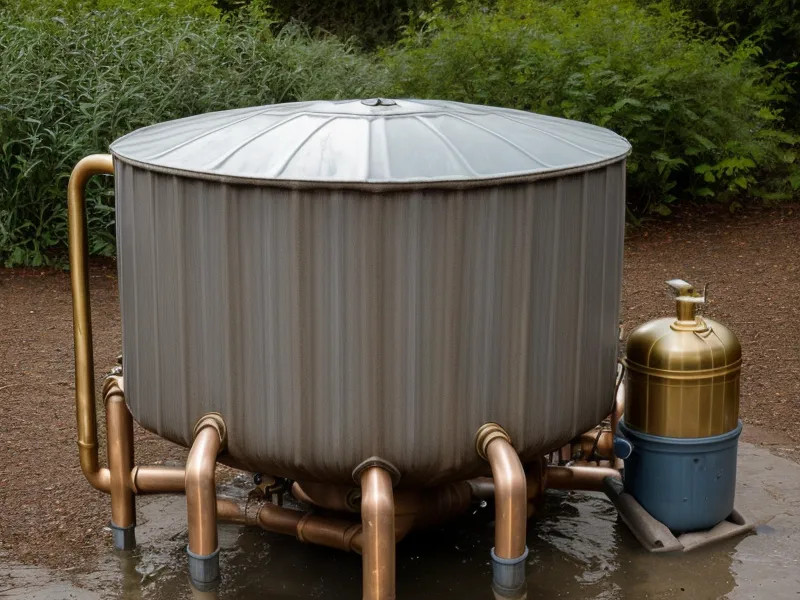
What actually works is capacity — storage that holds enough weight and height to create real pressure without a pump doing all the work. The Aqua Tower solves that half of the equation: it's less gadget than physics, water finding its own way downhill once you give it enough height to fall from.
That's different from a pressure tank, which does its own quiet job keeping water flowing evenly between pump cycles, and different again from full gravity-fed distribution, which skips the pump question almost entirely once the tank sits high enough above the house.
Our two dogs figured this out before I did, honestly. They'll drink from a mud puddle by the well-head path before they'll touch the bowl I just filled indoors, which tells you something about how differently animals judge water than we do.
Is Your Well Water Actually Bottomless? (Mine Wasn't.)
Wells have limits, and mine taught me that lesson with a dry pump one August afternoon — nothing but a hollow wheeze from the pipes and a very unimpressed hen standing next to me. A well's recovery rate is exactly what it sounds like: how fast the ground refills the hole after you draw from it, and most transplants from the city have never had a reason to think about a number like that before.
Guessing at well recovery rates cost us more in pump repairs than I'd like to admit, plus a week of hauling water in jugs from a neighbor a couple of turns down the McKenzie River Valley backroads, who still has better manners about it than I deserve. That neighbor is Ruthanne Dalby, who showed up our first week with a bottle of Willamette Valley red and opinions about our fence posts already formed, and who has never once let me forget the summer the pump ran dry.
The mudroom stopped being just a mudroom around the time I hung a row of pressure gauges at eye level and clipped a hand-inked sketch of every pipe, valve, and the well head above the utility sink, so I stop guessing and start checking. The gadget that actually earns its spot there is the SmartWaterBox, which works like a fuel gauge for the whole property instead of a mystery box you have to interpret.
Before that, I was lowering a weighted string down a pipe to guess how much water we had left, which is exactly as scientific as it sounds. Tank-level monitoring isn't about the panic anymore — it's the difference between finding out at a decent hour and finding out in the dark, and I've written the longer, messier version of that shift if you want it: 2 AM tank check epiphany here.
Clear water is not the same as safe water — that's its own myth, and a dangerous one if you're drinking straight from a well. Water testing is the only real way to know what's actually in there, and after a hard rain, UV disinfection is the piece most new well owners forget entirely, because nothing about clear water looks contaminated.
One Filter Cannot Win a Sediment War
Portland water was soft and agreeable. Ours arrives full of iron and silt, the color of rust some mornings, and treating it like city water was my second expensive mistake. I bought a single-stage, ultra-fine filter that looked impressive and lasted twelve days before Oregon grit ground it down to nothing.
What actually holds up is staged filtration — a chunky pre-filter first to catch the sand and pebbles, then something finer, and only at the end anything expensive. I wrote the long version of that lesson after I got tired of a washing machine that smelled like a pond: best sediment filters for well water.

What Happens When the Power Grid Quits
An ice storm took our power out for four days this past winter, and if your entire water system depends on one electric pump, that outage turns into a much bigger problem than cold coffee. We ended up dipping buckets into the rain barrels just to flush toilets, which is a fast way to feel every convenience you took for granted.
That outage is why I keep a Dark Reset kit by the mudroom door now — the low-tech answer for when the grid dies but we still need water that's actually safe to drink, no generator required.
It's also why I stopped treating rainwater like a hobby-garden afterthought and started counting it as real off-grid water capacity. Three forty-gallon blue barrels stacked under our porch eave were the entire original rig, and they're still running today, generator or no generator. If you want the messier build story, I documented how I built my rainwater collection system, zip ties and all.
Shock chlorination sounds like something you do to a swimming pool, and treating it that casually is exactly how people damage a well — it's a slower, more deliberate process than dumping in bleach and hoping for the best.
Build for Mud, Not Pinterest
Every rural water photo on the internet shows cedar cladding and gravel raked by hand. Our main tank currently leans a few degrees because a mole tunneled under one side of it last month, and it's dusted in feathers half the year. Functional beats photogenic every single time out here.
June Abernethy, a fellow homesteader I met through a local rural water co-op meeting, has more rural living miles under her than we do and trusts gravity and hand tools over anything that needs a battery. She still emails me pointed questions about whatever new gadget I mention, mostly some version of "what happens when the battery dies." She's not wrong to ask — a monitor that needs power is one more thing that can fail exactly when the power already has.
None of this fixes the path down to the well head, which turns to soup every November no matter what gear sits in the mudroom. You'll still overspend on something you didn't need. You'll still get a judgmental look from at least one animal on the property. But understanding your own system beats owning the most gear every time, and that's the whole correction I wish someone had handed me on day one instead of a catalog.
If you're standing on new property feeling behind already, here's the honest short list I'd hand my past self. Get a tank monitor first, because it kills the not-knowing panic before it starts — the SmartWaterBox is the one living in our mudroom. Get a low-tech power backup second, for the days the grid quits without warning — ours is the Dark Reset. And get real storage capacity third, because gravity is the most patient, reliable pump you will ever own — ours came from the Aqua Tower.
Before the next Oregon winter rolls in, it's worth checking how your whole system handles freezing pipes too — I put together a lazy winterizing checklist after learning that one the hard way as well.
Don't wait for a drought or a dry pump to find out how little you actually know about your own water system. Get a way to monitor your levels before you need one, keep a backup plan by the door, and — if you only do one thing off this whole list — getting a SmartWaterBox is the single change that made me feel like I run this place instead of the other way around.