The bleach jug is already half-empty by the time I remember I never actually tested our well water before pouring it straight down the casing. That's what happens once a sulfur smell gets bad enough — you stop thinking and start dumping chemicals down a hole in the ground because a forum told you to. Spoiler: it did not go the way that forum post promised, and it took a while before we sorted out real well water maintenance instead of a one-time chemical dump.
Quick disclosure before the swamp-gas details: this post has a couple of affiliate links in it, and if you buy through them I get a small commission at no extra cost to you. I only mention gear that's actually been dragged out to our five-acre patch of Oregon mud and tested against real well water, not stuff I read about in a catalog somewhere. And to be clear, I'm not a water treatment professional — just someone who traded a Portland apartment for five acres of homesteading DIY chaos and is now weirdly invested in what comes out of a hole in the yard. If your water starts doing something genuinely alarming, please call someone with an actual license.
The Smell That Wasn't a Dead Rat in the Walls
Turns out that rotten-egg smell almost always means hydrogen sulfide gas, not a dead animal somewhere in the plumbing — I checked, because chickens have a way of ending up in strange places, but not that strange. It's produced by sulfur bacteria that thrive in low-oxygen pockets, the kind you find at the bottom of a well or inside a water heater that hasn't been flushed in ages. If the smell only shows up in hot water, the culprit is probably your water heater's anode rod doing something weird. If it's in the cold water too, it's coming straight from the ground, and no amount of ignoring it makes that go away.
Sulfur bacteria love low-oxygen environments, which is exactly what you get at the bottom of a well or inside a tank that never gets flushed. Depth matters here too — deeper wells have less oxygen, so the bacteria down there are having a great time, which is part of why two neighboring properties can have wildly different water depending on how far down their well actually goes. If you're brand new to well ownership and want to know what other landmines might be waiting, I put together a rundown of Common Well Water Problems for People Moving from the City that covers the rest of the surprises.
None of that matters much, though, if you don't know what's actually in your water to begin with. The lesson that would have saved me the whole orange-water disaster later is simple: test before you treat, not after. I go through exactly how in How to Test Well Water Quality Without Hiring a Professional Lab — you don't need a fancy lab contract to get a basic read on what you're dealing with.
Why Did Shocking the Well Make Things Worse?
Like any homesteading DIY project undertaken with more confidence than knowledge, my first move was "old timer" internet advice: shock chlorination. A friend of mine, who spends most weekends chasing a disc around the fairways at Milo McIver State Park, swore by it because his family used it for years on their own well.
So I pulled the well cap, poured in the bleach, and waited, wrench in hand, feeling completely out of my depth. The house smelled like a public pool for two days. For a little while, the egg smell actually disappeared, and I felt like a genius, like I'd single-handedly solved rural water treatment. Then it came back. And it brought company.
Nobody warns you that shocking a well can wake up a dormant iron bacteria bloom — those bacteria apparently treat the aftermath of a bleach treatment like an open buffet, and what they leave behind is a slimy orange mess that stains everything and smells worse than what you started with. If you've ended up with that gunk clogging your filter housings after a shock treatment gone sideways, that cleanup is its own project, and I wrote up the whole process in How to Clean Black Slime from Well Water Filter Housings Safely.
Two Sulfur Smell Fixes: Bleach vs. a Filter That Never Quits
Here's the actual comparison, stripped of forum mysticism. Shock chlorination is a one-time chemical dump: cheap, fast, and it treats the well like a light switch you flip once and forget. A continuous oxidation filter does the opposite: it treats the water every time it flows through your pipes, converting sulfur gas into a solid it can physically strain out instead of just poisoning whatever bacteria made it. One is a shortcut. The other is infrastructure. And no, this isn't a job for UV disinfection either; sulfur is a gas problem, not a pathogen problem, and that's a fix for something else entirely.
I looked at a couple of options before landing on one. The SmartWaterBox handles general filtration well, but I needed something built specifically for sulfur gas and the iron mess I'd accidentally created, so I went with David's Shield, a whole-house system that catalyzes the gas into a solid before it ever reaches the faucet. I already watch the pressure gauge by the well head tremble around 38 PSI most mornings before it dips at sunrise, so keeping an eye on one more gauge for the filter didn't feel like a big ask.
Understanding the full chemistry isn't necessary to trust that it worked, and that's honestly the bar I care about most. More on the actual setup — the parts I fumbled and the parts that were easier than expected — lives in My Experience Using David's Shield for Whole House Water Filtration.
So Which One Should You Actually Use?
If I'm being straight with you, shock chlorination isn't useless; it's just misunderstood. It can knock back a sulfur bacteria population after something like a flood or a repair that introduced contamination, and it's cheap enough to try once. But if you're using it as a recurring fix for a smell that keeps coming back, you're not solving anything, you're just restarting the same fight every few months and rolling the dice on another iron bloom.
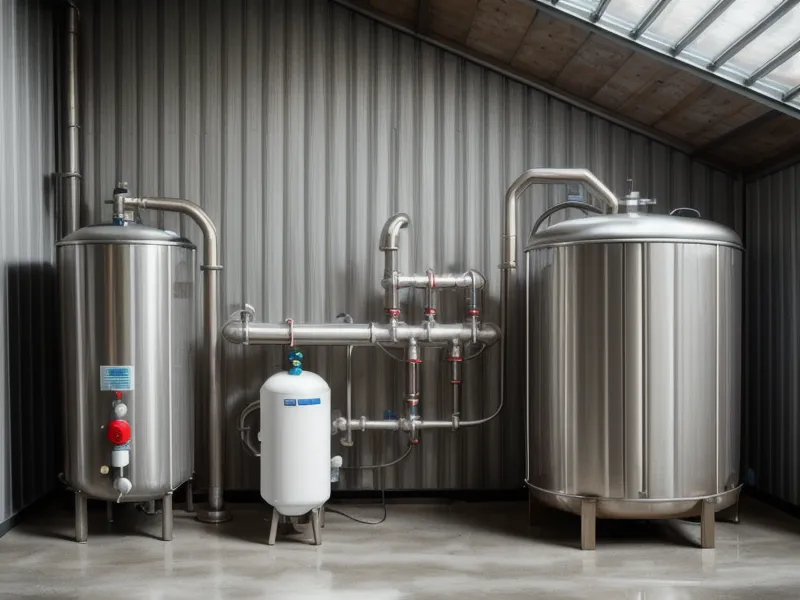
A continuous filter costs more upfront and needs a spot in a mechanical room or a shed, but it treats the water every single time it runs, with nothing to reapply and nothing dormant left to wake up. My rule now is simple: bleach for a one-time, known contamination event, filtration for a smell that won't quit on its own.
Living With Water That Doesn't Announce Itself Anymore
One morning I was rinsing a colander of garden lettuce under the kitchen tap before loading up the truck for the Corvallis Saturday Farmers Market, and I got halfway through before noticing I hadn't been holding my breath. The water just smelled like water: no swamp gas, no science-experiment aftertaste, nothing at all.
My dogs used to turn their noses up at their water bowls when the smell was at its worst. Now they drink like it's the most unremarkable thing in the world, which I suppose it finally is. The chickens don't seem to notice anything either way, but honestly, chickens will drink out of a mud puddle, so that's not exactly a ringing endorsement.
Every other piece of this water system — the pressure tank, the rain barrels, keeping pipes from freezing every winter — has taught me some version of the same lesson: nothing out here forgives guessing.
Homesteading has a way of teaching you the hard lessons twice: once when you try the free fix, and again when you finally pay for the real one. If your well water smells like eggs, don't just dump bleach down the casing and hope, the way I did. Look into an oxidation filter like David's Shield, or a broader filtration setup like SmartWaterBox if your situation calls for something more general. Your pipes, your hair, and your dogs will all thank you.
There's no landlord to call out here when something goes sideways, which is either terrifying or oddly satisfying depending on the day. But once the water's sorted, everything else — the garden, the rain collection barrels, the whole ridiculous project — gets a lot more manageable. If you're worried about bigger well problems down the line, my story about When the Faucets Went Silent covers the disaster that scared me even more than the eggs did.