
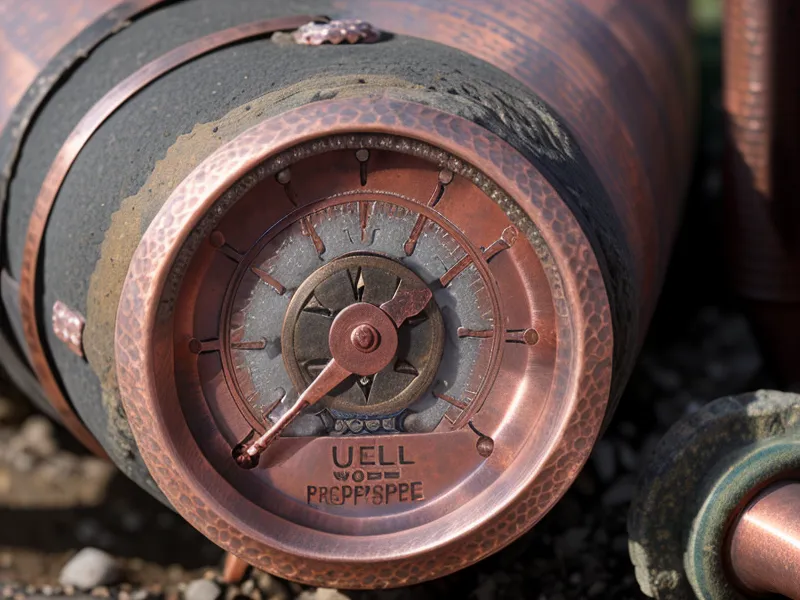
Forty-three pounds per square inch. That's what our well's pressure gauge reads on a completely ordinary day, and there was a stretch, back when we first moved out here, where I couldn't glance at that number without flinching, half-convinced it would be lower than it was the day before. That flinch is what real well water management feels like for anyone easing into rural living — you're braced for the well to fail you, especially once an actual drought settles over the valley and every neighbor starts swapping worst-case stories.
Quick disclosure before we go further: some of the links below are affiliate links, and if you buy through them I earn a small commission at no extra cost to you. I only mention tools that have actually earned a spot on our five-acre place, usually after something cheaper let me down first. I'm not a plumber or a well driller — just someone who had to figure this out without a landlord to call. If your system is doing something strange, a licensed professional beats anything you read here.
The Myth That Had Me Terrified of Our Well
Here's the myth, stated plainly: people assume that when a well "runs dry," the water is simply gone — that the ground underneath the property has stopped producing and there's nothing left to pump. That belief is what sends people into a full panic, and it's mostly wrong. In most cases, what's actually happening is that demand for a few hours outpaced the well's recovery rate, meaning how quickly water seeps back into the casing after the pump draws it down, and the pump is temporarily pulling air instead of water. It's closer to a checking account running low for a day than an account closed for good.
Does a Dry Well Mean You're Actually Out of Water?
Almost never, at least not permanently. A well can be shallow or deep, drilled into fractured rock or a sand-and-gravel aquifer, and each type recovers at its own pace — ours is on the shallower side, a different animal from a neighbor's much deeper well down the road. What actually decides whether you run dry on a hot afternoon usually comes down to the size of your pressure tank and how much backup storage you've got sitting between the well and the house, not some slow-motion disappearance of groundwater. Once I understood that, the sound of the pump gasping stopped feeling like a death rattle and started feeling like information.
Where the Real Panic Comes From
Panic shows up when you can't see what's happening underground, so you fill the blank with the worst story available.
My friend Priscilla — we met years ago at a rural property buyers' seminar back in Portland, long before either of us actually owned any dirt — still texts me in a full meltdown every time her pressure dips, because she panics first and researches second, always has. I used to run the exact same way, standing in the yard listening to the pump cycle, positive that this was the time it wouldn't come back on.
I ran into someone at the Eugene Saturday Market this spring who was convinced her well had died for good after a rough stretch of dry weather, only to have it come roaring back on its own days later once conditions eased — proof, if you needed it, that "dry" and "dead" aren't the same word.
The dogs, for what it's worth, have never once shared my concern. They'll drink from a mud puddle with the same enthusiasm as a fresh bowl, so watching them shrug off a crisis I was convinced was unfolding did eventually talk me down more than once.
Wrapping Pipes in Bath Towels Doesn't Count as Insulation
One winter, worried about a hard freeze hitting an exposed section of pipe outside, I grabbed a stack of old bath towels and wrapped them around it instead of driving into town for proper foam insulation. It felt resourceful at the time. It was not resourceful. The towels soaked up the first bit of moisture in the air, froze solid themselves, and did roughly nothing to keep the pipe above freezing — if anything, a frozen wet towel pressed against a pipe probably made things worse. We caught it before anything cracked, but it was close, and it taught me that freeze protection is one of those homestead jobs where the actual hardware store item is worth the trip.
Off-Grid Storage Buys You Time the Well Can't
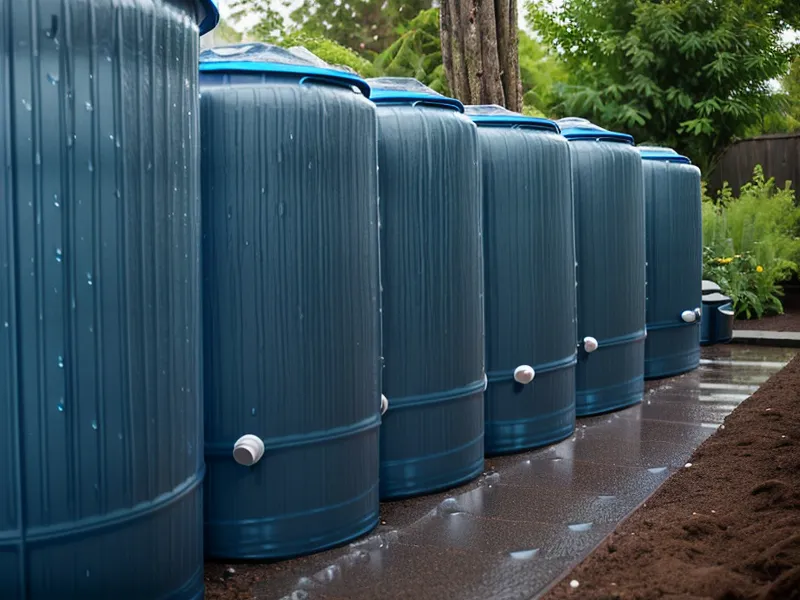
Storage is the part of this that actually matters day to day. We lean on rain barrels fed by the barn roof, and the math behind that is really just a basic hydrological calculation — catch enough roof area over enough rain, and you've bought yourself real backup capacity without touching the well at all. Ours feed the garden beds by gravity, no pump involved for that leg of the system, which means even a power blip doesn't touch the vegetables.
I already learned the hard way how much water twenty chickens can go through during a stretch of hot weather — I ran those numbers properly in Daily Water Requirements for Chickens and Other Small Farm Animals, and it's more sobering than you'd expect. That single guide changed how much backup capacity I keep around, because the flock doesn't care whether the well is having a bad day.
The Rest of the System Nobody Warns You About
None of this happens in isolation. Our sediment filter works overtime during dry spells, when the water pulls more grit through the line than usual, and it needs checking far more often than the manual suggested. We test the water itself on a regular schedule too, because assuming it's fine is exactly the kind of shortcut that gets people sick out here. We've also had to shock-treat the well once, which is its own tense, smelly process I won't walk through here, since it deserves its own telling. Iron shows up in ours occasionally as a rusty tint in the tub, which is a mineral problem, not a quantity problem, and a completely separate headache from anything above. We've talked more than once about putting the pump on a small solar setup, mostly so a power outage doesn't automatically mean a water outage too.
Checking the Gauge Less, Not More
A reader named Corinne emails me every so often. She found the site after a rough patch with her own well and hasn't quite stopped worrying since. Her well runs shallower than ours, a different animal from a depth standpoint, and she cross-references every pressure reading against the week's rainfall until I want to reach through the screen and tell her it's fine. I get it, though, because I used to run the same math in my head, half-awake, before the coffee even finished.
That's when the SmartWaterBox earned its keep — not by fixing anything mechanical, but by finally telling me the truth about my tanks instead of leaving me to guess. There's one particular morning that still stands out: I checked the pressure gauge purely out of habit, already braced for bad news, and it read exactly what it had the night before: no drop, nothing to explain away, just a number holding still. That's tank-level monitoring doing its actual job: turning a guessing game into a fact you can glance at and move on from.
We added a David's Shield unit later, mostly for the UV disinfection side of things after heavy rain stirs up the water — sediment and microbes both tend to spike right after a storm, and that felt like the missing piece. If you want the deeper comparison of monitoring tools we've tried, I wrote up the fuller rundown in Keeping the Pump Humming: My Experience with Four Off-Grid Water Monitoring Tools, and if you want the longer version of how the anxiety itself faded, that's in The Summer I Stopped Staring at My Well Tank: My Journey to Real Water Security.
Living out here is still a lot of work, and the chickens will absolutely find a way to knock something over the day you finally relax. But the well itself doesn't have to be a mystery you're braced against every summer. Once you understand what running dry actually means and can see your storage levels instead of guessing at them, the whole thing gets a lot less scary. If you're at the stage where every dip in pressure sends you sprinting for the yard, the SmartWaterBox is the tool I'd point you toward first.