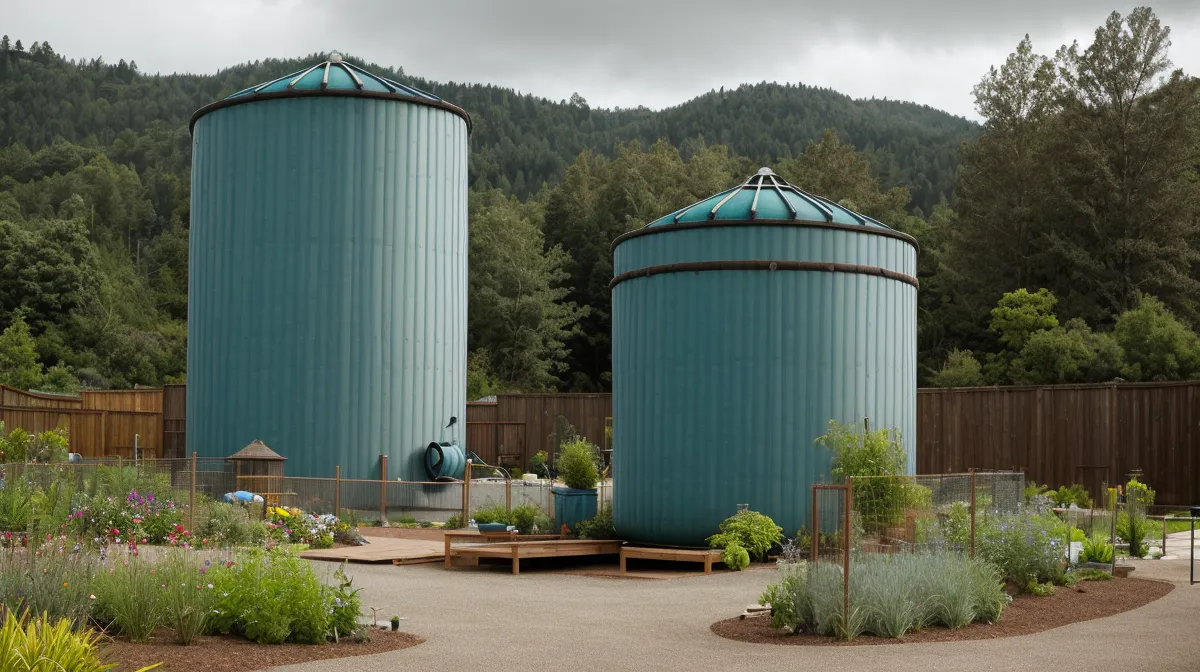
A well pump makes one sound right before it quits pulling water: a hollow, rattling thunk instead of its usual steady hum. That sound is what turned garden backup plans, well water, and backup water storage into a daily obsession of mine, instead of the background noise of homesteading I assumed they'd stay.
Update (September 2026): Aqua Tower is no longer available for purchase; this article is kept for reference. Our current alternative pick in this category is Water Freedom System.
Quick disclosure: this post has affiliate links, including one for the Aqua Tower, and I earn a small commission at no extra cost to you if you buy through them. I'm not a licensed well professional, just someone testing real gear on a real property, so treat this as field notes, not professional advice — call a licensed pro if your own system does something weird.
Two Ways to Handle a Dead Well Pump
Every homestead with a well ends up choosing between two default responses when the pump quits: lean on whatever water is already collected, or keep a dedicated backup source topped off and ready before you need it. For a while, my whole strategy was the first one — a rainwater harvesting setup that depends entirely on the sky doing its job on schedule. I was walking the dogs at Silver Falls State Park when it actually hit me how shaky that plan was: rain barrels only work if it rains, and an Oregon dry spell doesn't care what your garden needs.
The other option is what finally won me over: a dedicated Aqua Tower that sits full and ready near the garden, completely separate from whatever the rain barrels are doing. For about forty-five dollars, it felt like a reasonable insurance policy compared to what we'd spend replacing a burned-out pump. It doesn't care whether it rained last week; it just sits there, full, waiting.
If you're still new to well ownership and want the fundamentals before comparing backup options, my Honest Survival Water Guide: What I Learned After Running My Well Dry covers the basics nobody explained to me before I started watering the lawn like a city person.
Where the Rain Barrels Fall Short as Water Storage
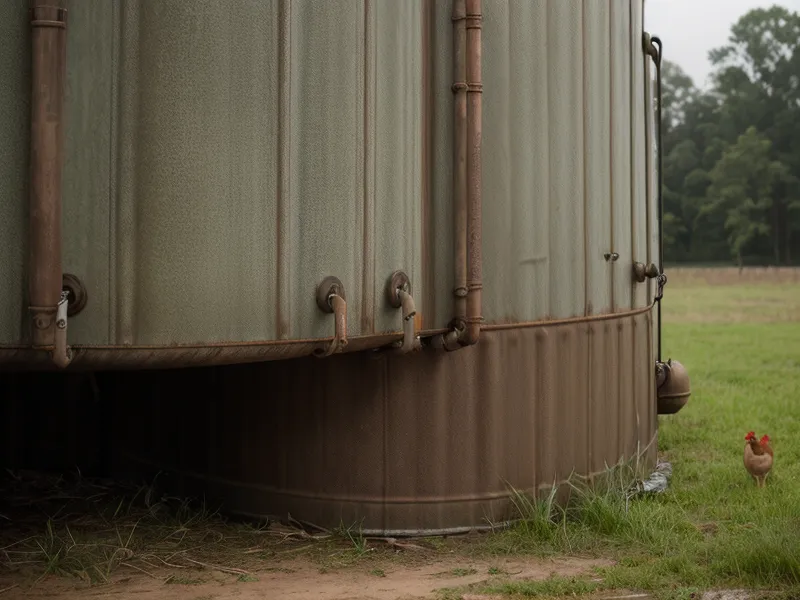
Rain barrels have an obvious weakness: they only refill when the sky cooperates, and southwestern Oregon summers have opinions about that. A backup that's only full on the one day you don't need it doesn't do much good. Ours sat half-empty more days than I want to admit last year, which meant the actual backup, when the well pump stumbled, wasn't backup at all, it was just whatever leftover puddle the weather happened to leave us. Chickens do not understand rationing. Mine treated the shrinking barrel water like a personal insult and complained about it loudly enough that the neighbors probably heard.
There's a decent argument that small-scale storage — barrels, towers, whatever holds water above ground — takes pressure off local aquifers during peak demand, and I like believing I'm doing my small part for the water table. But an aquifer doesn't fill your watering can on a Tuesday afternoon when the pump's down. Something more reliable than hope was the point.
What the Aqua Tower Does Differently
Setting the Aqua Tower up next to the garden beds made the difference obvious fast. Its whole trick is gravity: stack the water higher than what it's feeding, and the tower pushes water out without needing a pump or a power source at all. Compare that to a rain barrel sitting at ground level, which needs you to haul water by hand or improvise a pump of your own, and the tower's height starts to look less like a design quirk and more like the entire point.
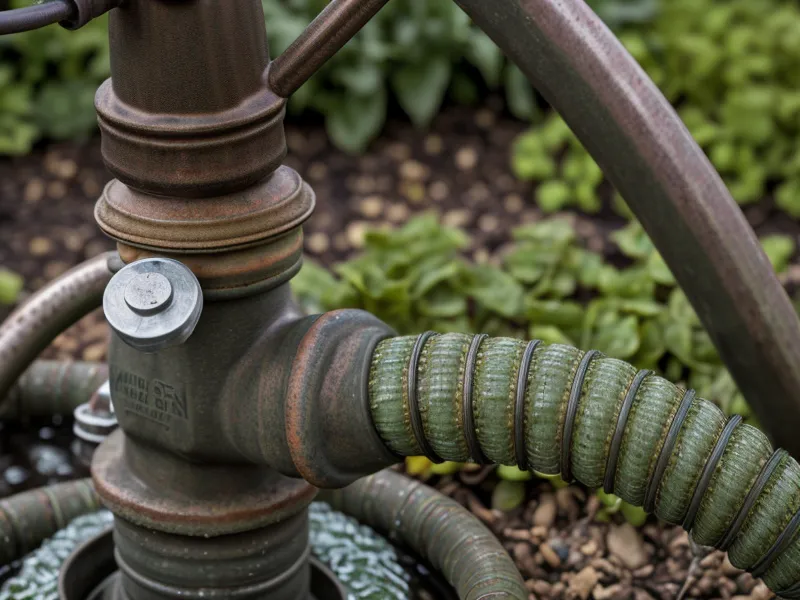
I pair the tower with a SmartWaterBox tank monitor, which solves a completely different problem — it tells me the water level in the tank without me walking out there to look, so I'm not caught off guard when it's actually running low. That's monitoring, not storage, and mixing the two up is how people end up with a tower that's already dry the one week they actually need it.
After a heavy spring rain, I also lean on Is Our Well Water Actually Safe? My Honest Update on David's Shield for the UV side of things — it's aimed at whatever might be riding in with runoff, which is a separate concern entirely from having enough water on hand. Storage, monitoring, and treatment are three different jobs, and the Aqua Tower only ever promised to do one of them.
Testing Both Systems the Day the Pressure Tank Cracked
A fitting on the main pressure tank cracked last month — probably from a bump with the lawnmower, if I'm being honest about it — and we had to shut off the main water line for most of a day while we waited on a repair. The pressure tank is supposed to buffer exactly this kind of moment, smoothing out demand until the well itself can catch up, and every well has its own recovery rate for how fast it refills once you stop pulling from it. Ours is not fast. That's precisely the gap a garden backup plan is supposed to cover.
Long before any of this, I went through a phase of blaming low water pressure on the faucets themselves, unscrewing every aerator in the house one by one, convinced a clogged screen somewhere was strangling the flow. It fixed NOTHING. The moment that actually told me something was wrong came with the washer, the dishwasher, and the hose bib all running at once and the pressure gauge not dropping a single point — which meant the problem was never the faucets, it was how little backup capacity we had anywhere in the system.
Elliot, the plumber from the next town over, is the person I measure every other repair opinion against these days, and even he shrugged at the cracked fitting and said a spare tank of water beats an emergency service call every time. So instead of standing around waiting on the fix, I filled a watering can straight from the Aqua Tower and finished the afternoon's chores like nothing had happened — no frantic calls, no dry tomato plants, just a very confused dog wondering why I wasn't muttering at the pipes.

None of this solves everything, either. A cracked pressure tank isn't a sediment problem, so if your water runs cloudy after a big rain, that's a filter question, not a storage one — I've got more on that filtration side in Best Backup Homestead Water Filtration Systems. It's also not a testing question: none of this matters much if you haven't actually tested what's coming out of your well in the first place, and it's definitely not a shocking-the-well-with-chlorine-after-a-flood question, which is its own emergency with its own rules. A garden backup tower answers exactly one question — do I have water right now — and nothing more.
So Which One Do You Actually Need?
Bert Yamamoto, a retired irrigation engineer three properties over, calls water pressure the mood of the system, and I've started thinking about backup water the same way: it's not one fixed answer, it's a mood you're managing. If your well recovers fast and your only real worry is a random power outage, rain barrels and a rainwater harvesting habit are probably enough backup for a home garden. If your pump has ever run dry, if your pressure tank is aging, or if you're watering anything you actually depend on, a dedicated tower that doesn't care about rainfall or the grid is worth the money.
The Aqua Tower isn't going to fix your well, your pressure tank, or your water quality — it's not built for any of that. What it does is buy you a calm afternoon of watering when everything else on the property has picked that exact day to fall apart. I still catch that faint metallic sweetness off the hose bib the second the pump kicks back on, and even now it feels like relief instead of a warning.
Don't wait until the ground is cracked and the pump is groaning before you decide which side of this comparison you're on. Figure out your backup now, while it's still boring and theoretical, because the day you actually need it is never a good day to be shopping.