
The pressure gauge hasn't moved a hair since last night, and I check it twice before I trust it. No drop. NONE. Running my own patch of rural infrastructure, mornings like that still catch me off guard. Because most mornings, they don't go this smoothly.
Quick and honest note before we go further: this post has a couple of affiliate links in it, including one for the water monitor I actually use, and I'll earn a small commission if you buy through them at no extra cost to you. I'm not an engineer or a geologist, and if you're just starting out homesteading as a beginner, please don't take any of this as a substitute for a licensed well professional looking at your actual property. I've just spent a long stretch arguing with my own well until it started making sense.
Here's the plain well-water basics answer, before the why: a shallow well reaches water within about 25 feet of the surface and pulls it up with a suction pump sitting above ground, while a deep well goes past 100 feet and relies on a submersible pump that sits underwater and pushes instead of sucking. Nearly every water-management headache a new owner runs into — cost, risk, how the supply behaves during a dry summer — traces back to that one difference.
Why the Well-Water Basics Start at 25 Feet
In practice, that 25-foot line isn't arbitrary. It's physics. A suction pump can theoretically lift water about 33.9 feet at sea level, thanks to atmospheric pressure and nothing else. Friction, aging pipe, and elevation eat into that number fast, so 25 feet is closer to the real-world ceiling. It's a bit like trying to pull a thick milkshake through a coffee stirrer instead of a straw: technically possible, practically miserable. Drop below that line and the pump isn't pulling water anymore. It's pulling air, and it lets you know.
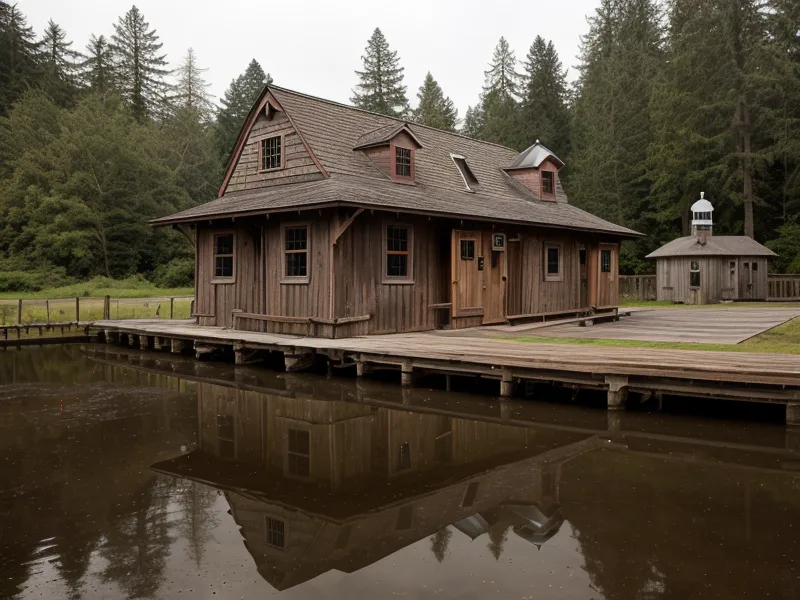
A deep well works on a completely different principle. Instead of pulling from above, a submersible pump sits down at the bottom of the pipe and pushes water up past the 100-foot mark that usually earns a well the "deep" label. It's the more reliable setup by a wide margin, but it also means you can't just walk out and poke at the pump when something goes wrong. Everything is buried, sealed, and expensive to pull back out. A submersible pump also needs a properly sized pressure tank to push water evenly through the house once it arrives, and getting that sizing wrong is its own separate fix-it project.
My neighbor Bert Yamamoto, a retired irrigation engineer a few properties over, keeps a running notebook of every fix he's made to his own system. When I asked him why his well seems to keep up even during dry stretches, he tore out a page and told me to look into recovery rate instead — how fast a well refills itself after a heavy draw — because depth alone doesn't explain everything. That's a deep enough topic on its own that I won't try to cover it here.
Elevation, Season, and the Shallow Well Gamble
A well isn't just a hole that either has water in it or doesn't. Elevation and climate say otherwise, and more than most homesteading advice ever admits. A shallow well is cheaper to install and, because I can technically see the water if I pull the lid off mine, easier to keep an eye on. But that same closeness to the surface leaves it painfully exposed to whatever the season is doing.
Shallow aquifers are the first to feel a hard freeze or a dry spell, full stop. In a high-elevation or drought-prone area, a shallow well can behave like a seasonal creek instead of a permanent water source. Here in spring, gone by August. Neighbors with wells drilled past 300 feet down into a confined aquifer, protected by layers of rock, don't notice the same droughts that leave my garden gasping. Why I Stopped Panicking Every Time the Garden Hose Ran Low is basically the mantra I had to adopt once I understood exactly how limited my own system was.
A rain catchment system, set up properly, can take some of that seasonal pressure off a shallow well during the driest stretch of summer, though building one right is its own project entirely, not a weekend fix. On land with any real slope to it, gravity-fed distribution can move that stored water out to the garden without a pump at all, which is worth knowing if your property has the grade for it. Some neighbors also run UV disinfection on top of regular testing, especially right after a hard rain pushes runoff toward the wellhead — more of a layer than I've personally needed at my depth, but worth knowing exists. There's a particular wet slap of canvas work gloves hitting the edge of the sink that means watering season is officially done for the day — small satisfactions.
The chickens, for their part, have strong opinions about the wellhead cover. I've caught one perched on top of it like a tiny feathered sentry more than once, which tells you nothing useful about hydrogeology but does wonders for morale on a bad water day.
Test the Water, Track the Trends, Skip the Guesswork
Depth alone won't tell you if your water is safe, and this is the part I got embarrassingly wrong for longer than I'd like to admit. After a scare with cloudy tap water, I called the county health lab, paid for a full test, and got back a results packet dense enough to make my eyes cross. Then I did the worst possible thing: I filed it in a drawer and never actually acted on what it said. Regular testing only protects you if you read the results and do something about them. A lesson that cost me more peace of mind than it should have. The actual step-by-step of testing well water without a professional lab is its own walkthrough I won't repeat here.
Shallow wells push more grit and sediment through the line than deep ones do, which is where sediment filtration earns its keep on the shallow side of this whole equation. And if contamination ever gets bad enough to need a real reset, well shock chlorination is the nuclear option — a whole process with strict steps of its own that deserves its own explanation rather than a paragraph here.
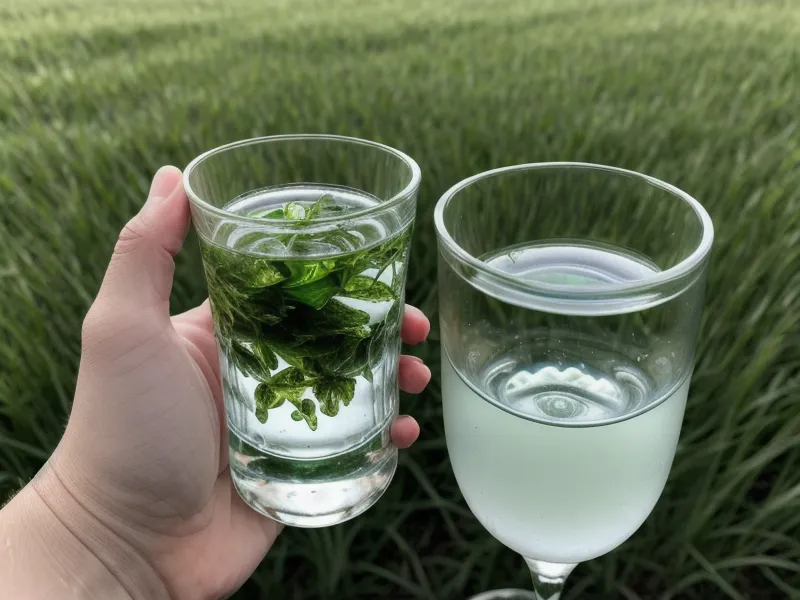
Guessing how much water I had left used to be a constant low hum of anxiety, especially with livestock depending on that supply. Somewhere along the way I stopped trying to eyeball it and started actually tracking tank levels with the SmartWaterBox, which at least lets me see a trend forming before the pump starts screaming about it — you can read the longer version of that experiment in my SmartWaterBox Review 2026. Winterizing is its own separate skill, too — our plumber Elliot Morozov fixed a burst pipe for us once and left behind a handwritten sheet of freeze-protection notes without even being asked, and he still mostly explains things with a raised eyebrow rather than a full sentence.
If a shallow well leaves you exposed during a drought, real storage capacity matters more than any pump upgrade you could buy — though picking the right tank size for your property is a decision tree all its own. And because a submersible pump depends entirely on electricity to do its job, some deep-well owners eventually look into solar power independence for backup, which is a different rabbit hole than anything covered here.
Is a Shallow Well a Dealbreaker for New Owners?
Not necessarily — but it does need a gentle hand and an honest accounting of what it actually is. If your well log shows water within that 25-foot range, plan your budget around backup storage and testing discipline rather than pump upgrades. If it's drilled past 100 feet, budget instead for the day that submersible pump eventually needs replacing, because that repair bill is no joke.
Owning a well was never going to be about having a perfectly engineered system — it's about learning the specific quirks of your specific land and finding the tools that actually make the job easier. For us, tracking our water levels with the SmartWaterBox did more for our sanity than anything else we tried, mostly because it turned constant guessing into an occasional glance. Your tomatoes, and your nerves, will thank you either way.