
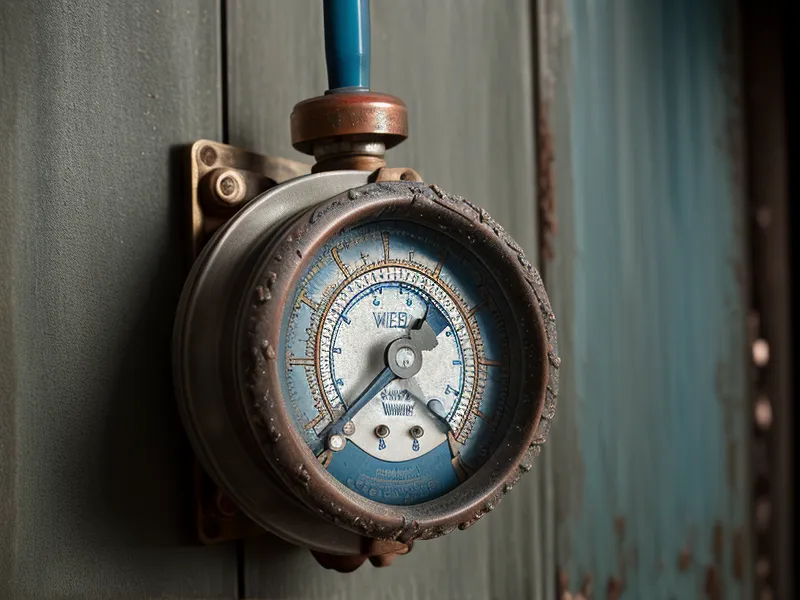
My thumb is already pressed against the pressure gauge before the coffee maker even finishes its cycle, watching the needle tremble somewhere in the high thirties and then dip, the way it does most July mornings out here. This is what well water management actually looks like on a five-acre homestead: not a spreadsheet, not a tidy checklist, just someone in pajama pants doing math about how many showers are left before the pump has to work for it. Homestead resilience, I've decided, has less to do with rainwater harvesting barrels or fancy gadgets and a lot more to do with how many times a day dread sends you walking out to the pump house.
Quick disclosure before we go further: some of the links below are affiliate links, and if you buy through them I earn a small commission at no extra cost to you. I only mention systems and gadgets we've actually bolted onto this property ourselves — nothing I haven't tested with my own dirty hands. I'm not a plumber or a hydrologist, just someone who's made every mistake once, so check with a licensed well professional before you touch your own system.
Panic-Checking the Pressure Gauge Became My Whole Personality
Every homestead has its own flavor of low-grade dread, and mine took the shape of a pressure tank. We'd already run the well bone dry once, early on, after I left the sprinkler going for an entire afternoon on a stubbornly green lawn that had no business being green in a high-desert summer. The kitchen faucet gave up a pathetic hiss and a puff of brown grit, and I spent the following days hauling water in buckets just to flush toilets. After that, checking the gauge stopped being a chore and turned into something closer to a compulsion, walking past the pump house three or four times a day, ears tuned for that mechanical thrum, bracing for the moment it wouldn't stop cycling.
Even a weekend trip to Silver Falls State Park didn't fully unplug me. I caught myself refreshing a water-monitoring app on my phone somewhere near the waterfalls, which is its own special flavor of ridiculous. That kind of vigilance, staring at my well tank like it might defect on me at any moment, isn't sustainable, and by midsummer it had turned into a genuine hobby I never asked for.
Why Replacing Every Aerator in the House Changed Nothing
My first fix attempt had nothing to do with the well at all. I decided the problem must be inside the house, so one Saturday I unscrewed and replaced every single faucet aerator we owned, sink by sink, convinced that mineral buildup was strangling our flow. It felt productive. It also did absolutely nothing. The gauge still crept down the same way it always had, and I was still standing in the kitchen at odd hours listening for the pump. Swapping parts inside the house treats a symptom; it tells you nothing about what the well itself can actually deliver.
The Question Bert Asked That Actually Mattered
It was our neighbor Bert Yamamoto, a retired irrigation engineer three properties over, who finally pointed me in a useful direction. He has this habit of asking one question and then just waiting, saying nothing else, until you've talked yourself into the answer. Standing at the fence line one evening, he asked whether I actually knew how fast our well recovered once it had been pumped down, or whether I was only watching the tank drop and hoping. I didn't have an answer. Recovery rate turns out to be its own deep rabbit hole, not one I'm going to pretend to have mastered here, but just knowing the question existed changed how I read every gauge reading after that. Why did nobody just ask me that sooner?
I called Elliot Morozov, our plumber from the next town over, mostly out of habit rather than real hope. The man talks slower than anyone I've ever met and has never once been wrong about a pipe, so when he told me the aerators were a dead end and the real gap was storage, not plumbing, I believed him immediately.
Building a Rainwater Harvesting System That Doesn't Need Constant Babysitting
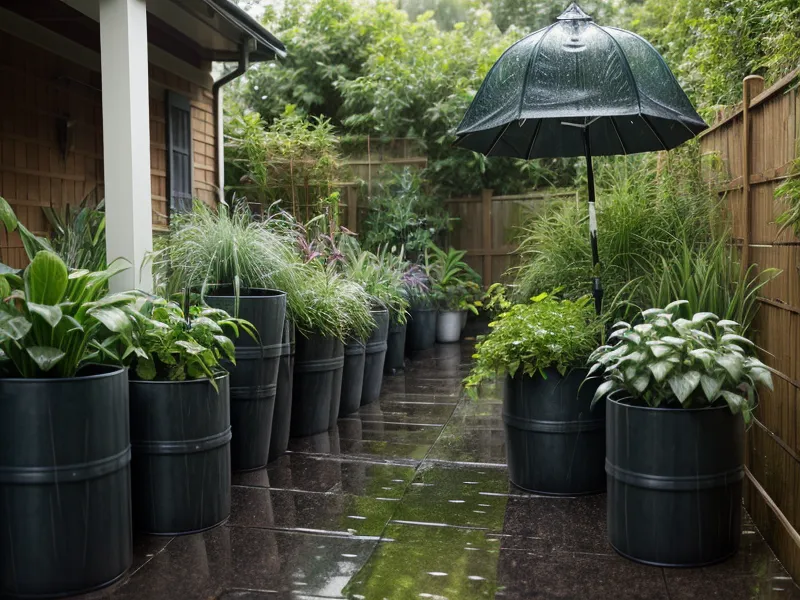
Our rain collection setup is still held together with zip ties, stubbornness, and probably too much duct tape, and it works beautifully every April when Oregon rain shows up on schedule. By July, those barrels are bone dry, which is exactly the gap Elliot meant. Rainwater harvesting only solves the wet-season half of the problem; the dry months need something that tracks what's left and warns you before the tank runs low, not after.
That's the direction that eventually led me to the SmartWaterBox. It's built for people managing off-grid or limited water sources without an engineering degree, and the appeal for us wasn't a bigger well (we don't have one to make bigger) but finally having a read on tank level and usage instead of guessing from the sound of the pump. Having eyes on tank level instead of guessing from pump sound felt like a relief. The babysitting stopped being constant, which was the entire point.
For anyone who wants a more DIY-heavy approach instead of a physical unit, I also looked hard at the Water Freedom System, which leans into a guide-and-blueprint format rather than hardware you plug in. It comes backed by a full 60-day money-back guarantee with instant digital delivery, which took some of the risk out of trying it, though I ultimately wanted something with a screen I could glance at rather than a manual I had to reference. You can read more about why I added the Water Freedom System to our backup plan if the guide format sounds like a better fit for you than it was for me. A few homesteaders in our area have also started pairing storage upgrades with UV disinfection after heavy rain events, though that's a whole separate rabbit hole of its own.
What Five Weeks of Watching the Right Number Looks Like
Five weeks after we started tracking usage instead of guessing from the gauge, the hens went an entire day without me refilling the fount once, the first time that had happened since we moved out here, chickens included. The pump stayed quiet. I wasn't rationing my own shower to keep the kale alive. Nothing about that afternoon felt dramatic; it just quietly stopped being a crisis, which might be the bigger win.

The dogs didn't seem to notice any difference, which honestly tells you something about dogs, but I noticed the absence of loud humming noises keeping me up at night, the kind that used to mean the spigot was about to sputter air. For the first time in a long while, I wasn't doing mental math about how many gallons were left before bedtime.
Homestead Resilience Isn't a Personality Trait
None of this makes me an expert, and our rain barrels are still very much held together with zip ties. What changed is which number I trust: not the panic in my chest when I hear the pump cycle, but the actual gap between what the well can give and what the house is asking for. That's the one thing I'd tell anyone new to well water management: stop treating every low-pressure moment like an emergency and start figuring out your real numbers, because most of the dread turns out to be about not knowing rather than about the well actually failing.
If summer panic-checking sounds familiar, take that as your sign to look at storage and monitoring together instead of just staring at the gauge. Something like the SmartWaterBox is a reasonable place to start, and it costs a lot less than drilling a second well. Now if someone could just explain to me why the chickens still think the tomato bed is theirs, I'd really be winning at this whole homesteading thing.