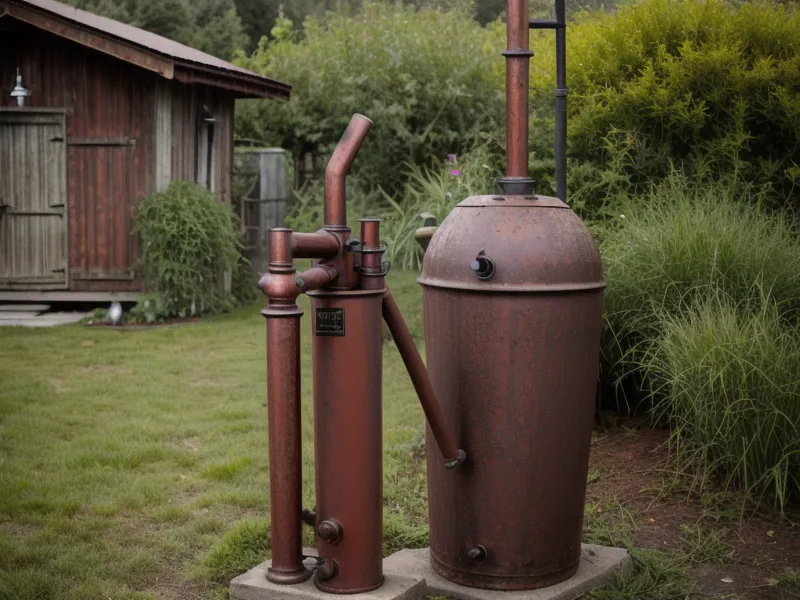
What actually happens to your water supply the second the power drops and your well pump has nothing left to run on? Most emergency-preparedness lists skip straight past that question and jump to flashlights and canned beans, while the actual well water system just sits there, dead weight, a few hundred feet underground. Out here in the Douglas County foothills of southwestern Oregon, a blackout doesn't just mean dark rooms: it means the taps go dry right along with the lights, and no amount of stored candles fixes that. A manual pump is the one piece of homestead infrastructure nobody talks about until the exact hour you need it.
Getting one installed properly took longer than I expected, mostly because I accidentally ran our well pump dry early on, before we understood how any of this worked, and have been quietly terrified of well mechanics ever since. Neither of us has an engineering background or any plumbing training, so this was a slow, patient project built on phone calls, forums, and one very patient local plumber. Here's the actual mechanical process, not the magazine-photo version: what it takes, what it costs you in effort, and where it can go sideways.
How Deep Is Your Water, Really?
Every hand pump conversation starts with the same disappointing physics lesson. Suction-style pumps — the classic cast-iron pitcher pump you picture leaning against a barn — only work because atmospheric pressure pushes water up behind a vacuum, and that trick tops out around twenty-five feet at sea level. Past that depth, a suction pump just wheezes at you. So the first job isn't buying equipment, it's finding out exactly how far down your water actually sits.
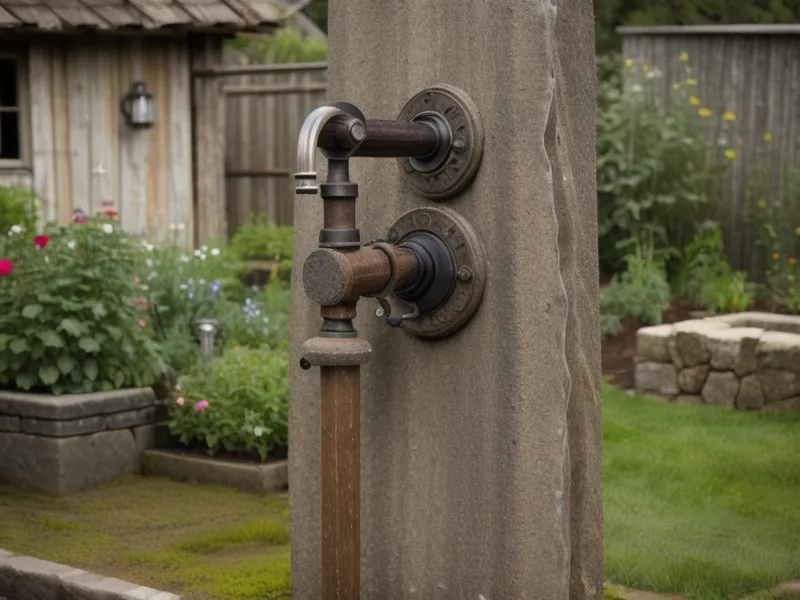
We measured ours the low-tech way: a fishing weight tied to a spool of twine, lowered down our standard 6-inch well casing until we heard that soft, unmistakable plop against the water. Sixty feet — well past that twenty-five-foot ceiling, which meant a simple suction pump was never going to work for us. A deep-well pump handles this differently. Instead of sucking water up like a straw, it uses a submerged cylinder connected to a series of rods that physically lift the water from below, stroke by stroke. It's more hardware, more moving parts, and more installation headache, but it's the only design that reaches water sitting deep in Oregon basalt.
Bolting a Manual Pump to Your Well Cap Can Break Your Electric Pump
This part surprised me more than the physics did. Sealing a hand pump straight onto an existing well cap seems obvious — bolt it on, done — except your well casing needs to breathe for the electric pump to keep its pressure balance right. Trap that air pocket by sealing the casing too tight around a new manual handle, and you can accidentally choke your primary water system, the one you actually rely on every single day.
Our local plumber, Elliot, came out to look at the casing before we touched anything. He took one look, raised an eyebrow, and said, "you'll want a split seal" — and that was the entire consultation. That's Elliot's whole communication style: a raised eyebrow does most of the talking. The split-well seal lets the electric wiring and the new drop pipe pass through side by side while the casing still vents properly. If you're not sure how your own casing is set up, this is exactly the kind of question worth paying a professional to answer before you drill or bolt anything.
Pipe, Clamps, and a Very Muddy November
Long before any of this, when our upstairs shower pressure went strange one spring, I replaced every single faucet aerator in the house convinced that was the fix. It wasn't. The actual issue lived inside our pressure tank, a different piece of the system entirely that's worth understanding on its own before you go swapping fixtures that were never the problem.
Installing the drop pipe itself happened over one genuinely miserable November afternoon. We were threading eighty feet of thick-walled Schedule 80 PVC — sturdier than anything you'd use for garden irrigation, because it has to support both the water column and the rods inside it — one heavy section at a time, wrestling a safety clamp that felt like the only thing between us and losing a very expensive stack of pipe down the casing forever. Somewhere in the middle of that, a stainless mounting bolt slipped out of my frozen fingers and vanished into wet pasture grass. We spent close to an hour on our knees dragging a kitchen magnet through the grass while the chickens decided this was the best game anyone had invented all year, pecking at the magnet every time it got close.
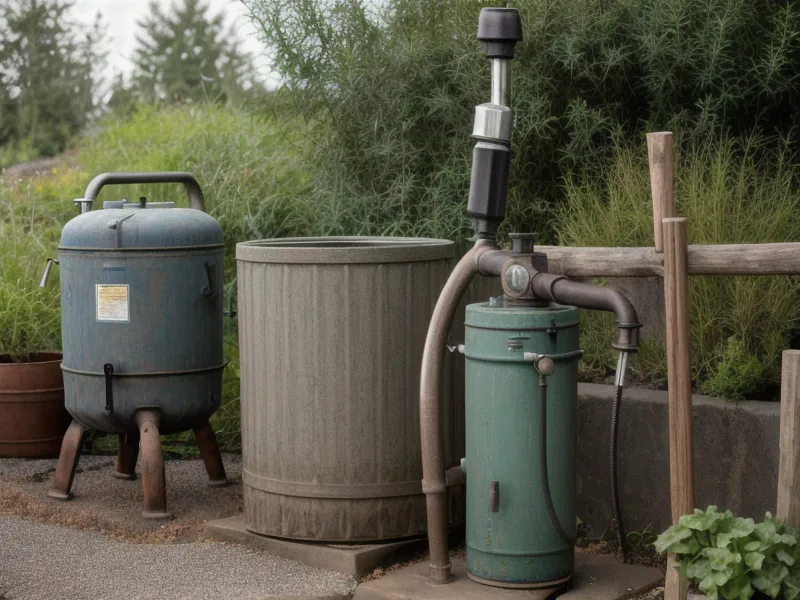
Bert, a retired irrigation engineer three properties over who'd noticed our trench line running slightly uphill, wandered over partway through and asked about a dozen quiet questions without ever once telling us what he thought we should do. Somehow, by the time he wandered off again, we'd figured out the grade problem ourselves. He keeps a notebook of every fix ever made on his own property, and I've started to suspect that's exactly how he thinks — write it down, ask questions, let the other person land on the answer.
Protecting the Pump Before the Freeze Hits
Once the pipe was down, winter was the next problem. Any water left sitting in a pump head will crack the housing the first hard freeze that comes through. The fix is a small weep hole drilled into the drop pipe several feet down, safely below the local frost line, so the water left in the head drains back into the well after every use instead of sitting there waiting to freeze solid. Skip this step and you'll be replacing pump parts by January.
What the First Pump Stroke Actually Feels Like
Nobody tells you the first several strokes of a deep-well hand pump feel like absolutely nothing — you're just clearing air and slack out of the rods, and it's easy to assume something's broken. Keep going. The resistance changes once the rods catch the actual weight of the water climbing all those feet of pipe, and that shift is how you know it's working, not failing.
These days, a small sensor on our storage tank sends the level straight to my phone, and I still remember lying in bed one morning watching that number hold dead steady through an entire load of laundry — no dip, no scramble, just a number that refused to move. Before the sensor, I'd check the gauge by hand most mornings, watching the needle wobble a little right around sunrise as the well recovered overnight — you learn to read those small movements the way you'd learn to read a sourdough starter or a seed tray, just from paying attention long enough.
The Rest of the Water System Puzzle
How fast your well actually recovers matters just as much as how deep it is, which is its own Deep Dive: What Every Former City Dweller Needs to Know About Well Recovery Rates conversation. Your sediment filter, whether your water's actually been tested instead of just assumed clean, whether you're set up to catch and store rainwater at all, whether gravity alone can move water to a lower garden bed, UV treatment after a heavy rain, and shock-treating a well after a flood are all rabbit holes of their own, and pretending one article covers all of it would be doing you a disservice.
None of this replaces an actual look at your specific well casing from someone licensed to do that work, and mineral buildup will find its way into a manual pump just as readily as an electric one — if you're already fighting scale, the Easy Ways to Remove Hard Water Scale from Rural Homestead Faucets piece covers that separately. What a hand pump actually buys you is simple: the next time a storm knocks the power out, you're not choosing between hauling water in buckets and canceling your weekend plans at Silver Falls State Park. You just go out to the well head and start pumping.