
Six inches. That's the width of the well casing running down through our five acres, and for one solid week this spring it was the number that decided everything about well maintenance on this property. The creek had finally pulled back after days of climbing into the lower pasture, and floodwater doesn't stay tidy — it finds every loose well cap, every low seam, every excuse to get where it shouldn't. Water safety was never something I thought about back in my apartment life; out here, rural living means it's entirely mine to manage, and DIY homesteading mostly means figuring out fast enough to solve a problem before it gets worse — no landlord, no city notice taped to a door, just a pump humming along while I stood in the mud wondering what exactly had gotten in.
My partner was across the yard at that exact moment, ankle-deep in a puddle, trying to keep the chickens from treating it like a swimming pool. One particularly determined hen kept wading back in no matter how many times she got scooped out — losing an argument with a bird was apparently part of the deal that day. Neither of us had any hydrology training, any engineering background, or much handiness to speak of. What we had was an old manual, a wrench, and the growing certainty that the only way through this was to move fast enough to solve the problem before it got worse.
The Number That Ran the Whole Show
Once the water receded enough to think straight, I did what any recently-former city dweller does: opened a dozen browser tabs and read half of them wrong before getting it right. The Oregon Health Authority page on flood-affected wells was blunt: coliform bacteria and E. coli can ride floodwater straight into a casing or slip in through the vents, and a boil-water advisory was already sitting over our little patch of the county. Nobody mentions in a real estate listing that buying five acres also means becoming your own treatment plant, your own technician, and your own quality control department, all before lunch. It's one of the common well water problems for people moving from the city that only becomes obvious once you're the one standing at the well head.
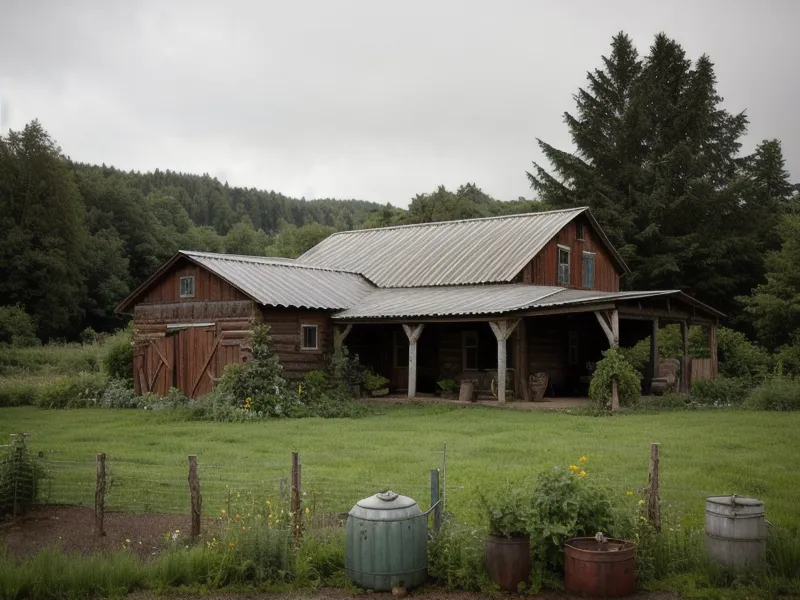
That's when the mudroom turns into mission control. Ours has a taped-up cluster of pressure gauges sitting right at eye level and a hand-drawn map of every pipe, valve, and the well head itself pinned above the utility sink, my own homemade blueprint for a system nobody ever handed me an instruction manual for. The well sits roughly a hundred and forty feet from the house down a gravel path that turns to soup every November, and that particular afternoon it might as well have been a mile.
Why I Made Myself Wait a Week
Waiting was not my instinct. My gut said pour the bleach the second the ground firmed up, get it over with, stop thinking about what might be swimming around down there. A neighbor who's worked this same stretch of ground since the seventies talked me down, though, and his advice fit in one sentence: wait.
Here's the part nobody explains well: shock a well too soon after a flood and you can shove problems deeper instead of solving them. When the ground is still saturated, the water table sits high and the whole system is under pressure from the surface down. Pour a heavy dose of chlorine into that pressurized column and you're not treating the well so much as injecting bacteria further into the aquifer, using your own well as the delivery method. So I sat on my hands for the better part of a week, waiting for the ground to firm up enough that the well wasn't still in "recharge" mode from all that runoff.
The Well Maintenance Math Nobody Warns You About
Once I could walk out there without sinking to my ankles, it was time for math — not calculus, just the kind involving a six-inch casing and a depth-to-water number I had to dig out of our original well log, a document I protect better than my own passport. Most wells around here run that same six-inch standard casing, which holds roughly a gallon and a half of water for every foot of depth. Multiply that by the depth on the log and you finally know how much water you're actually treating, instead of guessing and hoping.
Measuring out the bleach felt like halving a recipe under pressure. Get the ratio wrong and the whole batch is off, except here "off" means bacteria surviving or drinking water that tastes like a swimming pool for a month. I used plain household bleach, 5.25% sodium hypochlorite, nothing scented and nothing "splash-less." Grab the wrong bottle and you'll trade one problem for a house that smells like a candle aisle every time someone turns on the tap.
Opening the Cap, Pouring It In
Popping the well cap felt like minor surgery on the house itself. Bolts first, then the heavy metal lid, then that damp, mineral smell of deep earth hitting me square in the face. There's no undo button once the chlorine starts going down the pipe; you're committed the second the first cupful hits the water.
A Rhode Island Red who has never met a bottle she didn't want to peck decided the bright blue bleach jug was clearly a snack. I spent half the pour doing a slow-motion soccer block with my boot, trying not to spill concentrate everywhere while also not launching a chicken into the mud. NOT my finest multitasking moment, but the bleach went in clean and the hen survived with her dignity mostly intact.
Does Circulating the Chlorine Actually Take Ten Minutes?
Every tutorial online swears circulating the chlorine through the whole system is a ten-minute job: run a hose from the spigot back into the casing, wash the inside of the pipe down, done. In practice it took most of an afternoon before that unmistakable pool-chlorine smell showed up at the hose bib, mixed with the iron-sweet tang the water always gets for a second right after the pump kicks on. That smell means the system is finally pulling from depth instead of just what's sitting in the pressure tank, which held steady through the entire ordeal without a single hiccup.
Handling hoses that day dredged up a memory I'd rather forget. Last winter, in a moment of pure improvisation, I'd rigged an old garden hose as a stopgap water line out to the barn while dealing with a different pipe problem, told myself it was temporary, and then promptly forgot about it. The first hard frost split it wide open along its whole length, and I learned the hard way that "temporary" fixes on this property have a nasty habit of becoming load-bearing. This time, every hose I used got checked, used properly, and coiled up and put away the second I was done with it.
The Flush, the Septic Tank, and the Longest Day
Once the smell hit every tap in the house, the water had to sit: the Oregon Health Authority recommends a full 24 hours of contact time before you touch anything. We spent that stretch living like we'd pitched a tent in our own kitchen, drinking bottled water and taping a sticky note over the faucet handle so nobody would forget and turn it on out of habit. The next day is the flush, and that's when my brain jumped straight to the septic tank. I'd already learned the hard way, from what I wish I knew about maintaining a septic system for beginners, that dumping a slug of heavily chlorinated water into a leach field kills off the bacteria that make the whole system work.
So I ran the outside hoses instead of the indoor faucets, aiming the water well away from both the septic lines and the garden, and let it drain until the chlorine smell finally gave up. Those three blue barrels stacked under the porch eave, our original rain-catchment rig still chugging along, filled right back up once the storm passed, which meant the garden wasn't relying on well water during any of this. I've since added a sediment filter ahead of the washer intake too, mostly out of paranoia about anything gritty the flood might have stirred loose, and there are cheaper strip tests you can run yourself at home between now and an actual lab result, though I still send a sample out for the real answer every time.
Testing the Water for Safety
Two weeks after the flush, I finally drove a sample to the lab and then did the worst part of the whole process: waiting three days for an email, wondering if I'd missed a spot of bacteria hiding in some pipe elbow or gotten the math wrong. This wasn't my first rodeo with that particular lab; after the saga I wrote about in my experience testing well water for heavy metals after moving in, the technicians there already know me as the frazzled lady with the chickens. I texted a photo of the whole muddy operation to Priscilla, a friend I met years back at a rural-property seminar in Portland who now runs twenty acres near Roseburg with pipes just as cursed as mine, and she sent back a string of laughing emojis and her own well horror story from that same spring.
By the fifth week past the flood, I got up early and ran the kitchen tap into a glass out of habit more than worry, and there it was: clear straight through, cold enough to fog the glass, not a trace of the rusty tint that had haunted every glass of water since the creek came up. I still don't know our well's recovery rate off the top of my head, or exactly how fast it refills after a big draw, and I haven't gone the extra step of running a UV unit like a couple of neighbors do for backup peace of mind after storms. I also still walk out to the tank and eyeball the level instead of using any kind of remote monitor, and the gravity-fed line I rigged a while back to water the garden without running the pump is honestly held together with more hope than plumbing knowledge. None of that stopped the water from testing clean.
If homesteading has taught me anything out here, it's that you don't need to know everything before you start; you need to be willing to wait when waiting is the actual answer, even when every instinct says act now. The chickens are dry, the pump is humming a much friendlier tune, and I'll probably make another mistake by next winter. If you're staring down your first well shock after a flood, just remember: do the math, respect the clock on that waiting period, and for heaven's sake, keep your hoses rated for actual winter.