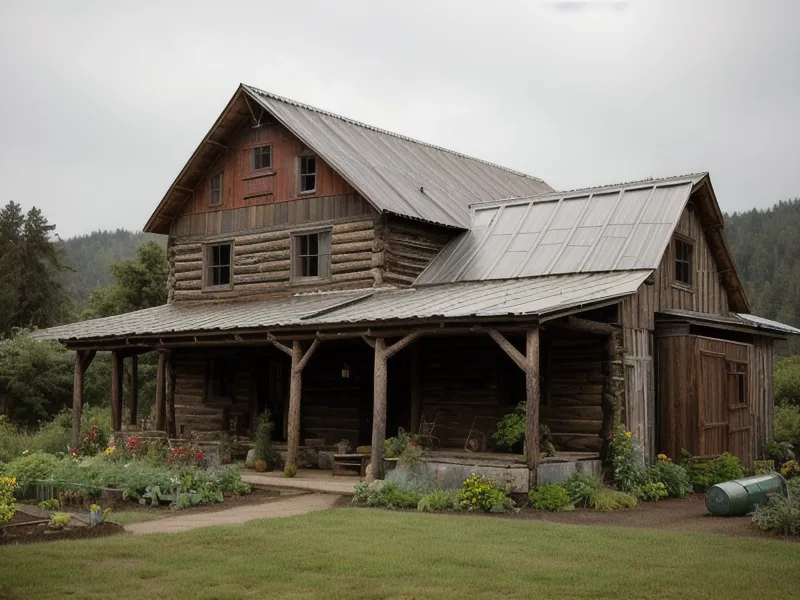
The rust ring in the dog bowl would not budge, no matter how hard I went at it with a sponge. That one stubborn ring is what dragged me into heavy metal testing in the first place, and it's the reason well water safety on this rural Oregon homestead means something completely different to me now than it did when we first moved out here.
Quick disclosure before we get into it — this post has affiliate links in it, and if you use one, I earn a small commission at no extra cost to you. My full disclosure page has the details. None of that changes what I'm about to tell you, though, because I am not a water engineer or a doctor — just someone who got tired of not knowing what was actually in her glass. If your own results come back strange, talk to an actual water treatment professional, not a homesteading blog.
We'd moved from a Portland apartment to five acres, chickens and dogs in tow, completely unprepared for anything related to water systems. Three years in, I can tell you the water gets ignored by almost everyone in that position, right up until something forces the issue.
The 'Clear Water' Myth
Here's the myth nearly every new well owner believes: if the water runs clear and tastes fine, it's fine. Nobody tells you that heavy metals like arsenic and lead don't announce themselves with a smell or a color change — they just sit there, invisible, while you fill the coffee pot every morning without a second thought.
If you're making the transition from city to rural living, this is usually the first hard lesson: clear does not mean clean. Oregon actually has a law about it — ORS 448.271 requires a test for arsenic, nitrate, and bacteria when a property changes hands. That sounds reassuring until you realize it's a single snapshot, taken once, before you even own the place. Treating it as a lifetime pass is a bit like checking your garden soil once during a house tour and never touching it again while you keep planting different vegetables every season. The ground underneath doesn't hold still just because you stopped checking it. After closing, nobody swings by to check your private well ever again. You're the utility company now, whether you feel ready for that or not.
Bleach Doesn't Touch Arsenic
My first reaction, months before any of this rust-ring business, was to reach for the thing every homesteading forum swears by: bleach. I poured a jug straight down the well casing because a neighbor mentioned that shocking a well fixes "whatever's going on" with your water, and I never tested a single drop beforehand to find out what that even was. It did NOTHING for the actual problem. Bleach kills bacteria, not arsenic or lead, and dumping it in blind meant I still had zero idea what was actually in our water. If anything, it just made me feel like I'd done something.
What a Hardware-Store Kit Won't Tell You
Once the rust ring showed up, I tried the other classic shortcut: a color-changing strip kit from the hardware store. Dipping strips into jars of well water while the chickens heckled me from the back step felt productive, and for things like pH and hardness, it actually is a decent starting point. What it will not do — what almost no home strip kit will do — is tell you anything about arsenic or lead. That's the line worth knowing: strip kits are fine for a rough read on your water, but heavy metals need a certified lab panel, not a color chart, and treating a strip test as the final word just hands you false comfort.

A River Valley Changes the Math
We're also in a river valley, which adds a wrinkle most tidy homesteading guides skip over. When the ground gets saturated after heavy rain or the river comes up, what turns up in a water test can shift — it's called leaching, and it basically means a dry-summer sample and a soggy-November sample from the same well can tell two different stories. A one-time inspection was never going to catch that.
I mentioned all this to a friend of mine over the produce stalls at the Corvallis Saturday Farmers Market — the one who's forever driving out to Milo McIver State Park for her disc golf tournaments — and she asked when she'd last had her own well checked. She genuinely couldn't remember. That's about average, from what I can tell. While I waited on my own lab results, I burned a stupid amount of time on the off-grid water source types comparison table, half-convincing myself I'd need to start hauling water from town if the numbers came back ugly.
Collecting the actual samples meant a walk down to the well head, and by then the gravel path had gone to its usual November mud, cold enough that I could feel it working through my boot laces before I'd gone twenty feet. Out of habit I glanced at the pressure gauge on my way past — still holding steady at the same number I remembered seeing that morning, not a flicker of drop, which had nothing to do with heavy metals but felt like a small win anyway. I filled the sterile jars, one from the tap, one from the well head itself, and sent them off.
So What Actually Works?
The lab report came back a few weeks later, and I opened the PDF like it might contain bad news, which, a little bit, it did. The Lead reading was comfortably under the EPA's action level of 15 parts per billion. One relief. Then I got to Arsenic: 9.8 parts per billion, against a maximum contaminant level of 10. Not over. Technically fine. Would you want your morning coffee sitting that close to the line, though? Because I sat there doing math in my head about the dogs, the garden, and every cup I'd already made that week. "Technically under the limit" and "something I'm comfortable drinking daily" turned out to be two very different feelings.

That gap between passing and comfortable is the whole myth, really. A lot of us treat drinking water like a pass or fail test, when heavy metals are more of a sliding scale you want to push as low as it'll go, especially with animals and a vegetable garden pulling from the same tap. So we looked at real filtration instead of another quick fix, and after comparing what was out there for high-sediment, seasonal-shift water like ours, we went with the SmartWaterBox. Installing it was a job, not a disaster — one pipe wrench, one very interested chicken trying to eat the plumber's tape, and an afternoon I'd rather not repeat, but nothing that needed a professional.
Once it was running, a follow-up test showed the arsenic numbers down near non-detectable, and that is a very different feeling than staring at a 9.8 wondering if it counts as fine. If you're hunting for a whole house well water filtration system, don't wait for a rust ring in the dog bowl to make the decision for you — that's just the version of the myth where you wait for visible proof before you believe an invisible problem.
So here's the rule I'd actually give a new well owner, since "my water looks clear" clearly isn't it: get a certified lab panel for heavy metals specifically, not just a hardware strip kit, don't assume the one-time closing test covers you for the life of the well, and retest after any big seasonal event if you're anywhere near a river or floodplain. Skip the bleach unless you actually know what you're treating. It solves a different problem than the one you probably have. The SmartWaterBox worked for our specific water, not as a universal answer, but the testing habit underneath it is the part that actually matters, and it's the part most of us skip until a stain in a dog bowl forces the issue.