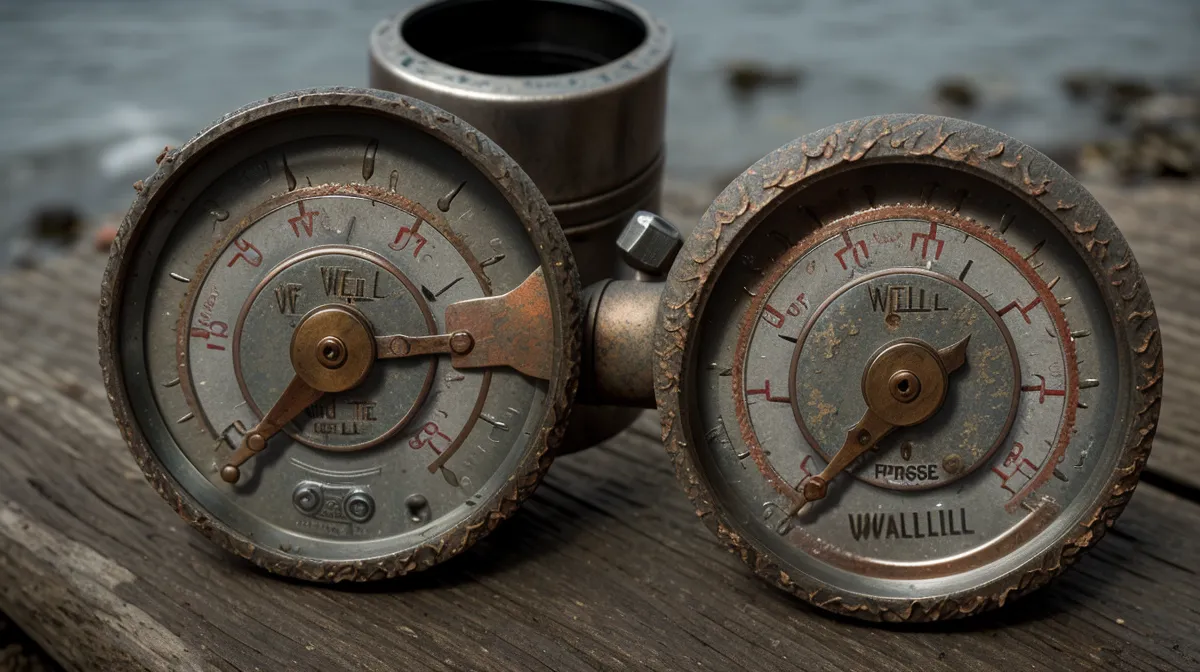
It takes a certain number of gallons before a well can actually call itself backed up. Ask five people with acreage and you'll get five different numbers, and most of them are guessing — including the version of me who thought one barrel counted.
Update (September 2026): Aqua Tower is no longer available for purchase; this article is kept for reference. Our current alternative pick in this category is Water Freedom System.
Quick disclosure before we get into it: some of the links below are affiliate links, and if you buy through them, I earn a small commission at no extra cost to you. I only mention products that have actually lived on this farm, usually while covered in mud and second-guessing every decision we've made since leaving Portland.
So here's the actual position, up front: stop treating storage as the whole plan and start monitoring what your well is doing in real time. The SmartWaterBox is the piece of gear that changed that for us on this homestead — not because it's magic, but because it tells you the truth about your tank pressure before your faucet does, and that single change did more for our off-grid water setup than anything else we tried.
The One-Barrel Myth About Off-Grid Water
Here's the myth almost every new homesteader believes, myself included: that a backup water plan just means having water sitting somewhere. For a while, ours was one 55-gallon drum shoved in a corner of the barn, and I called it a backup plan. Why would a container with no gauge and no warning system count as a plan? It doesn't. It had no way to tell me when it was low, no way to refill itself, and for most of one season, I genuinely forgot it was out there.
Rainwater helps too — I've written before about building a rainwater collection system for the vegetable garden, and it does real work for irrigation. But it isn't a well backup, and treating it like one is the same mistake as the drum. What actually forces the issue is your well's recovery rate — the number that turned a backup plan from a someday project into something non-negotiable.
I still don't fully understand the physics of a pressure switch, and I'm not going to pretend otherwise — somewhere between that switch and the pressure tank is a whole system quietly doing its job, and what I've actually picked up since leaving Portland is practical, not technical: mostly which sounds mean trouble and which ones are just the pump doing its thing.
How Much Would a Dry Well Actually Cost You?
When our well pressure finally dropped to nothing on a January night, I called the only emergency well technician who'd pick up the phone on a weekend. His quote just to drive out was enough to make me sit down right there on the kitchen floor — a genuine gut-punch of a number, the kind that makes you reconsider every choice that led you to owning a well in the first place.
A pump that gets caught cycling too hard doesn't fail quietly — it fails expensively, and the gap between catching a problem early and catching it late is not a small one. A quick fix and a full pump replacement live in completely different financial universes, and monitoring is what buys you the difference.
That gap is exactly why I kept ending up back on the SmartWaterBox page. I'd close the tab, tell myself the drum in the barn was probably fine, then find myself back on the SmartWaterBox listing a few days later. Eventually I stopped arguing with myself and just bought the thing.
What Four Products Actually Survived Testing
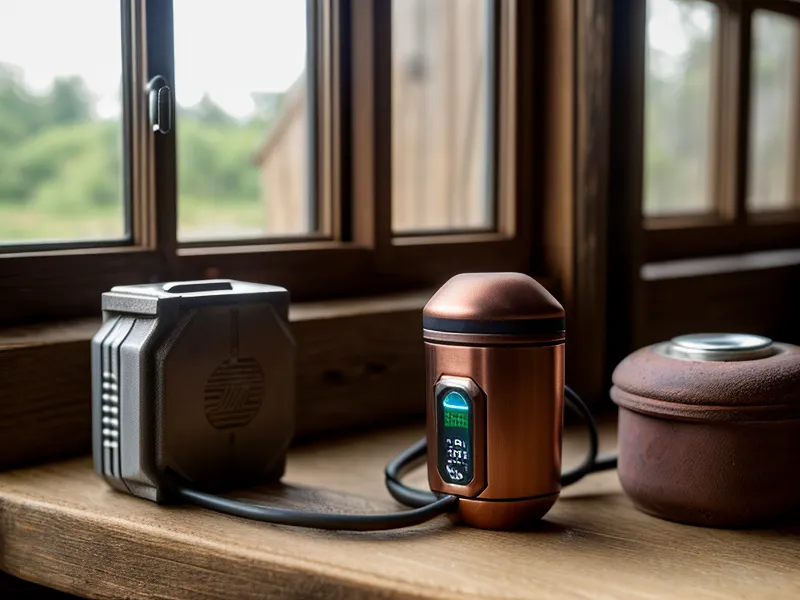
I ended up testing four different products side by side, mostly because I didn't trust my own judgment enough to pick just one. I needed something that would monitor tank or pressure levels, warn me before things hit zero, and ideally keep working if the power went out too. I have no plumbing background and no electrical training, so anything complicated got disqualified on sight.
The Aqua Tower was the one I liked most on paper — a gravity-fed backup that doesn't need power to move water, which matters out here when a storm takes the grid down along with the pump. I wrote more about that one in why the Aqua Tower is my top emergency water storage pick. Gravity-fed systems are worth understanding even outside emergency storage — the same basic idea of letting elevation do the work shows up anywhere water needs to move without a pump behind it. It's heavier to set up than a countertop box, though, and I needed an extra set of hands to get it in place.
Then there's David's Shield, the heavy-duty option if contamination worries you more than volume does. I use it for UV disinfection after heavy rain, and I got into the details of that in how I use David's Shield for UV well water disinfection after rain. It's the priciest of the group by a good margin, but if your well has ever tasted off after a storm, it earns that spot. None of this replaces basic sediment filtration, either — that's a separate fix for a separate problem, worth sorting out before you even start worrying about backup capacity.
Well Maintenance Isn't About Storage, It's About Monitoring
The actual lesson four products taught me has nothing to do with how much water you can store and everything to do with knowing what's happening before it becomes a crisis. You need some sense of your static head and how your particular well behaves, but you don't need an engineering degree to act on it — you need something watching it when you're not.
There was a night not long ago when I ran a full load of laundry just to stress the system on purpose, and instead of walking out to check the tank myself, I watched the level from my phone, still in bed. It did not move. Not even a flicker. That's the whole point of a monitor: not that the water is infinite, but that you'd know the second it wasn't.
My neighbor Ruthanne is the person I call when something smells wrong out here, and I mean that literally — she's the one who taught me to trust my own nose about well water before I trust any single gadget. Testing your water on a regular schedule matters more than any device you buy, and if a test or a smell ever points to contamination, shocking a well with chlorine is its own careful process with its own risks, not something to improvise from a forum thread at midnight.
If the SmartWaterBox and David's Shield are more than you want to spend right now, the Dark Reset is the bare-bones option — a simple reset tool for when your system trips, no app, no graphs, nothing fancy. It won't warn you before something goes wrong, but it'll get you back online after, and that's still worth keeping in the toolbox.
Enclosed housings matter more than I expected, and I learned that from a chicken. One of our Rhode Island Reds decided a shiny brass check valve I was testing on the rain line looked like an oversized kernel of corn, and she pecked the locking pin clean loose. Water went everywhere while I chased a very smug bird through the mud with my thumb jammed over the leak. Anything that lives out there now has to survive a curious chicken, not just a cold snap.
A Homesteading Backup Plan Built to Actually Hold
A real backup plan is not a single container, no matter how big it is — it's water, plus warning, plus a way to act before the tank ever runs dry. I think about that every time I talk with June Abernethy, a homesteader I met through a rural water cooperative meeting a while back. Her setup is the one I study when I want to see what doing this right actually looks like a few years in, because she treats monitoring and storage as two separate jobs instead of one drum standing in for both.
If you've been putting off a real plan because a barrel in the barn felt like enough, it isn't, and some part of you probably already knows that. Go take a look at the SmartWaterBox before the next freeze or the next dry spell finds the gap in your system for you. You can grab the SmartWaterBox here and stop guessing what your well is doing while you sleep. Now if you'll excuse me, I've got a drum to finally get rid of and a smug Rhode Island Red to keep an eye on.