
Both dog bowls are half full before I even think to lift the bucket and sniff it first, a habit that used to be automatic and apparently isn't anymore. That's the moment that actually stopped me this spring: I could not remember the last time I'd checked our well water before pouring it for anyone, human, hen, or dog.
Update (September 2026): Aqua Tower is no longer available for purchase; this article is kept for reference. Our current alternative pick in this category is Water Freedom System.
Quick disclosure before we go further: this post contains affiliate links, and if you buy through one, I earn a small commission at no extra cost to you. I only mention gear that's actually sitting in our mudroom right now, mostly because I've already wasted money on stuff that didn't hold up. Case in point: we ran a cheap garden hose as a temporary water line to the coop one winter, figuring it would last until spring. It split wide open in the first hard frost. Nothing labeled "temporary" on this property stays that way, and cutting corners on water infrastructure just moves the problem to a worse week.
Well Water Doesn't Come With A Warning Label
Back in an apartment, water lives behind walls and shows up clean by default. If it tasted off, you called the property manager. Out here, I'm the property manager, the plumber, and the entire water treatment plant, and after our well pump ran dry that first summer I've stayed a little paranoid about whatever's happening in our aquifer. Heavy spring runoff brings its own worries too: fertilizer drifting from neighboring fields, bacteria from our own septic system, whatever decided to wash downhill this year. None of that touches well recovery rate, which is really its own homesteading puzzle about how a well refills after you draw it down. That's a topic for another day. Would I skip checking my bank balance for a year and just hope for the best? Never. Off-grid water doesn't get special treatment either. My rule now is simple: if the water changes character at all (smell, color, taste), that's the test trigger, not waiting for me or the dogs to actually get sick. My friend Priscilla, who made the same leap out of the city around the same time I did, has a gift for making me feel like less of a disaster than I actually am, which helps on the days a strange smell sends me spiraling.
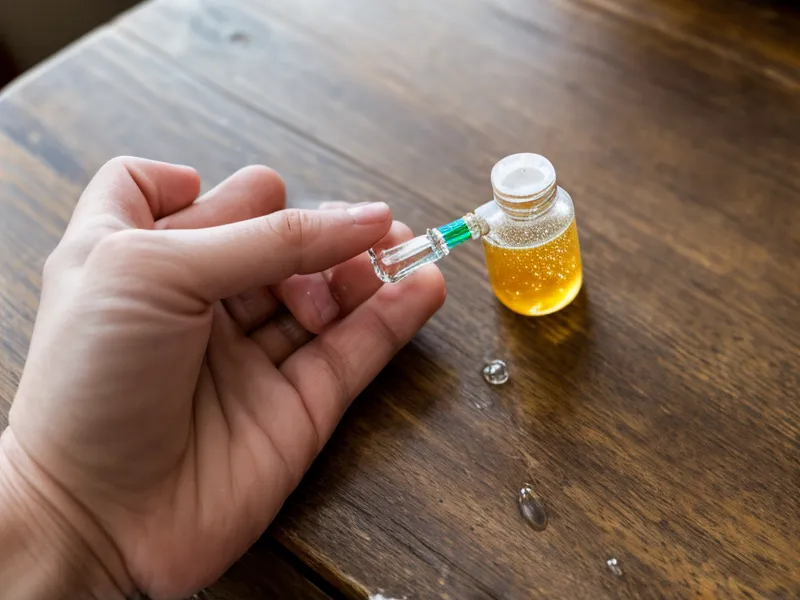
Inside The David's Shield Testing Kit
If you came here for a straight David's Shield review and not just my chicken stories, here it is: this year's home water testing round went through David's Shield again, partly because I've tried the bargain-bin strips before and they read more like a mood ring than an actual result. David's Shield sits in the middle: more thorough than a strip, without mailing vials off to a lab and waiting weeks for a report full of numbers I'd have to look up anyway. It checks for the heavy hitters: lead, coliform bacteria, pesticides, nitrates, and iron.
Our mudroom quietly runs double duty as mission control for the whole water setup, with gauges mounted right where my eyes land first thing, a scrawled diagram of every valve and pipe run pinned above the sink because my memory has never been reliable for this stuff. So it became the testing lab too for a few hours. Setting the vials out means keeping my fingers off the insides, which sounds simple until two dogs are leaning on your elbows and a partner is asking where the boots went. It's less "scientific procedure" and more kitchen chemistry run by someone easily distracted.
None of this makes me a water scientist or a health professional, so I follow the instructions like scripture and skip every shortcut. If you're genuinely worried about your own health, that conversation belongs with your doctor or a local water professional. This is just how I keep my own homestead anxiety in check.
The Hen Who Tried To Audit My Water Samples
While the lead test developed (about ten minutes of watching a strip do basically nothing), I heard the unmistakable thump-flap-scrabble of a hen who does not respect closed doors. Our boldest Barred Rock, the one we call Chaos Factor, had wedged herself through a gap in the screen and beelined STRAIGHT for the vials, because chicken curiosity outranks chicken self-preservation every single time.
Stopping her meant a full lunging tackle across the mudroom floor, one hand keeping the reagents upright while the other fended off a bird who was certain the bacteria sample was a snack. She lost interest fast once I hauled her back to the run, and my results turned out fine. My heart rate took longer to settle than she did. Set up something careful and adult on this property, and a creature with a brain the size of a grape will treat it like enrichment; lock the door before you start, or budget the extra ten minutes. There's more on how we handle the rest of our water chaos in Why the Aqua Tower Is My Top Emergency Water Storage Pick.

David's Shield, Dark Reset, Or Aqua Tower: Which Do You Actually Need?
People ask me this constantly, so let's settle it. For overall testing, David's Shield is still my pick: it balances thoroughness with something you can actually finish on a kitchen counter, and it catches more than a basic strip ever will. If money's tight and you just want a gut check on whether a new well is behaving, the Dark Reset is a solid no-frills option. It's faster, though it misses some of the subtler mineral shifts that mess with plumbing over time.
If your worry leans toward storage and getting water where it needs to go, rather than what's actually in it, I've been relying on the Aqua Tower system for that side of things: it's not a test kit, it's backup capacity, and it solves a completely different problem. How water actually reaches the garden beds from there is a gravity-fed distribution question, not a testing one, and worth its own conversation. I wrote more about testing the quality specifically for garden use, since kale apparently cares about pH almost as much as I do.
So What Was Actually In Our Water?
After about two days of letting the bacteria vial sit somewhere warm (on top of the fridge, safely away from the cats), the results were in. The bacteria stayed clear, meaning no coliform, no E. coli, nothing that would have meant shocking the well with chlorine to sort it out. Lead and pesticides were both non-existent too, which is the outcome you hope for every time and never quite expect.
The actual culprit behind that earthy smell was a spike in iron, paired with a slight dip in alkalinity. Nothing dangerous, just noticeable, probably shaken loose by how much water moved through the ground this spring. Iron at that level is also what keeps me paying attention to sediment filtration before it ever reaches the washing machine, since rust-colored water and clean laundry do not mix. That same test result is what tipped UV disinfection from optional to necessary for us. That's a purchase story for another post. Knowing the actual cause meant skipping a call to a commercial filtration company altogether, along with whatever a system like that would have cost.
Testing Tells You What's In The Water vs. Monitoring Tells You How Much You Have
A SmartWaterBox stays clipped to our pressure tank these days, doing a completely different job than David's Shield. Testing tells you what's actually in the water; the SmartWaterBox tells you how much of it you have left, which matters just as much after a well ran dry on us once already. The pressure tank itself is its own separate headache, and not one I'm getting into here. Between the tank monitor and the rainwater harvesting barrels we rigged under the porch roofline years back and never got around to upgrading, I actually sleep through a dry spell instead of lying awake doing math about tank levels.
More of our overall gear mishaps live in The Muddy Truth: What I Wish I Knew Before Spending a Fortune, including the stuff that flat out didn't survive a winter out here.
Is It Actually Worth Buying?
Short answer: yes, if you haven't tested in a while, or ever. Living out here means eating humble pie on a rotating schedule. Right when you think the chickens are contained and the garden's weeded, the water starts smelling like a swamp instead. The David's Shield kit isn't the cheapest thing in our gear closet, but what it bought us was worth more than a bargain price tag: knowing we weren't quietly poisoning the dogs, the chickens, or ourselves.
A reader named Corinne emails me every few months with a new water worry of her own. Her well runs shallow and her anxiety runs deep, and she's the reason I still explain things that feel obvious instead of assuming everyone already knows them. If you're new to well life, or you've been out here for years and just haven't checked lately, do yourself a favor and run a test. It's cheaper than a plumber and far cheaper than a doctor visit. Just lock the screen door first, or a hen will happily help with the science. Ready to stop guessing about your own tap? I'd point you toward a David's Shield kit before anything else: it's the closest thing to a landlord we've got out here in the woods.