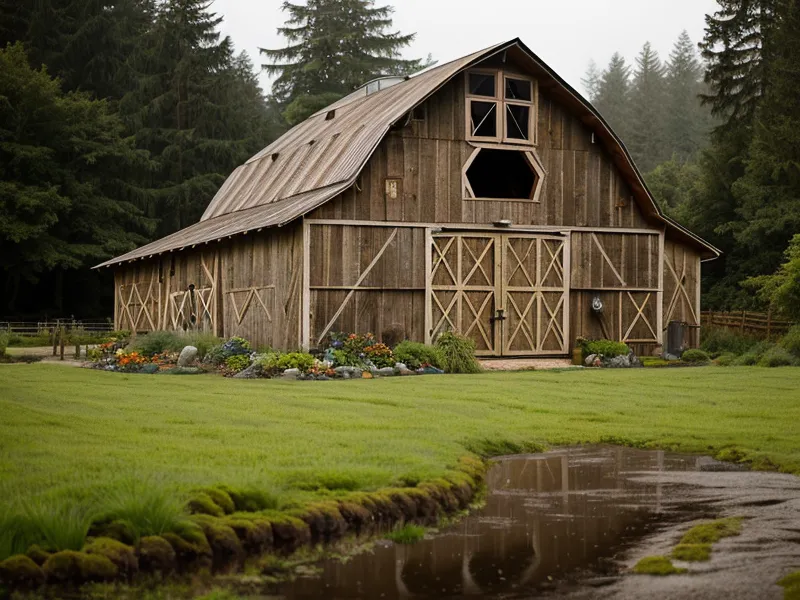
A pond that's breathing smells like nothing in particular — wet dirt, maybe a little fish; a pond that's dying smells like rotten eggs rolled in scum, and ours hit that second smell hard enough to send both dogs into a dead sprint away from the water. That's the entire gap between a small farm pond with working aeration and one without it, and it's why we spent a stretch of this past summer comparing off-grid solar aerator options side by side instead of just grabbing the first one that looked rugged enough for pasture mud.
Quick disclosure before we get into the comparison: this post contains affiliate links, and if you buy through one I earn a small commission at no extra cost to you. Every option below got tested right here in our own pasture mud — on a five-acre place in the Douglas County foothills of southwestern Oregon — not in a lab, not in theory.
We'd already survived one off-grid water disaster on this property — the summer our well pump ran itself dry and nearly cooked, a mess documented over in how our well sputtered during our first summer here — so we recognized the warning signs the moment the pond's water turned from murky green to an alarming neon color and the dogs refused to go near it.
Why a Small Farm Pond Loses Oxygen in Summer Heat
Here's the physics nobody explains at the garden center: warm water holds dramatically less dissolved oxygen than cold water, and a closed pond with no flow in the dry months just bakes under full sun. Heat splits the water into layers, trapping cold, dead water at the bottom while algae takes over the surface — and what rose off ours was eerily close to the thick green stink that hits you the second you pop a rain barrel open mid-August, just turned up by a factor of ten.
Once dissolved oxygen drops below roughly 5 mg/L, the aerobic bacteria that normally digest pond muck start dying off, and anaerobic bacteria move in behind them, producing the rotten-egg hydrogen sulfide that sent our dogs into retreat. I'm not a hydrologist, just a homesteader who reads too many extension-office PDFs after the chickens have gone to roost — if you're seeing actual fish die-offs rather than just a bad smell, call a pond specialist or your county ag extension office before trying anything from a blog.
Running power out to the pond the conventional way was never realistic — trenching conduit across rocky, uneven pasture costs real money in labor alone, pond or no pond. We'd already gone solar for the house well pump itself, which I cover separately over in portable solar setups for running homestead pumps, so solar aeration wasn't some leap of faith — it was just the next comparison in line.
Why We Ruled Out Three Off-Grid Aeration Options
This isn't the first time I've thrown effort at the wrong variable, either. I once spent a weekend replacing every faucet aerator in the house trying to fix low water pressure, when the actual problem was somewhere else entirely — so once the algae strands showed up along the pond banks, I made myself compare actual mechanisms before buying anything that just looked rugged.
The Water Freedom System was the first one we looked at seriously, mostly because its blueprints promised a decentralized setup we could adapt ourselves. It's a solid knowledge package for general off-grid fluid dynamics and emergency harvesting, but it isn't built specifically for continuous pond aeration — getting there meant sourcing our own pump and doing the engineering ourselves, and our farm schedule during peak weeding season left no room for that kind of tinkering.
We also weighed David's Shield against the Dark Reset system — one aimed at rugged independent power generation, the other at minimalist, budget DC power management for small pumps. Both move power just fine, but neither ships with the pond-specific hardware that actually matters: weighted airline, a diffuser rated for thick sediment, a chassis that survives sitting in pasture mud through a wet Oregon winter. Pick either one and you're still building the rest of the system yourself.
Pond aeration has one mechanical demand those general-purpose kits don't solve for: pushing compressed air through weighted line deep enough to reach thick sediment takes sustained pressure, not just steady voltage. That's the specific gap the SmartWaterBox closed for us — one integrated chassis handling solar-to-pump delivery, instead of me matching a charge controller to a diaphragm pump by guesswork.
The same dashboard that tracks the pond pump also tracks our house tank, and more than once I've pulled it up from bed half-asleep and watched the level sit dead flat through an entire load of laundry running at the same time — the first gauge out here I've trusted without walking outside to check it myself.
Direct-Drive or Battery-Buffered — Which Wins for a Small Pond?
Bert Yamamoto, a retired irrigation engineer who lives three properties over, wandered by during one of the first test runs and asked the one question I'd managed to skip entirely: what happens to the pond at four in the morning, eight hours after the sun's been down? That's the actual fork in the road with solar aeration, and most of what's written about it skips straight past it.
Direct-drive aerators wire the solar panel straight to the compressor with nothing stored in between, so nearly every watt of morning sun goes directly into pushing bubbles off the pond floor — efficient, simple, fewer parts that can fail. The catch is that ponds lose the most oxygen right before dawn, once plants stop producing it overnight and start competing with the fish for what's left. Battery-buffered setups store power through the day specifically to keep bubbling through that dead stretch, which answers Bert's question directly — but batteries sitting in a hot, damp pasture box wear out faster than a sealed direct-drive motor ever will. You're trading equipment lifespan for nighttime insurance, and there's no version of this where you get both for free.
The other comparison that actually matters is where the air goes in. A decorative surface fountain just agitates the top inch of water and looks nice from the porch; a bottom diffuser, dropped at the deepest point of our roughly quarter-acre pond, drags cold water upward and breaks apart thermal stratification so oxygen actually reaches the sediment where the real trouble starts. For a pond this size, bottom diffusion wasn't optional — surface agitation alone would have left the actual problem untouched.
Comparing the Contenders Side by Side
Lined up side by side, the four options split cleanly by what they're each actually trying to be.
SmartWaterBox is the only one built as dedicated homestead water and aeration hardware — rated for mud, dust, and the kind of exposure a pasture box actually takes, and it kept delivering through a stretch of genuinely inconsistent weather. Water Freedom System is the stronger pick if what you actually want is a DIY knowledge base: a 60-day money-back guarantee and instant digital delivery make it low-risk to try, though you're still buying parts and assembling the physical setup yourself. David's Shield hands you dependable, independent power architecture but expects you to supply your own weighted pond hoses and diffuser. Dark Reset is built for minimalists running small DC pumps on a tight budget, and it does that job fine, but it skips the integrated all-in-one chassis the dedicated units offer.
If what you actually want is a turnkey circulation setup instead of piecing together five mismatched parts in the barn — and you'd rather keep the pond as its own project, separate from whatever backup water plan you've already got running for the house — starting with the SmartWaterBox skips most of that assembly work entirely.
| Product | Rating | |
|---|---|---|
| SmartWaterBox Top Pick | 9.2 | Read More → |
| Water Freedom System | 8.6 | Read More → |
| David's Shield | 8.4 | Read More → |
| Dark Reset | 7.9 | Read More → |
The Trade-Off That Actually Matters
Once the bottom diffuser had been running non-stop through the hottest stretch of summer, the difference was striking. The pea-soup film broke up, the rotten-egg smell disappeared, and by late September you could actually see gravel in the shallows instead of black muck. Even the chickens went back to working the water's edge for bugs, something they'd stopped doing entirely once the smell first hit.
None of this is about running a swimming pool out in the pasture — it's about keeping oxygen above the point where the pond can manage its own muck without help. If simplicity matters most to you, and you don't mind the equipment working hardest exactly when the sun's strongest, direct-drive is the honest, lower-maintenance choice. If your fish load or water quality can't tolerate that pre-dawn oxygen dip, battery-buffered is worth the shorter equipment life it costs you. We didn't need a contractor or a few hundred feet of trenching wire for any of this — just the right side of that trade-off, and enough patience to let the bubbles do the rest.
SmartWaterBox
Pros
- ▸ Built to handle real off-grid homestead conditions without grid power
- ▸ Drives deep bottom-diffused aeration to break up stubborn pond muck
- ▸ Consistent performance through shifting weather and partial cloud cover
- ▸ Eliminates the cost and mess of trenching electrical lines across pastures
Cons
- − Diffuser placement requires careful adjustment in deep sediment
- − Vendor pricing and hardware inventory fluctuate with seasonal demand