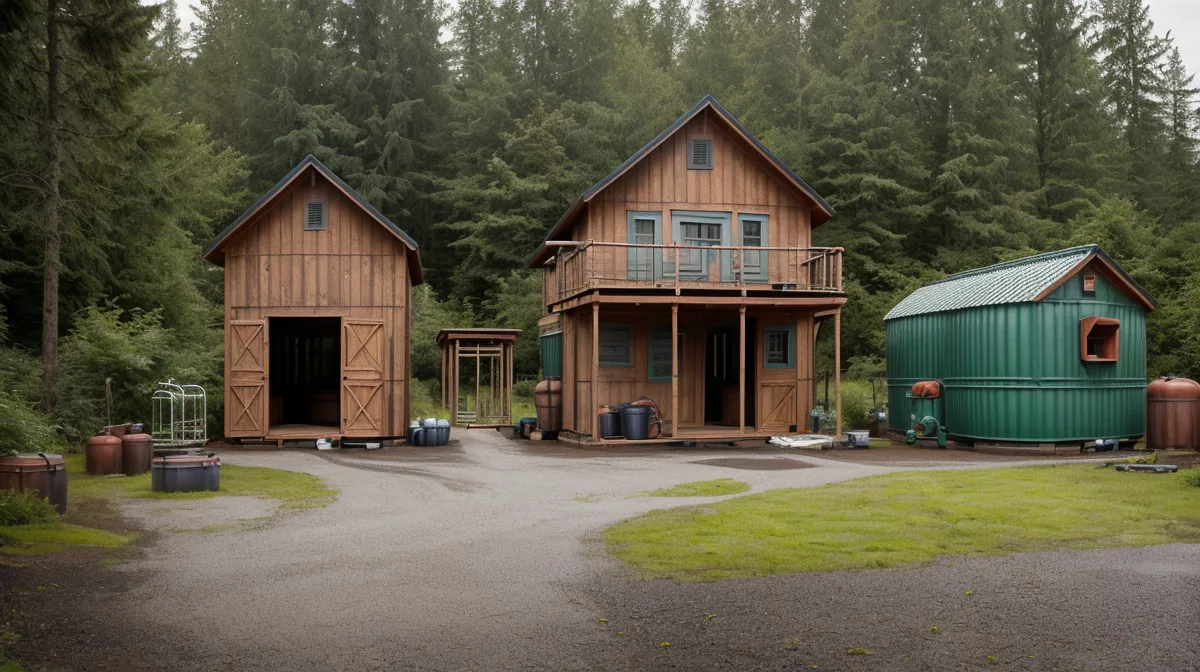
Two months ago, our rainwater collection tanks looked like they belonged in a swamp documentary; today, the same DIY water storage tanks are clear enough to see straight to the bottom. That flip is basically the whole plot of Oregon homesteading — one week you're proud of what you built, the next you're standing in mud questioning every decision that led you here. This round of homestead maintenance took the better part of a day, involved one deeply confused chicken, and taught me more about testing before treating than I expected going in.
My partner and I left an apartment in Portland three years ago for five acres in the Douglas County foothills of southwestern Oregon, and I still wouldn't call myself handy. Back then, water management meant paying a utility bill on time. Now it means standing outside with a scrub brush arguing with a plastic cube bigger than my car — no landlord to call, just us and whatever we can figure out before the dry season hits.
Homestead Maintenance, Six Hours at a Time
Our whole rainwater setup runs off the roofline of the chicken coop and the garden shed. That water drains into two enormous white cubes, technically known as an Intermediate bulk container, or IBC tote, connected in series. In theory, it's a simple backup system. In practice, it's a science experiment I referee every few months, arms aching, patience thinner than the plastic walls holding it all up.
Translucent Tanks Always Turn Green
Here's the part nobody mentions when you pick up a used IBC tote off some guy's back lot: clear plastic lets in light, and light plus standing water equals algae, every single time. I knew that. I even meant to paint the totes last fall. Then the chickens got into the garden again, the fence needed fixing, and painting two giant plastic cubes fell to the bottom of a list that never gets shorter. This happens every year. By spring the water had gone the color of pond scum, the gutters sagged under wet fir needles, and the intake filters were so clogged they were basically decorative — NOT ideal, six weeks before the dry season really sets in.
Vinegar, Sweat, and the Squirrel Nobody Warned Me About
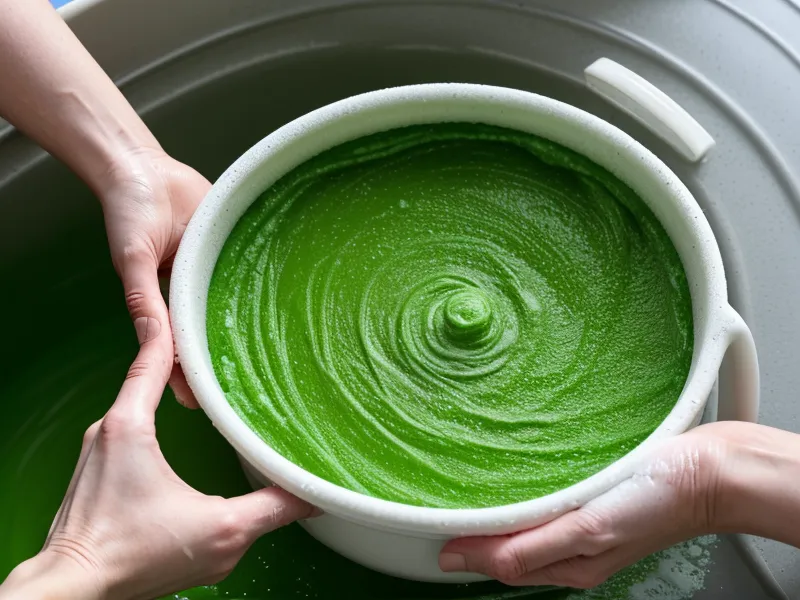
Cleaning the inside of a sealed plastic cube through an opening the size of a dinner plate is its own special flavor of misery — picture washing a car through the tailpipe, then double the swearing. We skipped bleach entirely since this water ends up on the vegetable garden, and went through vinegar instead, gallon after gallon, scrubbing until the biofilm coating the walls finally let go. A Barred Rock hovered by the drain valve the entire time, convinced every algae clump was a snack, while one of the dogs sat a safe distance away barking at the smell like it had personally offended her.
While my partner fought the tank interior, I went to find out why the downspout had backed up, expecting a wad of fir needles. What I found instead was a very unfortunate, very dead rodent wedged perfectly into the elbow of the pipe, proof that a first-flush diverter and a mesh screen are not optional extras for people with too much free time. I spent the next hour clearing muck, reinforcing the mesh, and adding more zip-ties, because at this point zip-ties are basically load-bearing on our whole property.
This Rain System Isn't the Whole Water Story
I learned plenty about slope and pipe fittings the year I figured out how I built a rainwater collection system for my vegetable garden, but nobody warned me that a setup like this isn't a set-it-and-forget-it appliance — it's more like a truck that needs an annual tune-up whether you remember to schedule it or not, and skip a year and you get a swamp behind the chicken coop.
There are other pieces of a homestead water setup I haven't touched yet, and it's worth saying so instead of pretending I've got it all figured out. Some people run UV treatment on their well water after a big storm; that's a different animal from painting a plastic tote, and not a system I've built. My tanks feed the garden and the coop by gravity alone, no pump involved, which is about as much plumbing complexity as I want in my life. Sediment filtering for well water headed into a washing machine is its own separate headache, and one I'm grateful isn't mine yet. I also still don't have any kind of remote sensor telling me how full those totes are — I just climb the ladder and look, which is either refreshingly low-tech or embarrassingly behind, depending who you ask.
Testing Before Treating: What the Well Taught Me
The well is a whole separate saga, and it's the one that actually scared me. Last summer, convinced something in the taste was off, I poured bleach straight down the casing without testing the water first — no sample, no baseline, just panic and a chemical smell that hung around the yard for days. There's a right way to shock a well, and I did not do it. These days I test before I treat anything, which sounds obvious until you've been the person who didn't.
That same summer the well was already struggling, probably because I didn't understand how slowly it recovers between heavy draws, and it wasn't until I fixed low water pressure from my well that I realized the pressure tank, not the well itself, was the cranky part of the system.
At the Corvallis Saturday Farmers Market a few weekends later, a friend of mine — the kind of guy who vanishes every summer weekend for disc golf tournaments at Milo McIver State Park — asked why I suddenly looked so relieved. I told him about the bleach. He just laughed. Five weeks after that whole mess, I rinsed a head of garden lettuce under the kitchen tap and stopped halfway through: the sulfur smell that used to catch in the back of my throat every time I filled a glass simply wasn't there anymore.
Lessons From the Mud, Take Three
If you're newly rural and still in that stage where every strange noise outside sounds like an emergency, here's what this round actually taught me. Paint your translucent tanks or wrap them in something opaque before the first hot week hits — UV light is the enemy, and waiting until you have a literal swamp is not a strategy. Vinegar takes more elbow grease than bleach, but it won't hurt the soil your vegetables are growing in, and yes, you will smell faintly of pickles for a while. Check your first-flush diverter monthly, especially under heavy tree cover, since a single handful of needles or one unlucky rodent can undo months of clean water. And don't let anyone shame you about zip-ties — the UV-rated ones hold up fine, and a system that works ugly still works.
None of this is glamorous. It's wet, it's occasionally disgusting, and it usually ends with at least one dog barking at a plastic cube for reasons known only to her. But if three years out here have taught me anything, it's that water systems don't reward good intentions — they reward whoever shows up with a scrub brush before the dry season, not after. Mark it on the calendar like an oil change, do it every single year, and the six-hour scrub stops feeling like an emergency and starts feeling like maintenance.
I'm not an engineer, and nothing here replaces a professional actually looking at your specific setup. If your well or your storage tanks are doing something that doesn't add up, call someone who knows more than a homesteader with a scrub brush and a strong opinion about zip-ties.