A well that's actually dying sounds nothing like a well that's just thirsty, and most of us who jump into homesteading and off-grid water life can't tell the difference until it's already a problem — I sure couldn't, for way too long.
Quick disclosure before we go any further: a couple of links below are affiliate links, and if you click through and buy something, I earn a small commission at no extra cost to you. Only gear and methods that have actually been dragged through mud, chicken dust, and dog hair on our five acres makes it onto this page.
Back in our old Portland apartment, water was a non-issue — you turned the tap, it ran clear and cold, and nobody thought twice about where it came from. Out here, there's no landlord to call when the ground goes quiet, which is exactly how we ended up learning when the well runs low backup water solutions the hard way, one soaked sock at a time.
Why Off-Grid Water Backup Stopped Being Optional for Us

Our mudroom has slowly turned into mission control for the whole water situation — there's a gauge taped up at eye level by the door, and a hand-sketched map of every pipe, valve, and the well head itself is tacked above the utility sink, more scribbled-on than I'd like to admit. The well sits roughly 140 feet from the house down a gravel path that turns into a genuine slip hazard every November.
Oregon technically lets a small domestic well pull a fair amount each day without a permit — the exact ceiling is one of those numbers nobody memorizes until they need it — but shallow bedrock wells like ours never get anywhere close once August bakes the clay solid. What people call the recovery rate is really just how fast a well refills itself after you've been drawing on it, and ours noticeably slows every summer before the fall rains show back up.
Is It Normal for a Shallow Well to Sputter Every August?
Short answer: for a shallow well, yes, especially if the static water level was already marginal going into summer — but that doesn't mean you shrug and ignore it. If your pressure tank, the part that smooths out water pressure between pump cycles, starts short-cycling, or your faucet spits air before the water fully stops, that's the moment to back off on heavy pulls, not the moment to panic and overcorrect with some drastic fix pulled from a forum thread at midnight. Having an actual emergency water backup plan ready before that point — not scrambled together after the faucet hisses — is really the whole difference between a stressful week and a five-minute inconvenience.
The Towel Trick, the Snapped Fitting, and Other DIY Failures
Not every fix we tried actually worked, and the towel one still embarrasses me. One cold stretch, instead of buying actual foam pipe insulation, I wrapped the exposed sections running out to the barn in a stack of old bath towels and called it good enough. It was not good enough — the towels soaked through the first time it rained, froze solid overnight, and did less insulating than the bare pipe would have managed on its own.
Before that, there was the drum incident — I'd hunted down a couple of used food-grade barrels, hooked up a garden spigot, and overtightened a plastic bulkhead fitting until it cracked clean through, dumping water across the ground while both dogs lost their minds and three Rhode Island Reds sprinted over expecting snacks. I texted my friend Priscilla Hartung a photo of the mess, and her reply — something along the lines of "congratulations, you're officially a real homesteader now" — is basically the only thing that's ever made me feel like a disaster without actually convincing me I was one.
Why Didn't the Rain Totes Just Solve Everything?

Rain collection sounds like the obvious fix until you actually try to run one through an Oregon winter. A big plastic tote sitting out in the yard looks great in July and turns into a block of cracked ice by December once the valves freeze, and without serious insulation or heat tape, exposed lines running to the garden or coop don't survive the first real freeze. We learned a chunk of this the hard way while figuring out what nobody told us about gravity-fed rainwater pressure before our first freeze, and it reshaped how we store water for the cold months entirely.
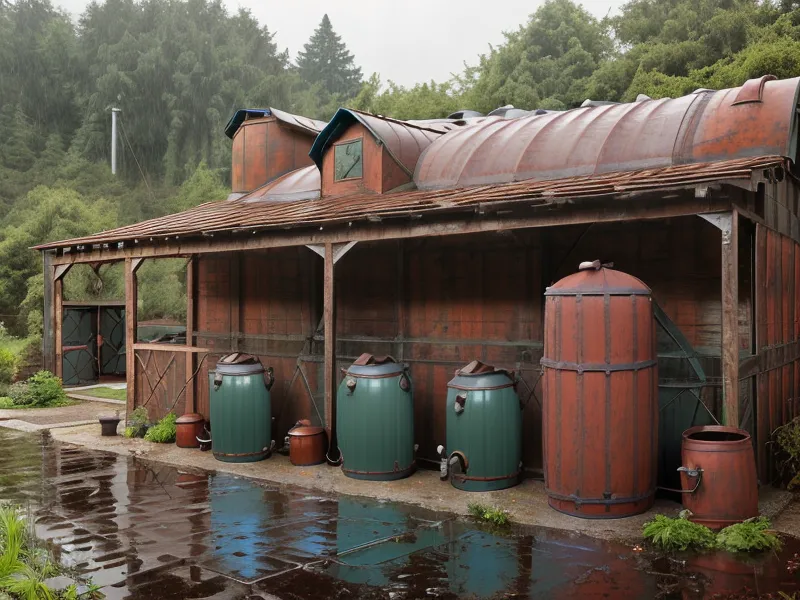
What actually keeps working, unglamorously, are three old forty-gallon blue barrels stacked under the porch eave — our very first rain rig, held together with more zip ties than I want to count, and somehow still the most dependable thing we own. Sediment filtration matters more on a setup like that than people expect; ours clogs faster than any package ever promises once you're running real catchment water through it instead of tap water.
Trusting the Water Again — No Sniffing Required
You know water's actually fine, in a very unscientific way, the day the dogs drink it without hesitating. For a long stretch I'd watch them sniff at the bowl before committing to it, and the day they just walked up and drank like it was nothing told me more than any of my own worrying did. That's not a substitute for real water testing, to be clear — it's just the moment I personally stopped bracing for bad news every time I filled a bowl.
A reader named Corinne Specht emailed me a while back after a post about the summer we ran our pump dry, and she's never really stopped writing back — her well runs shallow, her nerves run shallower, and between the two of us we've covered pretty much every version of "is this normal." She's part of the reason I still explain the obvious stuff on this site without apologizing for it, because somewhere out there, someone's standing over a well they don't trust yet.
Is an All-in-One Backup System Actually Worth Adding?
After the drum disaster, I stopped trying to reinvent plumbing out of spare parts and looked at systems actually built for this exact problem. The SmartWaterBox is the one we ended up adding — a self-contained unit that takes water in from whatever source is available, hauled totes, catchment, or a feed line, and runs it through filtration and pressure without needing a separate pump and a mechanical engineering degree to keep it alive. It isn't flashy, but it hasn't choked on dust, pet hair, or a fluctuating power supply the way our homemade setup did.
If you're more of a build-it-yourself person, the Water Freedom System is worth a look too — it's a guide rather than a physical unit, walking through how to capture usable water from ambient condensation, and it comes backed by a 60-day money-back guarantee if the approach doesn't fit your setup. We leaned toward hardware because I wanted something running on its own the day our pump coughed again, not a project to tackle mid-crisis.
Pricing and promotions shift often enough that I'd check each company's site directly rather than trust anything written here months from now. For us, not having to improvise with cracked fittings and soaked towels the next time the well gets cranky was worth the trade.
Priscilla still texts me photos of her own broken fittings, usually from somewhere near the Eugene Saturday Market where we both end up most weekends anyway, and I still don't have this entirely figured out. But the chickens get fresh water every evening without me doing mental math about what's left in the tank, and some version of that — not perfection, just not panicking — is the actual goal out here.