Thirty-five PSI. That's what the gauge on our David's Shield well water filtration rack read the day I finally stopped ignoring it, half of what this place runs on a good day, and the number that killed a piece of filter maintenance advice I'd been handing out to every new Oregon homesteader who'd ask.
The advice was wrong: replace your filters every six months, mark it on a calendar, done. That's a DIY plumbing shortcut that sounds smart right up until your own water proves it wrong. Sediment filtration doesn't run on a school schedule — it runs on how much iron the well throws that month, how hard the garden lines have been pulling, and whether it just rained sideways for a week. Getting replacements usually means a drive out to Coastal Farm & Ranch in McMinnville, which eats a good chunk of a morning before I've even touched a wrench.
The Calendar Trap Every New Well Owner Falls Into
Ruthanne, next door, is still nursing a grudge against whoever chewed up her driveway during her own well work, and she's got an opinion about everybody's water system, usually delivered over the fence while her chickens work the yard for bugs. Hers runs on a strict rotation. Mine used to as well, right up until I noticed I was pulling filters that still looked fine and tossing ones that had clearly been done for weeks.
Six months is a guess dressed up as a rule. Why would every homestead's water throw the same amount of iron on the same six-month clock? Ours never has. A filter that's fine in April can be strangled by September, and nobody mentions that when you buy the system — you find it out standing in the mudroom, watching a gauge you finally learned to actually read.
What David's Shield's Pressure Gauge Actually Tells You
That gauge lives at eye level in the mudroom now, screwed in beside a hand-drawn map of every pipe and valve on the property, because I got tired of guessing where things went. Sixty PSI is normal for us. A ten-to-fifteen point drop means go check your supply of filters. Twenty points down — like the day it hit thirty-five — means stop what you're doing and change them now, because the pump is starting to work overtime for nothing.
None of this touches how fast the well itself recovers between draws — that's a separate headache entirely, and one I've learned to leave alone until the gauge tells me otherwise. The pressure tank cycling the pump on and off is doing exactly its job even when the filters sitting in front of it are the ones giving out.
Why a Backup Barrel Isn't a Backup Plan
The first year here, my entire plan for a filter failure was one 55-gallon drum sitting in the barn, which I called "backup water" and never once actually tested. It didn't work the way I'd imagined. Filters don't fail all at once — they choke gradually, and a single drum covers maybe a day of real household use, not the week I'd pictured when I filled it. That's the kind of mistake that feels responsible right up until you do the math.
Rinsing lettuce from the garden under the kitchen tap right after that first proper filter swap, I noticed the faint sulfur edge I'd stopped consciously smelling was just gone — not covered up, gone. That's the actual test. Not a calendar, not a drum in the barn. What comes out of the tap when you're not paying attention to it at all.
Ask Anyone Who Doesn't Trust Batteries
June Abernethy doesn't trust anything that needs a battery to tell her the truth, and she asked me flat out why I'd rely on an electronic countdown on the UV bulb instead of just watching the water myself. She's got a point. A remote tank-level monitor is convenient right up until it isn't, and I'd rather train my own eyes on a mechanical gauge than depend on something that needs power to be honest with me.
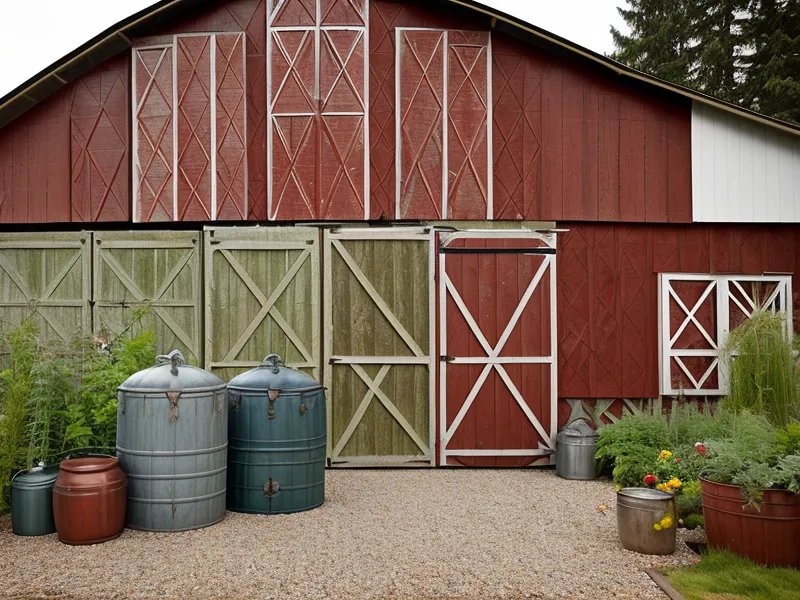
Iron caking onto the UV sleeve is still the main reason disinfection quietly stops working long before anyone notices a smell or a taste, and that's worth a proper lab water test on its own — a different job entirely from shocking the well after a flood, which I've learned not to lump in with routine filter maintenance anymore. Rainwater is its own separate system too: the three blue barrels under the porch eave have been catching garden water since before I understood any of this, and they don't care what the well is doing.
The Rule I Actually Follow Now
Filters get replaced when the gauge says so, not when the wall calendar does, and the housings get a fresh smear of food-grade silicone on the O-ring EVERY time, or the threads seize up like they've been welded shut. That's the whole rule. It's not elegant, and it's not what the manual leads with, but it's what actually keeps David's Shield running out here.
I've gone deeper into the money side of getting water gear right in the muddy truth about what I wish I knew before spending a fortune on water gear, since filters are only one piece of a much longer list. And if you're heading into your first real Oregon winter out here, keep the frozen pipe panic checklist somewhere you'll actually see it — right next to your own pressure gauge, ideally.
Watch the number, not the date. Your future self, standing in a cold pumphouse at some inconvenient hour, will thank you for it.