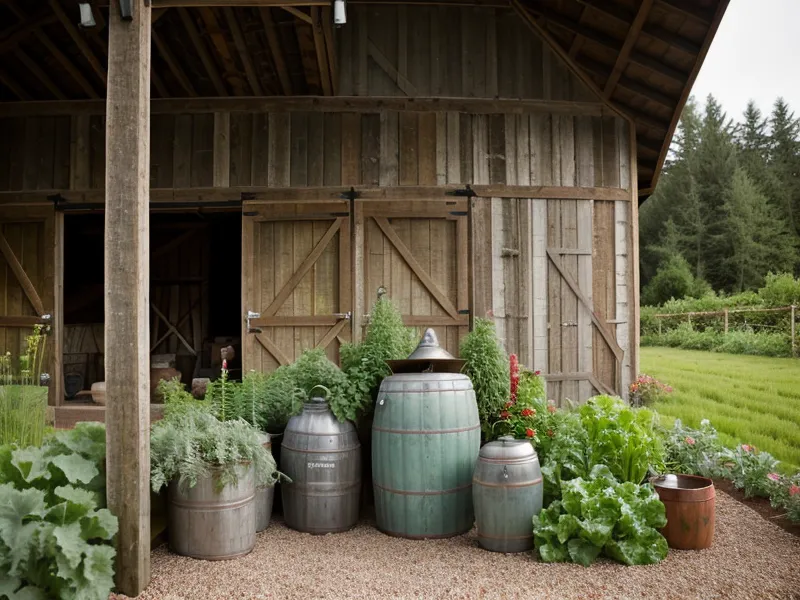
One hundred and forty feet. That's the walk from my kitchen door down to the well head, along a gravel path that turns to soup every November, and until recently every gallon that made that trip depended entirely on grid power. Switching to a solar-powered well pump changed that, and it turned into one of the bigger homestead security upgrades we've made to our off-grid water setup here in rural Oregon — right up there with the rain barrels under the porch eave.
Update (September 2026): Aqua Tower is no longer available for purchase; this article is kept for reference. Our current alternative pick in this category is Water Freedom System.
Quick disclosure before we get into it: this post has a few affiliate links, and if you click through and buy something, I earn a small commission at no extra cost to you. I only mention gear that's actually sitting in my mudroom right now, tested the hard way. I'm not an electrician or a licensed well contractor, so treat what follows as one homesteader's field notes, not professional instruction — talk to a pro before you touch your own wiring or well system.
Why a Solar-Powered Well Pump Beats Grid Power Out Here
Our well ran dry within the first few months on this property, back before I understood recovery rates well enough to leave the pump alone — that's a topic for a different post entirely. What became obvious fast was how often the power itself failed, long before the well ever did. Wind takes down a line in the Cascades, ice does it every December, and one memorably indignant squirrel took out a transformer down the road last spring. Every outage meant the pump stopped, and everything downstream of it — the chicken trough, the garden drip lines, the kitchen tap — stopped right along with it.
A grid-tied well pump is a single point of failure wearing a convenient disguise. That's fine if you live somewhere the power rarely blinks. It's a liability if you're forty minutes from the nearest utility crew and surrounded by trees that treat power lines like an all-you-can-eat buffet. Why would anyone assume a well under a fir canopy behaves like a well in an open field? It doesn't, and the sooner you plan around that, the less you'll be hauling water by hand.
How Much Sun Does Your Well Actually Need?
Here's where most solar advice falls apart for anyone under tree cover: it assumes a wide-open field somewhere sunny and flat. My five acres sit under a shifting canopy of fir that throws moving shadows across panels for a good part of the day, so the number that mattered most to me wasn't total daylight, it was peak sun hours — the hours of strong, direct light your panels can actually put to work. Under conifer cover in western Oregon, that can drop to somewhere around one and a half to two hours in December. Size a system for a sunny brochure photo and install it under fir trees, and you'll be disappointed by February.
The other number worth knowing before you buy anything is your well casing diameter, since a standard residential well casing runs about six inches across, and that limits which pump housings will physically fit down the hole. Pair that with your static water level and you've got the two measurements that decide almost everything else that follows — panel count, pump wattage, and whether you'll need a booster or backup battery to get through the darkest months.
Matching the Pump to the Well
Once you know your casing size and your sun hours, picking a pump stops being guesswork. DC submersible pumps are the standard choice for solar setups because they can run directly off the panels without an inverter eating into your power budget, and most residential systems cycle on a float or pressure switch rather than running nonstop. A reader named Corinne emails me every time her pressure switch does something strange, which is honestly why I still explain the obvious parts of this without apologizing for it. Nobody grows up knowing what total dynamic head means.
Total dynamic head, in plain terms, is how far the pump has to push water uphill plus how much resistance the pipe run adds along the way. Get that number wrong and you'll end up with a pump that technically runs but can't deliver real pressure to the house. It's the same principle as choosing a garden hose for a slope — too small a pump on too long a climb, and you get a trickle instead of a flow. A pressure tank is a separate piece of that puzzle, and switching to solar didn't change ours at all; that's an upgrade for a different year.
The Pipe Insulation Mistake I Won't Repeat
Not everything I tried before the solar switch worked, and I'd rather tell you about the failure than pretend this was all smooth sailing. The first winter here, I wrapped the exposed line near the pump in old bath towels instead of buying actual foam pipe insulation, because it was late, I was cold, and towels were right there. It held for exactly one hard freeze before I was outside thawing pipes with a hair dryer, furious at myself. My friend Priscilla, who I met at a rural-property seminar back when we were both still in Portland, has a gift for making me feel like a disaster without actually being one — and she still brings up the towels every time pipes come up.
Foam insulation is NOT expensive compared to a burst line, and it takes about ten minutes to install once you've got it. If you remember one practical thing from this whole piece, let it be that: insulate the exposed sections before the first real freeze, not after you're standing outside in the dark regretting your choices.
Watching the Tank Without Losing Your Mind
Monitoring used to mean walking out to the well house with a flashlight every time the wind picked up, which got old somewhere around the second winter. Our mudroom still has a hand-sketched map of every pipe and valve taped above the sink, left over from when checking the system meant standing in front of gauges and reading them by eye. These days I can pull up the tank level from my phone without getting out of bed, and it barely moves even mid-laundry, the kind of boring, steady number that used to feel impossible to trust.
The SmartWaterBox is what we ended up using for that piece, mostly because it didn't require rewiring anything else in the system. I also looked at the Aqua Tower for gravity-fed storage before deciding the solar pump was the actual missing piece in our off-grid water system from scratch — gravity-fed distribution is its own rabbit hole I won't get into here, but it's worth knowing the term if you're shopping around.
Where Solar Alone Won't Save You
If you're still deciding whether any of this is worth the hassle, my guide to Finding Your 'Wait, We Have Water?' Peace of Mind walks through the backup-gear side of things in more detail. Solar is one piece of a much bigger water security picture, not the whole thing.
Solar solves power. It doesn't solve water quality, and it doesn't solve what happens after dark if the grid's still out and stored power is running low. We run a David's Shield alongside the pump for filtration, because pulling water reliably doesn't mean much if you're not also treating it — UV disinfection is its own conversation I'll leave for another post, same with sediment filtration, which the pump does nothing for either. On nights when outages drag on past sunset, having an actual Dark Reset survival strategy matters more than the pump does.
If you land on the solar pump as your next move, the SmartWaterBox is the piece I'd start pricing out first, and test your water once the new system's running instead of just assuming solar fixed everything upstream of the tap. It's been the steadiest part of our water setup since we added it, which is not a sentence I expected to write about a piece of mudroom hardware.