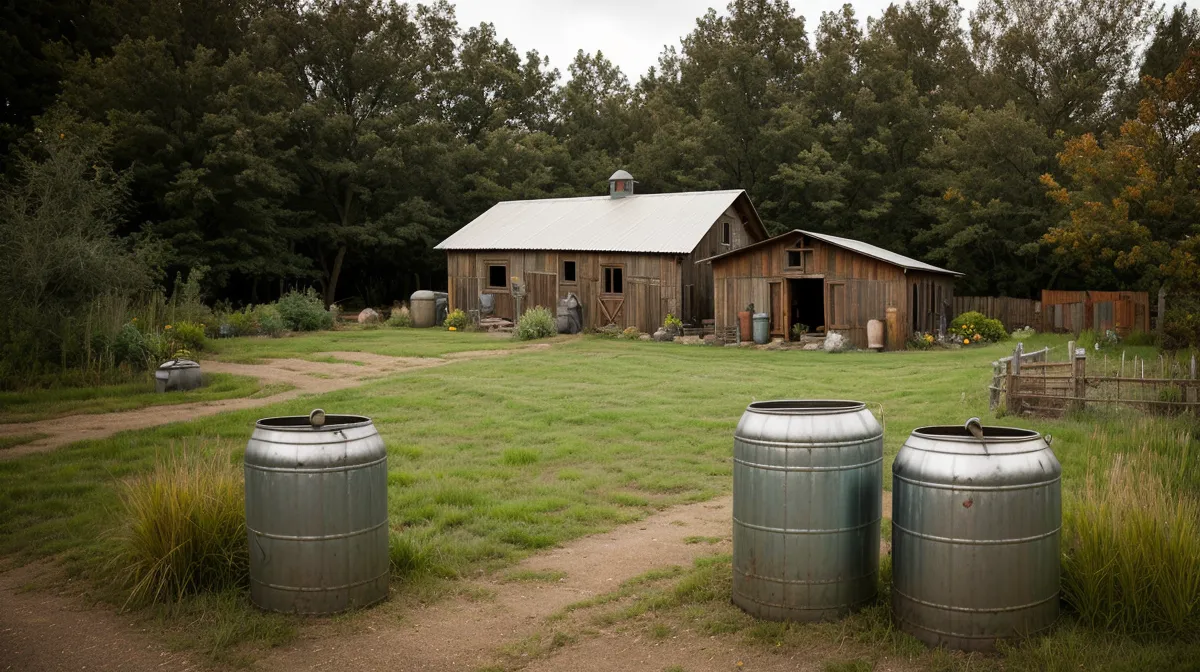
Twelve chickens need about half a liter of water each, every single day — heatwave or not. That number followed me around our place all August, because the morning our well finally went quiet, half a liter times twelve stopped being a fun fact and turned into an actual problem. Off-grid water security gets sold to beginners in homesteading circles as a single purchase or a single passed test, check the box, done. That's the myth this post is here to correct — real well maintenance, and the kind of emergency preparedness that actually holds up on a five-acre place with no landlord to call, is messier than a checkbox.
Quick disclosure before we go further: this post contains a couple of affiliate links, and if you buy through them I earn a small commission at no extra cost to you. I only mention things we've actually dragged through our own mud. I'm not an engineer, so please talk to a licensed well professional before you touch anything serious on your own system.
Off-Grid Water Security Isn't a One-Time Fix
Ask anyone new to homesteading what "water security" means and you'll usually get the same answer: buy a backup, pass a test, done. Treat it like a locked door — check it once and move on with your life.
Real security behaves more like a garden than a lock. It is never finished, it needs another look every season, and it punishes neglect the exact same way weeds do. That's the whole argument of this post, and it's worth saying plainly before anything else: one good test or one good gadget doesn't make you water secure. A habit does.
The Day Our Well Went Quiet
Standing in the shower one hot evening in August, I felt the pressure slow to a muddy trickle, sputter twice, and quit. Just my own heartbeat and a very quiet house.
Our place sits on five acres in the Douglas County foothills of southwestern Oregon — not high desert, but dry enough by late summer that a shrinking aquifer doesn't recharge on anyone's convenient schedule. I'd learned that the hard way once already, and I wasn't eager for a repeat lesson.
The chickens were the worst part of it. Twelve pairs of beady eyes stared at me like I'd personally betrayed them, because functionally, I had. A chicken doesn't care about aquifer science — it just wants its water, and if the tap's dry, that's your fault, full stop.
Even with the well down, the dogs still needed their walk — water crisis or not, nobody consulted them. We headed out toward the Tillamook State Forest trailheads like we always do, and one of them found something disgusting to roll in within the first ten minutes, because animals have zero sense of timing.
Oregon's exemption for small domestic groundwater use looks generous on paper. It just doesn't argue with an aquifer that isn't recharging fast enough to fill a tank. The law doesn't put water back in the ground — only the rain does that, eventually, on its own schedule.
I'd actually written about some of this before, including more of my lessons in rural well water security, but knowing the theory and standing in a dry shower are two very different kinds of knowing.
What Real Well Maintenance Looks Like Underneath the Surface
Here's where the myth really falls apart. A single test or a single gadget is a locked door you check once. Real water security is closer to that garden metaphor — never finished, and it punishes the owner who stops paying attention.
Start with the well itself. Knowing your well's actual recovery rate beats guessing every time, and that starts with knowing whether you're sitting on a shallow or a deep well, and whether it was sited with the right setbacks from the septic drain field in the first place. A pressure tank and pressure switch that aren't quietly failing matter just as much, along with purging the air out of the lines after any dry spell and actually checking your static water level instead of waiting for a mystery. None of that is exciting. ALL of it matters more than any single device.
Then there's the water once it's moving. Sediment filters and a real whole-house treatment train earn their keep before anything reaches a tap, and you need an actual plan for the water itself: shock-chlorinating the well if contamination gets in, a UV unit for ongoing disinfection, an eye on dissolved minerals like iron staining everything it touches. Storage is its own separate project: real water storage capacity, catching rain and moving it downhill with gravity instead of a pump, a tank monitor that tells you the level without a flashlight at midnight, and freeze protection wrapped around all of it before the first hard frost hits. Factor in how much your animals actually drink (livestock water demand is a different question from your own), plus a greywater system for the garden and a septic system you can't afford to forget about, and maybe a solar setup that cuts the pump loose from the grid entirely, and "I passed a water test" stops looking like a finish line. It's closer to page one.
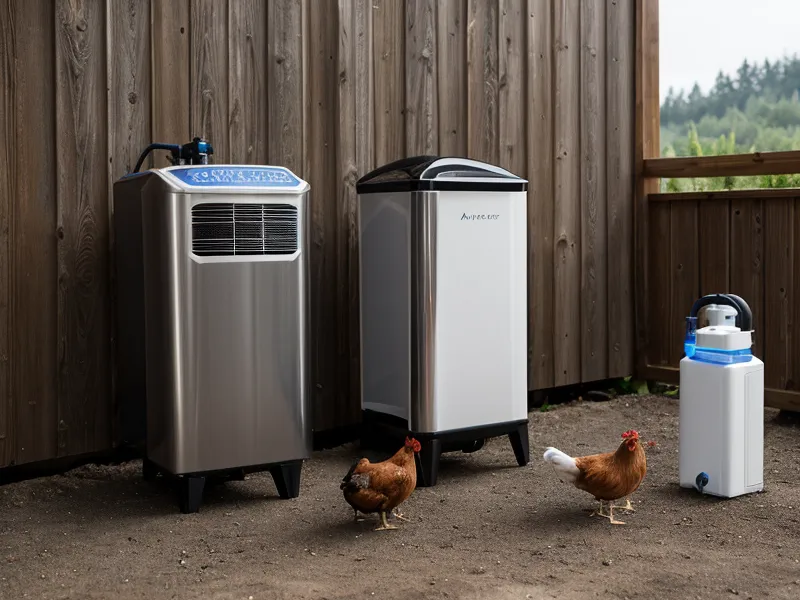
Somewhere on that list is atmospheric water generation: pulling moisture straight out of the air without needing the well, the rain, or a truck full of jugs. It sounded like science fiction the first time I read about it, and a dry September doesn't leave much patience for skepticism. It's one layer, not a silver bullet, and treating it as the whole answer would just be the same myth wearing a different gadget.
For anyone who'd rather build a setup than buy a box, there's a guide-based option too. I leaned on some of the same thinking in why I added the Water Freedom System to my garden irrigation plan earlier this year, even though that piece is more about garden irrigation than drinking water.
Over a full season of actually running it, not just the first hopeful week, I wrote up what held up and what didn't in my season-long look at off-grid water security. Worth reading before you buy anything, frankly, mine included.
Learning to Trust the Water Again
A well coming back online after running low is often the riskiest moment, not the safest one. A recharging aquifer can pull surface water intrusion right along with the water you've been waiting for: grit, runoff, whatever soaked into the ground during the dry spell.
Elliot, the plumber from the next town over, is slow to say anything he isn't sure about, which is exactly why I believed him the first time he told me the recharge is the dangerous part, not the dry spell itself.
Back in spring I'd actually called the county health lab and paid for a proper water test: the kind every homesteading guide tells you to get. The results came back fine. I filed the paperwork in a drawer and never tested again: not after the dry spell, not after the well recovered. One passed test turned into a lifetime pass in my head, which is the exact myth this whole post has been arguing against.
Bert, a retired irrigation engineer who lives a few properties over, has a habit of asking the one question I'd forgotten to ask myself. He found me filling the dog bowls outside one afternoon and asked when I'd last actually looked at that test result: not whether I'd tested, when. I didn't have a good answer.
I filled the dog bowls one morning and realized I hadn't leaned down to sniff the water first, something I'd been doing without quite noticing for a while. That was the real sign I'd started trusting the water again, and it's also exactly the moment I should have walked back into the lab instead of trusting my nose. Flowing again is NOT the same thing as safe again, and that gap is where my own mistake lived.
Build Your Backup Before You Need It
So here's the actual rule, not the brochure version: treat any single test, tank, or gadget as one layer, not the whole system, and re-check the water itself every time something changes: a dry spell, a storm, a well that goes quiet and comes back. If you want one more layer in the stack, the SmartWaterBox is the one that's held up on our place through an actual dry season, though you should check current pricing and availability yourself, since it does shift.
The well still makes that same tired hum some mornings, and the chickens still judge me the second a hose kinks. But I don't panic anymore, and that's really the whole point of water security: not a feeling of certainty, but having enough layers that one dry spell doesn't turn into a disaster.