
Mud-brown water sputters out of the kitchen tap, and I'm holding a mason jar up to the window before the coffee's even finished brewing. This is the least glamorous side of well-maintenance nobody puts in the pretty homesteading photos — the moment water-filtration stops being a hobby topic and turns into an actual chore. Every well-water household runs into this rural-infrastructure surprise sooner or later, usually right after the first big autumn storm, and the homesteading struggles that follow tend to raise the same handful of questions. So here they are, answered straight, no meandering backstory required.
Quick disclosure before we get into it — a couple of the links below are affiliate links, and if you buy through them I earn a small commission at no extra cost to you. I only mention gear we've actually run through a muddy Oregon winter on our own five acres. None of this is professional advice; if your water situation feels serious, a licensed well or water treatment pro is worth the call.
Why Heavy Rain Causes a Well-Maintenance Headache
Rain that lasts more than a few days does something different underground than a quick afternoon shower. Once the soil around the well casing gets fully saturated, water starts finding paths it wouldn't normally take — including tiny gaps a casing seal can develop over the years — and it carries dirt, silt, and clay along with it. Well folks call this turbidity, which is really just a fancy word for "your water is wearing its mud boots." How fast a given well recovers from that kind of surge is its own rabbit hole. A slow-recovering well tends to stay murky longer than one that refills quickly.
Think of it like stirring the bottom of a garden bed after a downpour — the water was always going somewhere, it just used to be clear because nothing was disturbing it. Add in a well casing that's a few decades old, and even a well built to spec can pull in extra sediment during a big enough storm system. The chickens, for what it's worth, took one look at the cloudy puddle forming by their coop and refused to touch anything but their own clean waterer that morning, which felt like a pretty fair review of my water quality.
I Already Replaced Every Faucet Aerator in the House — Why Is the Water Still Cloudy?
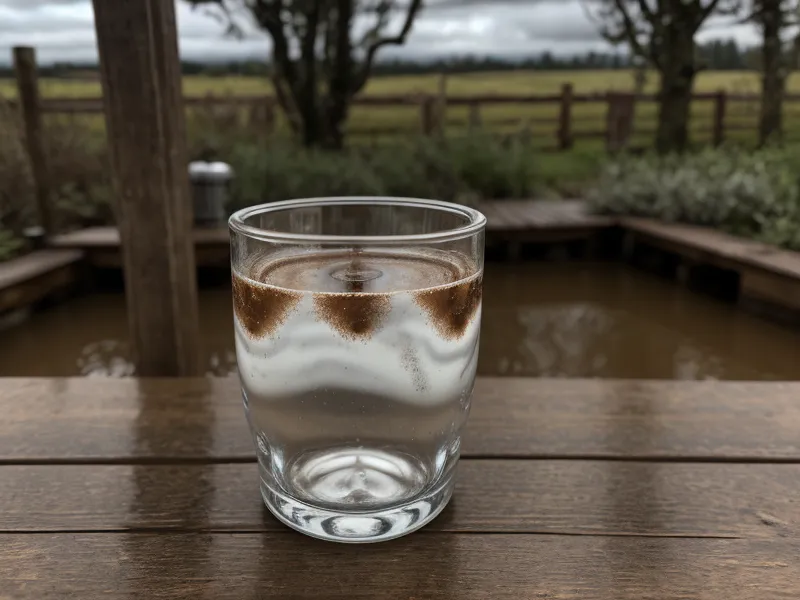
This one comes up more than you'd think. Someone notices weak flow or a sputtering tap, assumes it's a pressure problem, and spends a Saturday swapping every aerator in the house — kitchen, bathroom, the outdoor spigot, all of it. It happened here too, and it did NOTHING, because low pressure and muddy water are two different problems wearing the same symptoms. Cloudy or brown water is almost always a sediment issue upstream of the fixture, not a clog inside it, so no amount of hardware swapping at the faucet touches it.
A pressure tank buffers the swings in flow so your pump isn't cycling constantly, but that's a subject for another day — I covered a full pressure-system meltdown in The Night the Pressure Gauge Hit Zero, if you want the deeper dive. My neighbor Bert Yamamoto, a retired irrigation engineer three properties over, likes to say pressure is "the mood of the system," and after enough rainy seasons out here, I get what he means. Muddy water, though, is a different animal — it's about what's suspended in it, not how hard it's pushing through the pipe, which means the fix lives further back, closer to the well itself.
Sediment Filters: When They Help, and When They Just Clog
Sediment filtration helps, but only the right kind. A filter rated too fine for the sediment load will clog within the hour and choke your pump instead of protecting it. My rule now: start coarse, watch how fast it fouls, and only tighten the rating if the coarse stage genuinely isn't cutting it. That's judgment built from watching a lot of filters die, not a spec sheet.
If your setup is gravity-fed rather than pumped — like the cistern we run for the garden — a tight filter is even less forgiving, since there's no pump pressure to force water through it and flow just stalls, which is really its own conversation about how a gravity-fed system behaves under load. For a straight pressurized system, the fix is usually simpler: match the filter to what's actually coming out of the ground, not to the tightest number on the shelf.
How Do You Know the Well Has Actually Cleared Up?
There's no gauge that tells you "done." The real answer is boring and visual: you fill a clear glass straight from the tap and check it in daylight, more than once, over a few days. For me, the moment that actually convinced me was catching the kitchen faucet early one morning, filling a glass without thinking about it, and realizing there was no rusty tint creeping up the inside by the time the chickens were fed — just cold, plain water, nothing worth holding up to the light.
Do You Need to Test the Water Even When It Looks Clean?
Clear doesn't automatically mean safe, though — color tells you about sediment, not about what might have hitched a ride during a flood-level rain event. If you want to know what's actually in the water instead of guessing from a glass, I put together a full walkthrough on How to Test Well Water Quality Without Hiring a Professional Lab, and it's worth doing at least once a year no matter how clear the tap looks.
Shocking the Well with Bleach Won't Fix Turbidity
Shock chlorination is a common next thought once the water's been off-color for a while, but timing matters more than people expect. Dumping bleach into a well that's still turbid is mostly wasted effort — sediment has to settle out before chlorine can actually reach and treat anything hiding in the water, so a shock treatment done too early just gets used up on mud instead of on what you're trying to kill. That's a whole process on its own, and not one I'll walk through here, but the settling step is the part people skip most often.
Building a Filtration Setup That Survives Oregon Winters
Once you're past troubleshooting, the setup that actually holds up through a wet Oregon winter usually needs more than one line of defense. We landed on the SmartWaterBox for the heavy filtration work, since it's built to handle a steady sediment load rather than the occasional grit a standard under-sink unit expects, and it hasn't needed constant babysitting once the rain really started. Elliot Morozov, the plumber from the next town over, is the person I measure every other piece of advice against, and even he admitted this setup was a step up from what we'd cobbled together before.
For backup drinking water on the days the main system needs attention, we also picked up the /check/alt-1 — not glamorous, but having a few days of stored water on hand instead of hauling jugs from town takes a lot of the stress out of a muddy-water week. It pairs well with the rain barrels we already run off the garden cistern, which is really its own rainwater-harvesting setup with quirks I've covered elsewhere.
The last piece is biological, not just physical — filtering out clay doesn't necessarily deal with anything that hitched a ride during a flood-level surge, which is where something like David's Shield comes in for the disinfection stage. I put together the details in my review of David's Shield if you want the longer version. UV treatment specifically is its own topic worth understanding before you buy anything, and so is knowing how full your storage actually is without walking out and lifting a lid — that's a separate tank-monitoring problem I won't get into today.

None of this requires being an engineer — mostly it requires paying attention and being willing to get your hands dirty for an afternoon. There's a particular slap of wet gloves against the edge of the utility sink that's become the unofficial soundtrack of every filter change here, and honestly, I don't mind it anymore. If your well turns to mud every time it storms and you're ready to actually fix it instead of just waiting it out, the SmartWaterBox is the one upgrade on this list I'd tell a friend to make first.