There's a thin white ring crusted around the inside of my kettle that wasn't there back in our Portland apartment — that's just what off-grid water does to a kettle out here, no matter how often I scrub it.
Quick note before we get into it — some of the links below are affiliate links, and if you buy through them I earn a small commission at no extra cost to you. I'm not a plumber or an engineer, just a homesteader who has tested this stuff on her own five acres, and I only recommend what I've actually used to keep our own water running.
Three years into homesteading on five acres in rural Oregon, the question I get asked more than any other is some version of "what's your actual backup plan when the well can't keep up?" A neighbor who spends every free weekend at disc golf tournaments out at Milo McIver State Park cornered me about it at the Corvallis Saturday Farmers Market last month, and he's not the first. So instead of one long story, here's the honest, question-by-question version — the stuff people actually want to know when they're staring down their own off-grid water setup for the first time.
Why a Homestead Needs Its Own Kind of Emergency Preparedness
A backup water plan out here isn't a one-time purchase you stash in a closet and forget about — it's closer to budgeting than shopping, something you keep adjusting as the seasons change. We learned that the hard way our first summer on this property, when we ran our well pump completely dry and found out just how expensive and avoidable that mistake was. Your well has what's called a recovery rate — basically how fast it refills once you've pulled water out of it — and that number matters more than most new owners expect when they're figuring out how big a backup they actually need. The pressure tank sitting between your pump and your faucets does more work than people realize too: it's what keeps water coming in a steady stream instead of surging every time the pump cycles, and when that tank is too small, you feel it first at the kitchen sink.
Is It the Well, or Something Else Entirely?
Not every water scare is actually a dry well. Shallow and deep wells behave completely differently under stress, and knowing which kind you have changes how worried you should actually be when the pressure drops. Where the well sits on your property matters too — setbacks from septic systems and slopes affect how much water is realistically available, which is a conversation I wish someone had made us have before we bought this place. Sometimes the real culprit is a worn-out pressure switch cycling the pump wrong, or air that's worked its way into the lines and is making everything sputter instead of flow. And after a hard rain, cloudy water isn't always the well failing — surface water can work its way in and muddy things up temporarily without anything being structurally broken.
How Much Water Does a Homestead Actually Go Through?
People always lowball this number in their head. Between two dogs, a flock of chickens, a vegetable garden, and two adults who apparently shower longer than they think, our actual daily use turned out to be a lot higher than I guessed before we moved out here. Chickens need less water per bird than you'd assume, but multiply that across a flock and add a heat wave, and an automatic waterer empties faster than seems possible — ask me how I know, the afternoon I found the whole flock crowded around a bone-dry waterer because I'd misjudged how hot it had gotten. Who wants to learn that lesson in the middle of summer? Storage capacity planning has to account for animals, not just drinking water for the humans in the house, and most of the backup calculators floating around online skip that part entirely. Stretching water you've already used once more — reusing shower or laundry water on garden beds, what people call greywater reuse — can take real pressure off a backup tank during a dry stretch, though it's not something to improvise without thinking through what's actually in that water first.
Catching Rain Before the Ground Dries Out
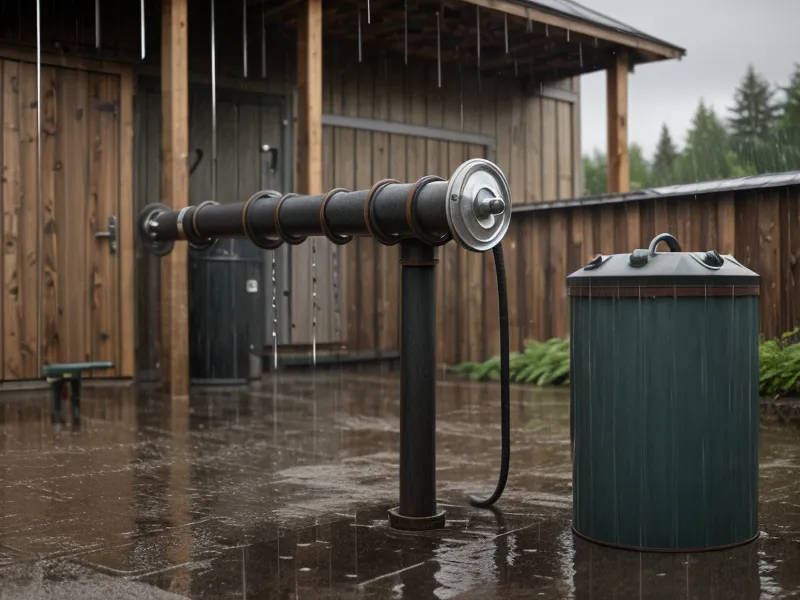
Our first attempt at rainwater harvesting was a handful of mismatched barrels held together with zip ties and stubbornness, and it worked fine for the tomatoes right up until August, when the ground cracks and the barrels go bone dry. The Willamette Valley gets plenty of rain — it just all falls in the winter, which means the real skill isn't catching it, it's storing enough of it that it still matters in September.
I got into the longer, slightly humbling version of how our water security actually came together over these past three years here: When the Well Goes Quiet: My Lessons in Rural Water Security After Three Years on Five Acres.
One option that surprised me was a purely digital approach — no hardware at all, just a step-by-step blueprint for pulling backup water out of situations most people would write off, backed by a money-back guarantee that made it low-risk to actually try. I wrote more about how the Water Freedom System helps me during Oregon summer droughts if that angle interests you.
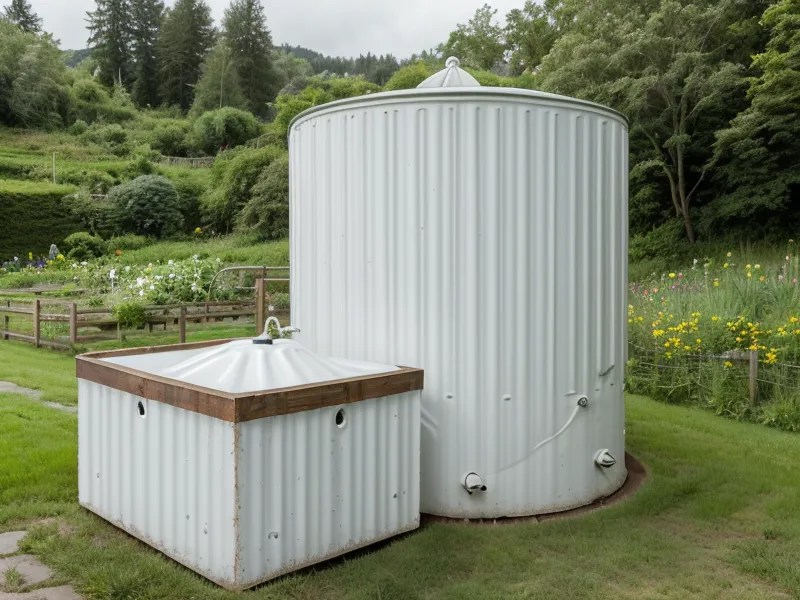
A standard IBC tote holds 275 gallons, and if you can get a full one up to the highest point on your property, gravity will push that water to your taps with no pump and no power bill needed — the catch is that hauling it up there in the first place is its own project. If gravity isn't realistic on your land, pairing your pump with its own independent power source, like a small solar setup, buys you similar independence without needing a hill at all.
Making Sure Backup Water Is Actually Safe to Use
Storing water is only half the job — treating it is the part people skip, and it's the part that actually matters. Shallow wells pull in a lot of grit and sediment, especially right after heavy rain, so a basic sediment filter is usually the first thing standing between your tank and your taps. Some backup systems add a UV stage on top of that, which handles anything biological in the water without adding chemicals, and it's worth knowing that option exists even before you need it. That chalky ring in my kettle is dissolved minerals, not dirt, and no filter marketed as a simple sediment screen is going to touch it — that's handled further down a proper whole-house treatment train, not at a single tap. None of this replaces actually testing your water before you act on anything. I test first now, always, which is a lesson I learned the hard way: the first time our well needed shocking, I poured bleach straight down the casing without testing a thing beforehand, which is exactly backwards and not something I'd repeat.
What Breaks When You're Not Looking
Winter brings its own failure points. Exposed lines freeze fast once temperatures drop, and losing a pipe in January is its own special kind of panic when the nearest hardware store is a real drive away. Backup tanks need the same kind of attention — a full tank you can't actually see the level of is just a guess, and guessing is how you end up with a cold shower and no idea why. The real test of our setup came on an ordinary afternoon when I ran the washer, the dishwasher, and the hose bib all at the same time, mostly out of curiosity, half expecting the pressure to tank. It never dropped, not once, and that's the moment I actually trusted the thing instead of just hoping it worked.
Where I Landed After Comparing Four Backup Systems

I looked hard at a handful of options before spending money on anything twice. If you want something to point a total beginner toward, the SmartWaterBox is the one I'd start with — it's built around knowing your tank level without climbing up to check it manually, which solves the exact guessing problem from a minute ago. It's rugged enough for Oregon weather, the setup doesn't require an engineering degree, and the one real downside is that the physical install involves some genuine heavy lifting, plus pricing only lives on the vendor's page since it shifts with demand.
Here's how the four stacked up once I'd actually used or dug into all of them side by side.
| Product | Rating | |
|---|---|---|
| SmartWaterBox Top Pick | 9.4 | Read More → |
| Water Freedom System | 8.9 | Read More → |
| David's Shield | 8.5 | Read More → |
| Dark Reset | 8.0 | Read More → |
SmartWaterBox
Pros
- ▸ Extremely beginner-friendly setup for non-handy owners
- ▸ Rugged design that handles Oregon weather with ease
- ▸ Provides massive peace of mind during the dry summer months
- ▸ Clear instructions that don't require an engineering degree
Cons
- − Physical setup requires some heavy lifting
- − Vendor page is the only place for the latest pricing
Our dog still tries to drink straight out of the hose bib every chance she gets, completely ignoring that we now have a legitimate backup system standing by a few feet away — some things about homesteading never get fixed by better equipment, just managed around.