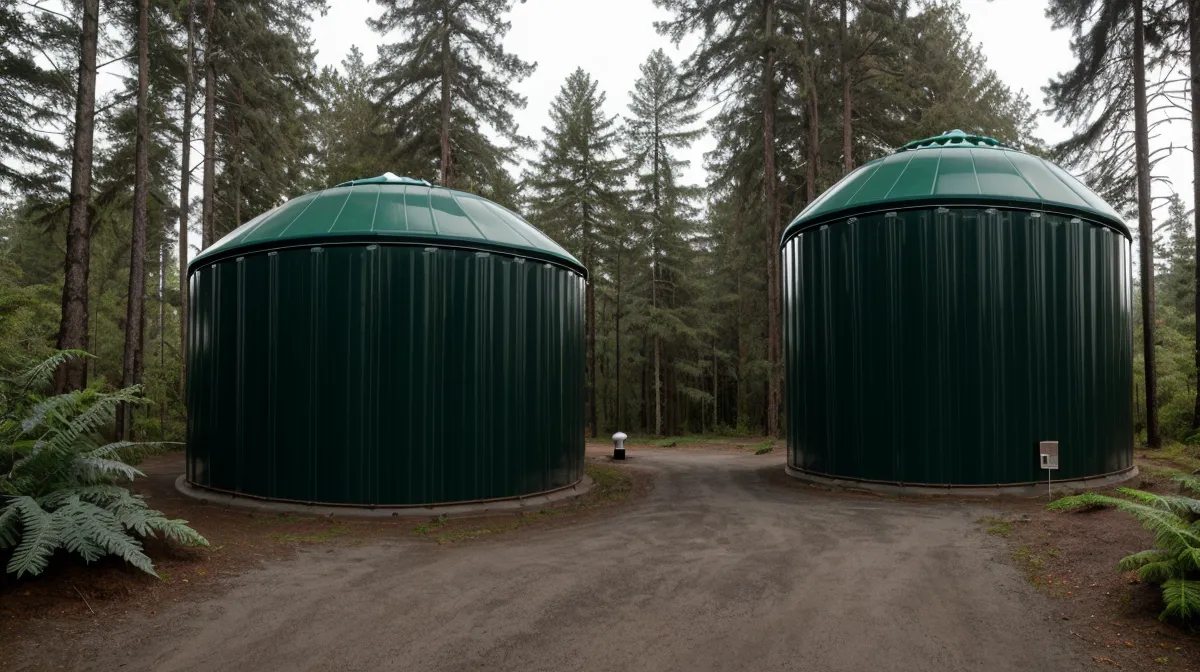
My arm's elbow-deep in green sludge right now, headlamp fogging up against the curved plastic wall, and every pass of my sponge turns into a hollow boom inside the tank. This is not how I imagined a weekend back when we still lived in a Portland apartment and water was just something that showed up out of a wall. Out here, our entire homestead water setup — rainwater harvesting, gravity lines to the garden, the works — runs through this one plastic storage tank, so when a swampy green tint showed up along the bottom a while back, non-toxic cleaning wasn't a nice-to-have. It was the only option I was willing to try.
Here's the short version, if you're standing over your own tank right now panicking: a greenish tint with no smell is almost always biofilm and algae, and you can handle that yourself with things already in your kitchen cabinet. A foul, rotten-egg smell is a different problem entirely, and that's when you stop, test the water, and call someone qualified instead of improvising. I learned that distinction the hard way, standing over our tank wondering whether I'd just ruined our whole system.
Why Bleach Was the Wrong Call for My Plastic Tank
When I first spotted that biofilm — the microscopic mat of algae and bacteria that colonizes tank walls — my gut reaction was to go nuclear with bleach. I texted a photo to Priscilla, a friend I met at a property-buyers seminar back when we were both still eyeing our future places from Portland, and her answer came back before she'd looked anything up: just bleach it. That's Priscilla for you — she panics first and researches second, then calls back an hour later to walk it back. She wasn't wrong that bleach kills algae, but it's rough on the High-density polyethylene most of these tanks are made from, and I didn't want chemical residue rinsing into my garden or the dogs' water for weeks afterward.
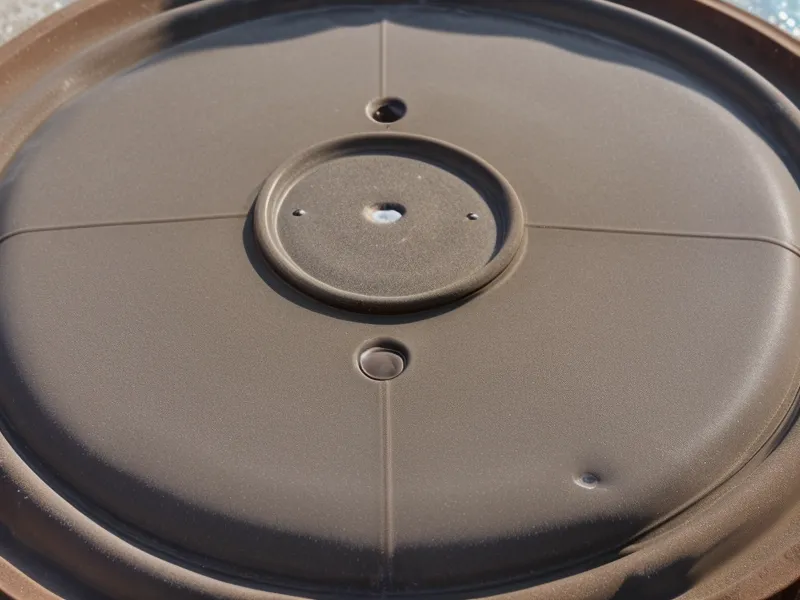
Most of these big tanks, ours included, are stamped with a recycling code 2, which just means food-grade plastic built to last decades. Algae doesn't care — it only needs a sliver of UV light to get going, and once it does, it builds a Biofilm that acts like a shield over itself. A hose alone slides right over that shield without touching it, the same way cold water alone won't touch a greasy pan. What I needed was something that would break the shield down chemically instead of scraping it off by hand.
I'm not a water engineer or a licensed plumber, just someone who's learned this stuff by getting it wrong in real time — one US gallon weighs about 8.34 pounds, which meant our full tank was pushing over twenty thousand pounds, definitely not something I could tip over and dump out. A reader named Corinne emails me every so often since I wrote about our dry well pump, and she once asked whether a tint like this meant her whole water supply was contaminated. Short answer: not necessarily, but also not something to guess on. If your water smells off, looks cloudy beyond a green tint, or you're at all unsure, get it tested and talk to a water quality professional before you climb into anything based on my trial and error.
Do You Really Need to Scrub the Inside?
By the time the weather cooled off enough to actually drain the thing, I had a plan: get in there with a stiff-bristled brush and scrub until my arms gave out. Sounds logical enough — it's dirty, so you scrub, right? A neighbor down the road, who's been doing this since before I was born, stopped me before I got started. Never scrub the interior of a plastic tank with an abrasive brush.
Every pass of a stiff brush leaves thousands of microscopic scratches in HDPE that you'll never see with the naked eye. To an algae spore, though, those scratches are prime real estate — grooves to hide in and multiply. Scrub today and you're building a rougher surface that grabs onto biofilm even faster next time. The walls need to stay slick, almost glassy, so there's nothing for the gunk to hold onto.
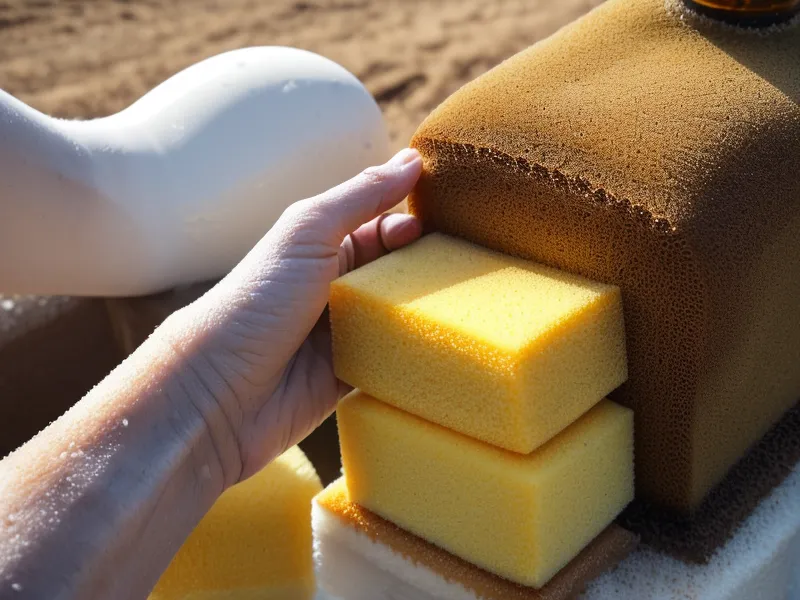
That one stopped me cold, honestly. It's the same logic as never taking steel wool to a non-stick pan — you have to lift the mess chemically instead of grinding it off. I've run into this same pattern building out our first real rain barrel setup and the gravity-fed lines that carry water to the garden: the city instinct to just muscle through a problem usually backfires out here.
A Non-Toxic Cleaning Routine That Actually Worked
Climbing inside with a headlamp and a soft sponge, instead of a brush, felt almost too gentle to work. There's a damp, earthy smell inside an empty tank that tells you exactly how much of the outdoors ends up in your water supply, and every small movement echoed back at me off the plastic dome.
Underneath the biofilm sat a fine layer of dust and sediment that had somehow worked its way past every seal over three years — the same kind of fine grit that's exactly why we now run a sediment filter on the line before it ever reaches the house. Here's the process that got the tank clean without wrecking the plastic.
For the stubborn ring where the water level usually sits, I mixed a thick paste of white vinegar and baking soda and worked it into the plastic with a soft cloth, then just let it sit — the mild acidity breaks down the mineral scale that algae tends to grab onto. After rinsing that off with a gentle spray, I filled a garden sprayer with plain 3% hydrogen peroxide and coated the entire inside. Peroxide oxidizes organic matter without any of the harshness of bleach, and it breaks down afterward into nothing but water and oxygen — no residue, no fumes to worry about.
Then came the waiting game: about two days of dry time with the cover off, just a fine mesh stretched over the opening to keep the squirrels from getting curious. That drying period, sun and air doing the work, finishes off whatever spores are left.
A hose alone never would have gotten this done — I'd already learned that lesson the hard way when I ran a cheap garden hose as a temporary water line out to the coop one winter, figuring it would hold until spring. It split wide open at the first hard frost, and I spent an evening in freezing mud finding the leak. Cheap fixes don't survive out here, whether it's a hose doing a pipe's job or a sponge trying to do a scrub brush's job without the chemistry behind it. Hours of hand-wiping later, the plastic felt slick and smooth again, no scratches, no slime — a real win for someone who'd rather work smart than hard.
Filling the Tank Back Up
Seven weeks after refilling, the real proof came while I was still half asleep — checking the tank monitor from bed, scrolling past a full load of laundry running downstairs, and watching the level hold steady without a single dip. That's the kind of detail that would've meant nothing to me back in our Portland apartment, and now it's basically peace of mind in app form. The water in the tank looked clean and the walls stayed smooth, and not scratching them in the first place turned out to be exactly what kept new growth from taking hold.
Keeping this tank clean turned out to be one small piece of the bigger project of learning how we built our off-grid water system from nothing. None of it comes down to the fanciest gear or the strongest chemicals — usually it's just being willing to climb into a tank with a headlamp and a bottle of vinegar, because there's no landlord to call anymore. The tank takes care of the water, the water takes care of the garden and the chickens, and the chickens still act personally betrayed every time they see me coming, even though I just fed them an hour ago.
If you're just getting started on your own property, don't let the scale of it intimidate you — you'll get plenty wrong along the way, same as I have. The one thing worth carrying forward from all of this: gentle and patient beats aggressive and fast almost every time out here, whether you're dealing with a dirty tank, a stubborn goat, or a garden bed that won't cooperate. Keep the scrub brush for your boots and save the vinegar for the tank.