
Four hours with a shovel was the price of never hand-watering the orchard again. That's roughly how long it took to dig the mulch basins that now swallow every load of laundry water before it gets the chance to pool, evaporate, or drown a tree's roots outright. A laundry-to-landscape greywater system sounds like a tidy little water-conservation project right up until you're standing in a trench with blistered palms, wondering if homesteading ever stops being quite this literal. Orchard care on five acres turned out to mean less gentle strolling with a watering can and a lot more negotiating with a shovel, a 3-way valve, and a washing machine that had no idea it was about to become part of the irrigation system.
Standing in the mudroom one morning with towels churning through a single wash cycle, I heard the well pump kick on with that deep, familiar thrum, and it struck me how much clean water was getting pulled from the ground just to get rinsed and buried in a septic tank thirty seconds later. Out past the fence, the young apple trees looked dusty and unimpressed, leaves curling at the edges the way they do right before a dry spell turns mean. We'd already lived through the summer I wrote about in When the Well Goes Quiet: My Lessons in Rural Water Security After Three Years on Five Acres — the one where the well ran dry and we hauled water in buckets like extras in a pioneer movie — so paying good well water to fill a septic tank while an orchard went thirsty felt less like an inconvenience and more like an insult.
That protectiveness over every gallon traces straight back to the well itself, which is its own tangle of ongoing questions — how fast it actually recovers between draws, whether the pressure tank and its switch are quietly doing their job or about to fail at the worst possible hour, whether this winter's runoff means another round of testing or shock-chlorinating, whether a cloudy creek after a storm means UV treatment again, whether the iron staining the tub is something a whole-house filter train should be handling, whether we even have a real deep well or just a glorified hole that happened to hit water, whether it was sited anywhere sensible in the first place, and whether there's air trapped in a line somewhere making the pump cycle for no reason at all. I still explain every one of those things more than most people probably want, mostly because of a reader named Corinne Specht, who emailed me years ago about her own shallow well and the exact flavor of anxiety that comes with one, and who has never once let me skip a step since.
A Laundry-to-Landscape Greywater System Costs Less Than You Think
Oregon's Department of Environmental Quality makes the laundry-only version of this refreshingly simple to pursue legally, which matters more than it sounds like it should. A system that only handles the washing machine — never a toilet line, never anything that leaves the property — falls under what the state calls a Tier 1 greywater system, and the paperwork burden is about as light as homestead paperwork gets. Compare that to the alternative a lot of new rural owners picture first: a proper irrigation setup, buried tanks, a dedicated pump, permits for the whole arrangement, and a price tag that can run toward a ten-thousand-dollar irrigation system before you've watered a single tree. Some people skip the washing machine's pump entirely and run a gravity-fed branched-drain system instead, which has its own fan base and its own plumbing headaches; that's not the route we took, but it's worth knowing it exists before committing to either one.
Your Washing Machine Already Has the Pump You Need
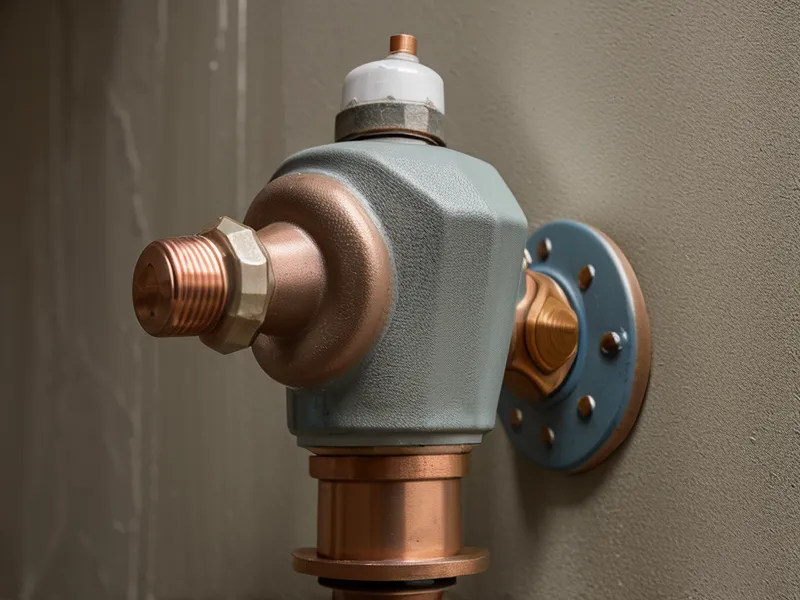
Most washing machines already have a fairly strong internal pump built to shove water up and out through the discharge hose, which means a laundry-to-landscape setup doesn't need a new pump, new wiring, or anything buried in the yard. The whole job is really just redirecting power that already exists. Getting there, though, meant wrestling a 3-way diverter valve onto the back of the machine in the mudroom — the same mudroom that's had a hand-drawn map of every pipe, valve, and the wellhead taped above the utility sink for years, right next to the pressure gauges I eventually mounted at eye level so I'd stop crouching down to squint at them. The valve itself is the whole system's decision-maker: septic for anything bleachy or disgusting, trees for everything else.
A forgotten hose clamp turned that installation into a small flood almost immediately, suds spreading across the laundry room floor faster than I could find a towel. When the connection let go, I did what I always do when something goes sideways out here and texted a photo to Priscilla Hartung, a friend I met years before any of this at a rural-property buyers seminar in Portland, back when neither of us had mud on our boots yet — we'd taken one of those day trips out to Sauvie Island together not long after, picked blueberries, and talked about acreage like it was a lifestyle instead of a problem waiting to happen. Her reply, something like "yep, that tracks," is Priscilla's whole gift: she makes every disaster out here feel ordinary instead of a referendum on whether I know what I'm doing.
Getting the hose outside meant drilling through the rim joist with a 1 inch bit to match the standard discharge line, then running 1 inch HDPE pipe along the side of the house while the dogs barked at nothing in particular from the yard — not perfectly straight, held level in a few spots with zip ties, but functional. The first version of that outdoor run wasn't HDPE at all, actually; it was a cheap garden hose grabbed because it happened to be coiled by the back door, and it worked fine right until the first hard frost split it down the seam. That's a very homesteader way to learn that a temporary fix and a temperature swing don't mix. Freeze protection on this property is its own ongoing argument with the weather, one I've gone deep on elsewhere, but the short version is that anything staying outside through a real Oregon winter needs to be treated like it will freeze, not like it might.
The Soap Problem Nobody's Pinterest Board Mentions
Here's the part most laundry-to-landscape advice skips entirely: dumping the same heavy, soapy wash cycle onto the same patch of ground every single time will eventually sterilize that soil. It didn't take long before the ground around my first apple tree stopped looking like living earth and started looking gummy, almost waxy, like something out of a bad science fair project. Concentrated detergent, even the kind marketed as eco-friendly, carries salts and surfactants that build up fast enough to kill the soil microbes a tree actually depends on.
Diluting that load matters as much as delivering it. One load goes out to the trees, then the next — usually a lighter wash, sometimes one with a bit of vinegar instead of detergent — goes out right behind it, essentially rinsing the soil before the salts can settle in. Detergent choice matters too: I switched to something low in both sodium and boron, since boron is excellent at cleaning clothes and slow poison for fruit trees in any real quantity. The point isn't the exact product; it's treating the soil as something you're feeding, not just a drain with better views.
Choosing Between Surface Discharge and Mulch Basins
Spraying greywater straight onto open ground is the fastest way to create a mosquito problem and an unhappy neighbor, so the water has to disappear under a layer of mulch instead of sitting on top of the soil. Most residential guidance puts the minimum mulch depth around 2 inches to stop surface ponding; I went closer to three or four, mostly because the chickens treat damp woodchips like the single greatest discovery since cracked corn and will flatten a shallow basin in an afternoon out of pure curiosity. Digging the basins — shallow donut-shaped trenches around each tree's drip line, filled with woodchips — is the only genuinely labor-heavy part of the whole project, and it's where that four-hour Saturday went.
What comes up out of the mulch afterward is almost worth the shovel work on its own: the first real load through the finished system sent up a faint cloud of lavender-scented steam from the woodchips as the water worked its way down into dry ground, gone within a minute, with nothing left pooling on the surface. None of this touches the rain side of water collection, either — there are still three forty-gallon blue barrels stacked under the porch eave from the very first rain rig we ever cobbled together, running on nothing but gravity and somehow still outperforming half of what came after, with no gauge to tell me how full they are besides climbing up and looking, and no way to run any of it if the well pump ever lost grid power, which is a separate problem I haven't solved yet. The laundry line gets a small mercy of its own, too: a cheap inline filter catches lint and grit before it ever reaches a basin, because clogging an irrigation system with sock fuzz felt like a uniquely embarrassing way to fail at this.
Chickens interfere with absolutely everything on this property, and the mulch basins are no exception — they scratch the damp woodchips into a flat mess the second my back is turned, convinced I'm digging up a buffet of grubs just for them. Heavy stones along the basin edges mostly solved it, though "mostly" is doing some work in that sentence. It reminded me of the exact relief I felt the first time their waterer made it through an entire winter day without me trudging out there by hand to refill it — the quiet satisfaction of a system finally doing its own job, something anyone who's ever tried to guess how much water a small flock actually needs in a day will recognize immediately.
Winter changes the math completely. Once the ground is saturated through a PNW January, the valve flips back to the septic, because trees drowning in mud need rainwater redirected toward them about as much as they need a drought. Balancing all of this is a little like how to measure well water depth manually — extra effort that mostly just buys peace of mind rather than solving anything dramatic.
Simple Systems Win Right Up Until They Don't
A laundry-to-landscape system earns its keep when you're watering a handful of trees or a modest garden bed, you want to stay inside Oregon's lightest greywater category, and you're willing to trade a weekend of manual labor for a setup with no new pump and almost no ongoing cost. It stops making sense once you're trying to irrigate a real orchard at scale, run multiple zones on a timer, or avoid touching a shovel ever again — at that point, the buried tanks and dedicated pump of a full irrigation build start earning their price tag instead of just justifying it. This is also only the laundry slice of a much bigger greywater-reuse question; showers and kitchen sinks are their own undertaking, one I'm still circling rather than tackling.
Our trees are green now, heading into the thick of summer, running on water that used to disappear into a septic tank for no good reason. The pipes aren't straight, the basins get remodeled by bossy chickens on a weekly basis, and there's still suds dried into one corner of the laundry room floor I never quite got up. None of that matters as much as the orchard staying alive on water we'd already paid for once. If you're just starting out on rural property, start with the simple version before anything fancier — a drill, a valve, and the willingness to learn from your mistakes, soapy ones included, will get you further than you'd expect.