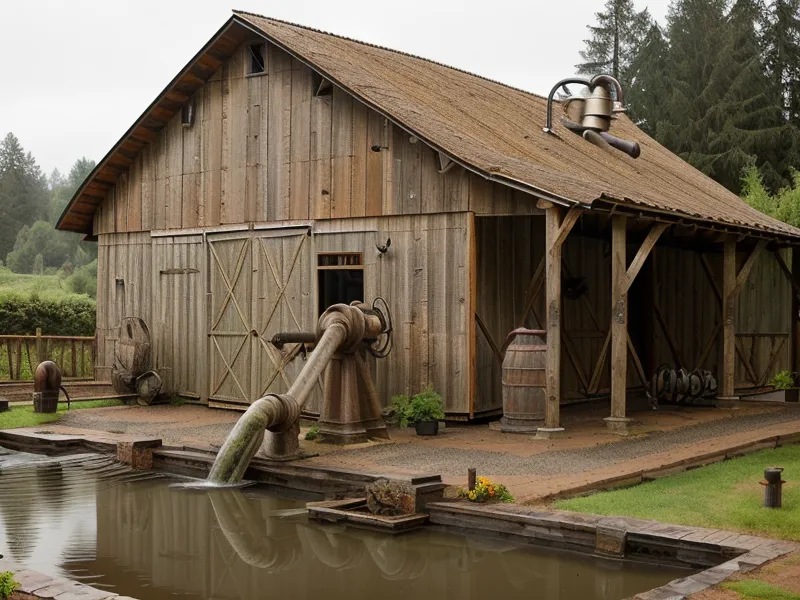
The shower cut out mid-rinse. No sputtering warning, no slow fade, just gone, water vanishing mid-shampoo like someone had flipped a switch out in the yard. My partner had driven into town for the Eugene Saturday Market with a truck bed of squash, so it was just me, two baffled dogs, and a head full of suds going nowhere fast. Back in my old apartment life, this is the exact moment I'd have grabbed my phone to text a landlord who doesn't exist out here. These days, that hollow, sucking silence means one specific thing to me: the well pump has lost its prime, and homestead plumbing and rural water systems wait for nobody, especially not someone standing there dripping in a robe.
My stomach did that specific drop it does every time the water disappears out here, because the first time it happened — early on, before I understood any of this — I ran the pump dry without knowing what that even meant. Leaving a centrifugal pump running with no water moving through it for too long can wreck it fast, and I won't rehash that whole saga again. Some mistakes are better left as a warning sign than a full replay. What matters is that the fear of it happening twice has lived in my chest ever since, tucked right behind the ribs, permanent.
I did write once about the sound of silence and managing our well after that first summer, and I got better after that at watching levels and catching trouble early. What I never fully sorted out was the actual physical process of priming the pump itself: the part where you get your hands wet and your patience tested, standing in a plywood shack arguing with a machine that does not care about your shampoo situation.
Hunting for Water When Every Tap Runs Dry
Robe on, dogs confused, I jogged out toward the pump house, and my barred rock hen — we call her The Boss because she runs this place more than either of us does — trotted along behind like she smelled a crisis worth investigating. Priming a pump just means clearing the air out of the line so water can move again. Picture sucking on a straw with a pinhole in the side: you can pull all day and get nothing until that seal is solid, and a well pump works on the exact same stubborn logic.
On the way out I glanced at the mudroom, which has basically become our whole water system's command center at this point — pressure gauges taped up at eye level, a hand-sketched map of every pipe, valve, and the well head itself tacked over the utility sink. None of the gauges told me anything I didn't already know: something, somewhere, had gone quiet.
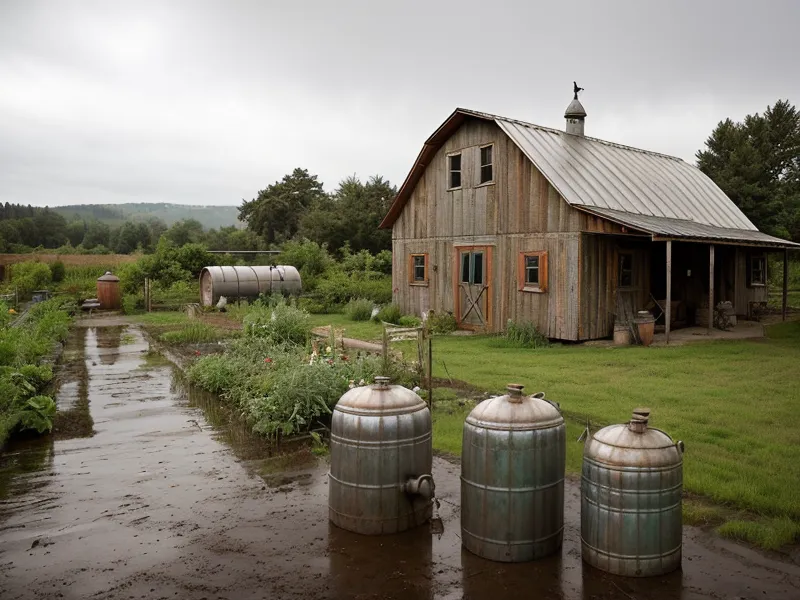
Since the taps were dry, step one was finding water to pour into the housing, which meant a walk down to our rain catchment setup — three faded blue forty-gallon drums under the porch eave, the very first rain-catching rig we ever put together out here and somehow still the one part of that early setup that still works exactly like it's supposed to. I hauled two five-gallon buckets back along the gravel path — the same path that runs a good hundred and forty feet from the house down to the well head and turns into an ankle-deep mess of mud every November — my shins picking up a fine coat of dust the whole way.
This is usually where I'd tell you the rain barrel water saved the day, and it did, though it also reminded me how much I lean on that setup for things beyond the garden, priming pumps included, not just watering tomatoes. Not every homestead fix works out, though, and why would it? The winter after we moved in, I wrapped our exposed outdoor pipes in old bath towels instead of buying proper foam pipe insulation, figured towels were basically free and foam wasn't, and by January I had two split fittings and a very smug feeling of having learned absolutely nothing about false economy.
Why Well Maintenance Always Comes Down to One Ugly Valve
Inside, I found the priming plug rusted shut, obviously, because nothing out here is ever easy-turn. I leaned into the wrench with my whole body weight until it gave way with a screech that sent both dogs into a barking fit worthy of a home invasion. Once that plug came out, I poured the rain water in through an old tractor funnel, watching it vanish down the pipe and waiting for the level to hold at the top. It wouldn't. Every time I got close, the water sank back down like the pipe had a secret drain somewhere I couldn't see.
There's a hard ceiling to how high a shallow well pump can lift water using nothing but atmospheric pressure and suction, and if the water table drops too low or air sneaks into the line, that ceiling wins every single time, no exceptions, no pep talks.
Eventually I stopped fussing with the pump housing and thought about the foot valve instead: something I wish someone had explained to me back when I still thought "foot valve" was a typo. A foot valve is a simple check valve sitting at the very bottom of the well pipe, and its only job is to let water in while keeping it from sliding back down into the well once the pump shuts off. Even a speck of grit or a sliver of debris caught in that valve means it won't seal, and if it won't seal, NOTHING you pour in the top will ever hold — it just drains right back out the bottom, patient as anything.
I'm not a plumber, and if your pump is smoking or something sounds seriously wrong, that's a call-a-professional situation, not a homestead-blog situation. But here's the thing: when a prime won't hold, the trouble is almost always down at the bottom of the well, not up where you're standing getting frustrated. A few sharp tugs and cycles on the pipe usually knocks loose whatever's stuck in that valve. Nothing feels more satisfying than fixing a plumbing problem with nothing but stubbornness and a wrench. After three or four tries, the water finally held level in the housing instead of sinking away.
The Valve I Almost Blew Out
Plug back in, housing full, I flipped the power switch and felt pretty proud of myself for about four seconds. Then I remembered — too late — that I'd left the discharge valve, the one feeding the house, completely shut while I was chasing shampoo out of my eyes earlier. The pressure gauge shot straight past its normal range, fast, and the pipes let out a groan that sounded uncomfortably like a large, unhappy animal. I fumbled for that valve with soap-slick hands, half expecting to hear something crack.
Cranking it open sent a shudder through the whole pipe run, a blast of icy water across my already-filthy shins, and the metallic smell of wet iron filling that little wooden shack. The motor's pitch dropped from a thin whine into a steady, working growl as it finally caught the load it was built for. Watching that needle settle into its normal rhythm, sitting there soaked and ridiculous in a bathrobe, I felt something close to triumph — a small, weird kind of victory nobody in the city would understand or particularly want to hear about.
Six Weeks Later, the Needle Never Moved
Six weeks after that whole pump-house disaster, I decided to torture-test the fix on purpose — washer running a full cycle, dishwasher going at the same time, hose bib cranked open out back for good measure. The pressure gauge didn't budge. Not a flicker, not a stutter, needle parked exactly where it always sits, like the whole system had quietly decided to behave itself. That is usually how I know a fix actually took: not some big dramatic moment, just the water quietly ceasing to be a problem for a while.
I texted my friend Priscilla about it that afternoon — we met years ago at a rural-property buyers' seminar back in Portland, of all places, and now we mostly just send each other photos of broken things. She wrote back something like "you didn't break anything, you just wrestled a pipe and won," which is exactly the kind of permission I need sometimes: to feel like a disaster without actually being one.
A reader named Corinne emailed me after I wrote about that first dry-pump summer, and she still writes now and then — her well runs shallow too, and her anxiety about it runs deep, so we've traded something like forty messages about pressure switches and valves at this point. She's the reason I still spell out the obvious steps instead of assuming everyone already knows where the priming plug lives. So here's the actual takeaway, the one thing worth remembering past all the mud and dog barking: when a prime won't hold, stop staring at the top of the pump and go check the bottom of the well first. I've spent plenty of time learning why I should stop fighting gravity on this property, and priming a pump is the one place gravity fights back hardest — every ounce of water you pour in wants to fall straight back down unless that foot valve is doing its job. Keep a bucket of water staged near the pump house before you ever step in the shower again. Your future, soapy self will thank you for it.