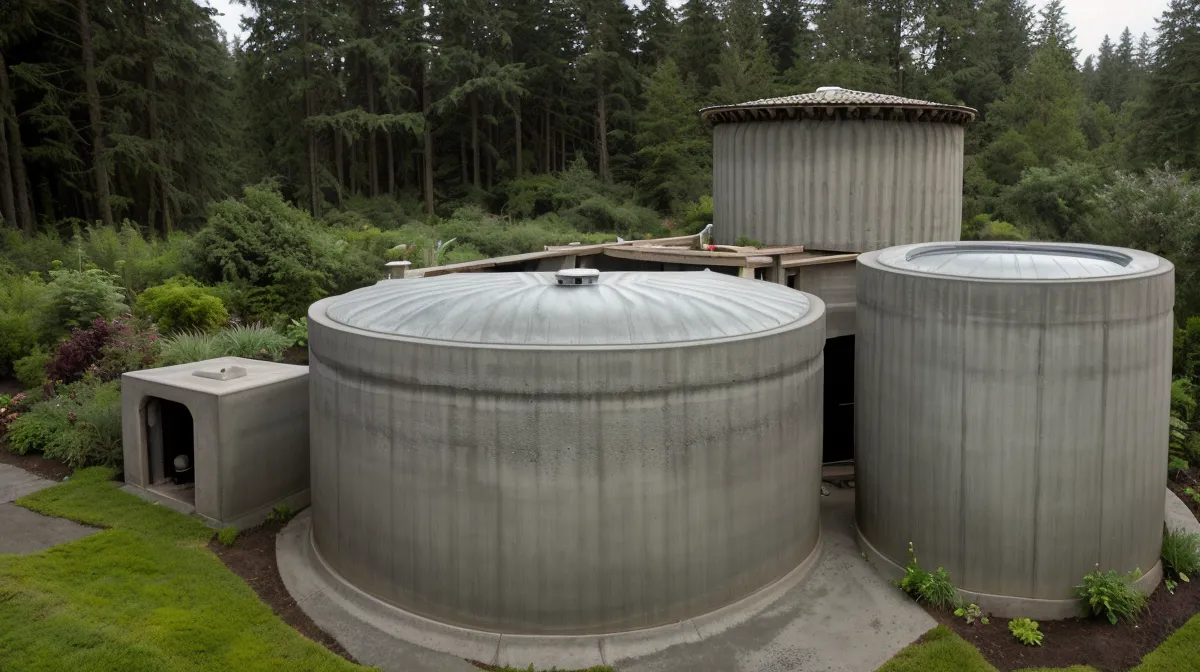
It was mid-November, and I was standing in the pouring rain at ten at night, tapping the side of my concrete cistern with a rock. I was trying to guess by the echo if we had enough water for showers the next morning. My partner was inside, probably wondering why he’d agreed to move to rural Oregon with someone who thought a 'thunk' sound meant we were fine but a 'thud' meant we were in trouble.
Update (September 2026): Aqua Tower is no longer available for purchase; this article is kept for reference. Our current alternative pick in this category is Water Freedom System.
Heads up—this post has some affiliate links scattered through it. If you click and buy something, I earn a commission at no extra cost to you. I only ever recommend stuff we’ve actually beaten up and tested on our own five acres. I am definitely not a professional engineer or a well expert; I’m just a former Portlander who has learned through a lot of trial and error (mostly error) how to keep the taps running. Check out my full disclosure here.
Before we moved here three years ago, I didn't even know what a cistern was. In the city, water was just... there. You turned a handle, and it came out. But after the 'Great Dry-Out' of our first summer—when I didn't realize our well was struggling until the pump started sucking air and screaming—I became obsessed with our water levels. I spent four hours a week worrying about a hole in the ground, and I’m not even joking. I used to use a notched PVC pipe as a dipstick, which is exactly as fun as it sounds when it’s freezing outside and the chickens are trying to peck your shoelaces while you’re balancing over an open tank lid.
The Anxiety of the Dipstick Method
Managing a rural water system is basically like having a bank account where you don't know the balance and the bank might randomly close for the weekend. Our main tank holds 2,500 gallons, which sounds like a lot until you realize how fast a well can struggle to keep up during a dry spell. At 8.34 pounds per gallon, that’s over 20,000 pounds of water we’re relying on for everything from the vegetable garden to our own morning coffee.
For a long time, I just guessed. I’d listen to the echo of the rock. I’d peer into the dark with a flashlight. Once, I even tried to calibrate a manual float sensor by hand and—in a move that perfectly summarizes my 'handyman' skills—accidentally dropped my only pair of waterproof pliers into 1,500 gallons of water. They’re still down there, somewhere at the bottom, a permanent monument to my incompetence. That was the moment I realized I needed a better way. I was tired of the 'guessing and stressing' cycle.
Enter the SmartWaterBox: Installation for the Non-Handy

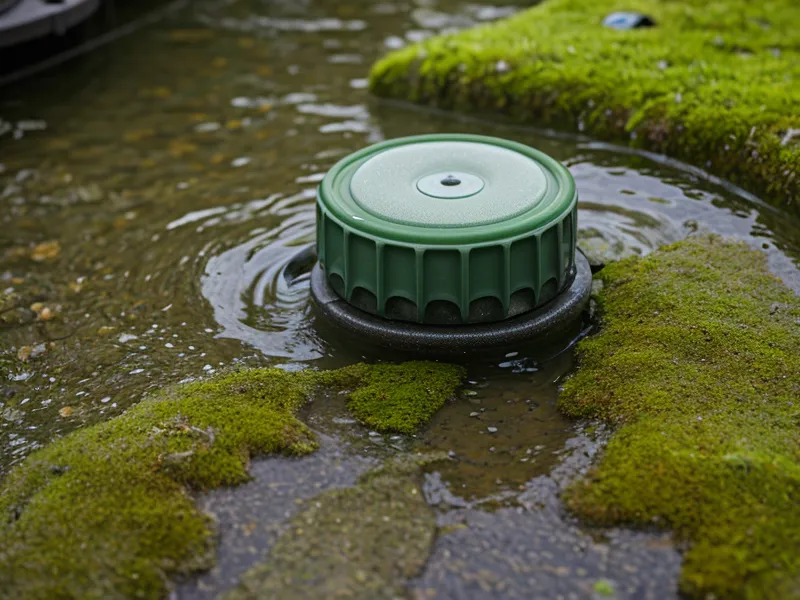
I finally pulled the trigger on the SmartWaterBox late last winter, around late February. I was nervous because I barely trust myself with a power drill, but the setup was surprisingly painless. It uses LoRaWAN technology, which I had to look up. Basically, it means the sensor can talk to the gateway in my house from a huge distance—up to 5 kilometers away—without needing a Wi-Fi signal at the tank. Since our cistern is tucked behind a grove of Douglas firs, standard Wi-Fi would have given up immediately.
The first time I sat at my kitchen table and saw a digital reading of our water level on my phone, I felt a literal weight lift off my shoulders. No more rocks, no more PVC pipes, and no more wet socks from trekking out to the tank in the mud. If you've been having similar heart palpitations every time you hear your pump kick on, you might want to check out my post on the summer I stopped staring at my well tank for more on that transition.
The Mid-Summer Turning Point
The real test came during the first big heatwave in July. It was one of those dusty, 95-degree Oregon weekends where the garden looks like it’s about to give up the ghost. I had been watering the tomatoes and the chickens' cooling misters were running. I checked the app on Sunday afternoon and noticed something weird: the level was dropping steadily, even though I’d turned all the hoses off an hour prior.
Because the sensor is so precise, I could see we were losing about 15 gallons an hour. I went on a hunt and found a cracked irrigation line hidden under a pile of mulch. It was a slow leak, but over a few days, it would have drained our entire 2,500-gallon reserve and likely burnt out our pump. Finding that leak before it became a catastrophe was worth every penny of the sensor's cost. The immediate, cooling relief in my chest when I fixed the line and the app finally showed '95% Full' after the well caught up is a feeling I can't quite describe to city people.
The Precision vs. Battery Tradeoff
Now, here is the one thing I learned the hard way (of course). When you first get a gadget like this, it’s tempting to set the update frequency to 'every minute' because it’s cool to watch the numbers move. However, I noticed that sensor precision increases battery drain frequency relative to the energy savings you get from efficient pump cycling.
If you have it pinging the gateway constantly, you’ll be out there changing batteries every few months. I eventually realized that for a homestead, an update every 15 to 30 minutes is the 'sweet spot.' It’s fast enough to catch a major leak but slow enough that the battery lasts for a year or more. It’s a classic homesteading lesson: just because you *can* monitor something every second doesn't mean you should. Sometimes, 'good enough' is actually better for the long-term health of the system.
Is the SmartWaterBox Right for You?
If you have a smaller setup or a tight budget, something like the Dark Reset might work for basic monitoring, but it lacks the long-range LoRaWAN punch that makes the SmartWaterBox so reliable for remote tanks. If you’re dealing with height-specific pressure issues, the Aqua Tower is a decent alternative, but for overall ease of use and 'set it and forget it' reliability, I haven't found anything that beats what we're using now.
I also use David's Shield for our whole-house filtration, and having that peace of mind combined with the water level data makes me feel like I actually know what I’m doing—even if I still occasionally forget to lock the chicken coop at night.
Final Thoughts: From Guessing to Growing
Looking back at that night in November, tapping on a concrete tank with a rock seems like a lifetime ago. Living rurally is hard enough without adding 'water detective' to your daily chore list. Please, if you're new to this, don't wait until you run your well dry like I did. Talk to a local well professional if you're worried about your recovery rates, but for day-to-day management, a wireless sensor is a total game-changer.
The peace of mind is real. I’ve gone from 'guessing and stressing' to 'knowing and growing.' And honestly? My chickens are much happier now that I’m not stomping around their run with a PVC pipe every evening. If you want to stop the guessing game and actually see what’s happening in your tank, I can’t recommend the SmartWaterBox enough. It's the one piece of tech on this farm that actually makes my life easier instead of just giving me another project to fix.
SmartWaterBox
Pros
- ▸ Incredible LoRaWAN range (up to 5km) handles remote tanks easily
- ▸ Easy installation even for people who hate power drills
- ▸ Real-time leak detection saved my 2,500-gallon reserve
- ▸ App interface is simple and gives instant peace of mind
Cons
- − Higher update frequencies drain the battery faster
- − Initial cost is higher than basic manual float switches