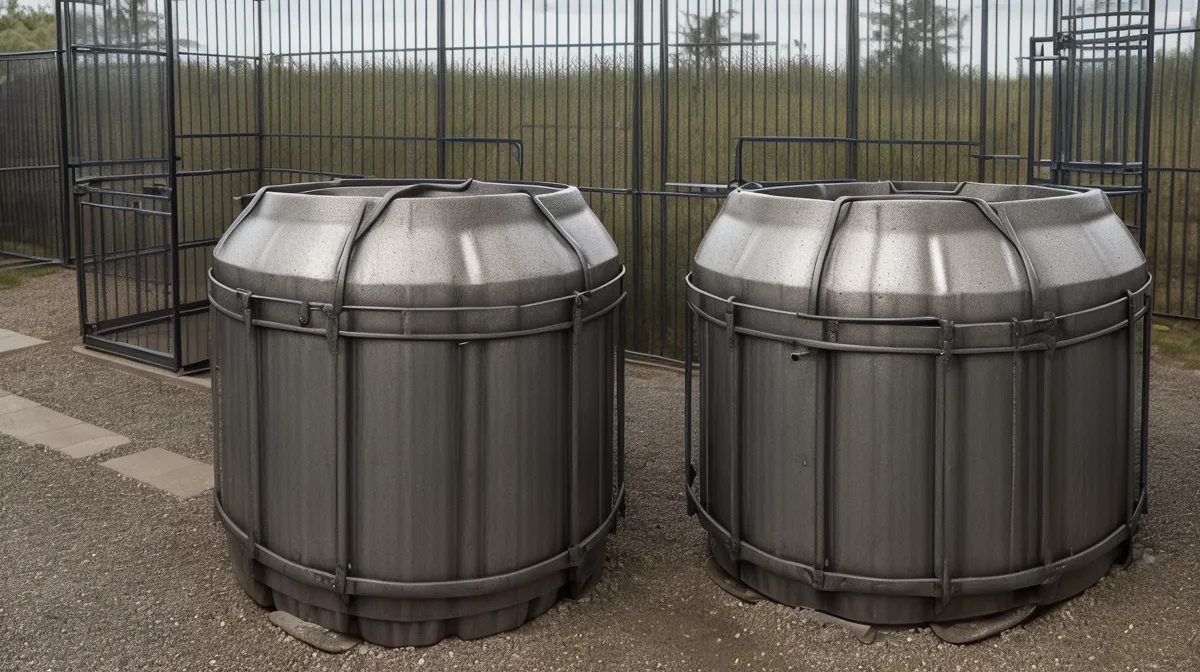
Frost has crept halfway up the metal cage of my 275-gallon tote by the time I get out to check on it, and there it is: a hairline crack running along the side seam like a hidden zipper giving way. This is the same tote that split wide open last winter and taught me, the hard way, that DIY rain barrels and an Oregon freeze do not automatically get along. Twenty feet away, tucked under the porch roofline, the first three rain barrels we ever set up — forty gallons apiece — sit iced over on top and otherwise completely fine. That contrast is really the whole mystery behind winterizing a homestead water system: why would the small barrels sail through a hard freeze with zero protection while the big tote has nearly destroyed itself twice?
Collecting all of this rain off the roof is completely legal here, by the way. Oregon law — specifically ORS 537.141 — generally allows rainwater harvesting straight off a roof surface without a separate permit, which is probably why half the rural properties in this state end up with some version of a tote-and-barrel setup exactly like mine.
Two Rain Systems, Two Totally Different Winters
Size and shelter decide almost everything here, and that's the short version before I get into the messy middle of it. A forty-gallon barrel loses heat fast and freezes fast, but it's also only holding forty gallons of ice looking for somewhere to go, and the porch roofline overhead blocks the worst of the wind and the open sky above it. A 275-gallon tote holds several times that volume inside a flat-sided plastic cube sitting wide open to every gust coming off the field. More water means more weight pressing against those walls before ice even enters the picture — a single gallon runs a bit over eight pounds, so a full tote already has upward of two thousand pounds leaning on its seams before the temperature drops at all. Freeze nine percent of that into ice, and something has to give.
Picture an ice cube tray filled right to the brim next to one with a little room left at the top. The overfilled tray pops its own lid off almost every time, and a rain tote behaves exactly the same way under a lid of frozen water. The three small barrels under the porch happen to run about three-quarters full heading into winter, mostly by accident, since the roofline overhang catches less water than the open gutters feeding the tote. The tote, full from October rain and left that way out of pure overconfidence, had nowhere to expand but outward.
Direct sky exposure matters more than most people expect, too — a tank out in the open radiates heat into a clear night sky and drops several degrees colder than one tucked under even a narrow eave, the same reason frost forms thick on an open lawn but barely touches the grass under a tree. My dogs figured this out before I did; they've slept under that porch roofline through every hard freeze we've had, while refusing to go anywhere near the open yard once the wind picks up. Dogs are smarter about shelter than I give them credit for.
My Garden Hose Didn't Survive the First Hard Frost
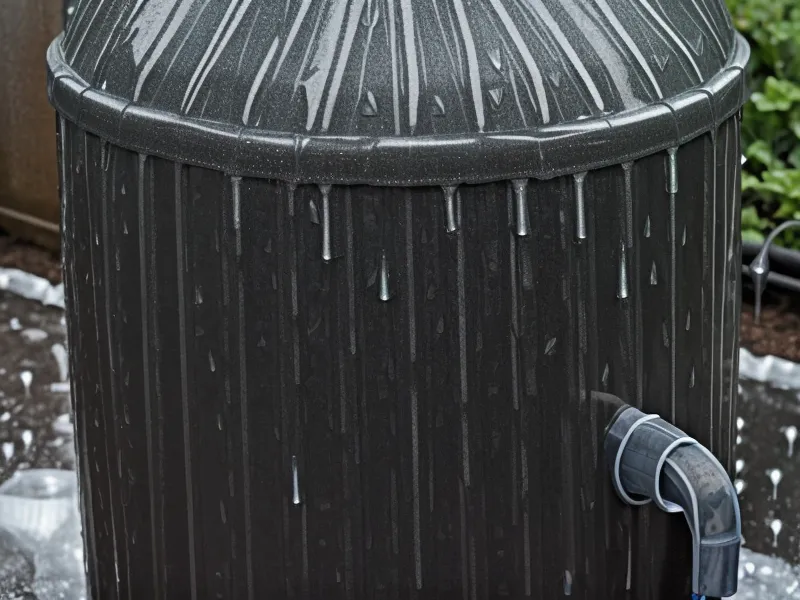
Not every failure that winter involved the big tote, either. I'd rigged a cheap garden hose as a temporary line running settled rainwater over to the chicken coop, meaning to swap it for real pipe once I got around to it. The first hard freeze solved that procrastination for me, splitting the hose wall in three separate places before I'd even finished my coffee. Garden hose rubber is built to flex in July sun, not to hold still water at twenty-six degrees, and I should have known that going in.
Zip ties didn't fare much better, if we're being honest, which is sort of the whole reason this homestead runs on a running joke about zip-tie engineering. The plastic gets cold enough to turn brittle instead of flexible, and a tie that would stretch fine in August just snaps in your fingers in December like a dry twig. The fix for the hose was boring and permanent: a short run of actual insulated tubing, buried shallow and sloped so it drains itself between uses, and it hasn't cracked since. The fix for the zip ties was switching to ratchet straps anywhere a connection actually needs to hold through a freeze, and saving the zip ties for jobs that don't matter if they fail.
Wrap It, Drain It, or Both
Homesteading forums tend to split into two camps on this, and I've tried both long enough to have an opinion. Camp one wraps everything — moving blankets, old carpet scraps, heat tape for the fancy and patient among us — and tries to keep the whole system above freezing through brute insulation. Camp two just drains tanks down to a safer level before a freeze hits, leaving room for the ice to expand without ever touching the walls.
Wrapping works, when it works, but it asks a lot of you. You have to catch every forecast, replace insulation that gets soaked and useless in an Oregon rain, and accept that heat tape on an exposed line is really an electrical problem wearing a plumbing costume. Draining is less glamorous and far more forgiving: once the tote sits at around seventy percent capacity, there's enough empty space at the top to absorb that nine percent expansion without any pressure ever reaching the seams. I disconnect the downspout diverters entirely once the barrels hit that winter level, which feels wasteful while free Oregon rain pours straight onto the ground, but it beats buying a replacement tote every spring. If you want the filtration side of this approach, I wrote separately about why I built a water freedom system for my greenhouse plants, which covers the settling-tank method I use instead of running everything through a sand bio-filter that just freezes and cracks its own housing by January anyway.
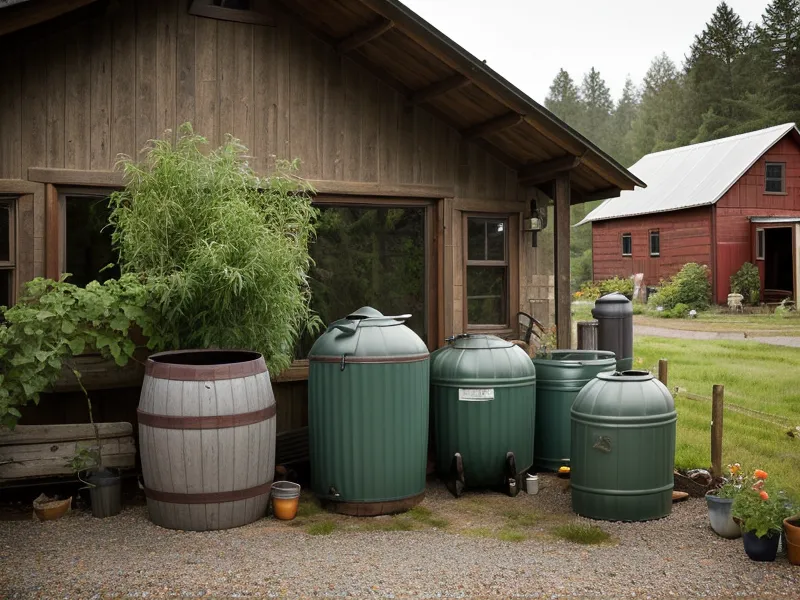
What actually works best, in my cold and zip-tied experience, is running both at once depending on the container. The sheltered barrels get a simple straw-bale skirt around the base, because they're small enough that wrapping is quick and shelter is already doing most of the work. The exposed tote gets drained down and left with its valve cracked slightly open, because no amount of insulation stops a sealed, overfilled container from fighting its own water once it freezes solid. Anyone setting up their first collection system before they've dealt with a single freeze should look into how to build a simple first flush diverter for rainwater barrels, since getting that piece right now saves you from fighting winter gunk and overflow management at the same time later.
Priscilla's Pipes Told the Same Story a Different Way
My friend Priscilla, who I sat next to at a rural-property buyers seminar in Portland years before either of us actually made the move, runs a twenty-acre spread near Roseburg with pipes that seem just as cursed as mine. She texted me a photo this past fall of a split fitting on her own rain system, caused by almost the same mistake — a container left too full right before an early cold snap neither of us saw coming. Her place is bigger in some ways and smaller in others, but the pattern holds: two homesteads an hour or so apart by Oregon standards, still managing to make different versions of the exact same mistake.
Every reader's version of this problem looks a little different, too. A woman named Corinne emailed me a while back after reading about the summer I ran our well pump dry, and we've traded messages ever since about her own water worries. She lives two time zones east, where the ground freezes solid for months at a stretch in a way my soggy little patch of Oregon never will, so half of what keeps my tote alive through January would be useless advice for her setup. It's a good reminder that there's no single universal winterizing checklist — just a handful of principles you adapt to your own climate, containers, and patience for zip ties.
Finding the Right Winterizing Fix for Your Rain Barrels
The real test came on the next hard freeze, the first one since I'd drained the tote and swapped the hose for real tubing. My mudroom doubles as command central for this whole operation these days, with a row of gauges taped up at eye level and a hand-drawn map of every pipe and valve tacked above the sink, more out of necessity than any kind of organizational pride. Checking the gauge became my whole morning ritual that week, and on the morning after the worst of the cold, the needle sat in exactly the spot I'd left it the night before — no drop, no pressure loss, NOTHING to chase down in the mud before coffee. Somewhere behind the wall a valve let out its usual soft double-knock settling into place, the same sound it's made every winter since we moved out here, which after three years has become oddly reassuring instead of alarming.
So here's where I've landed, two winters and one spectacular ice-cube failure later. If your containers are small and already sitting somewhere sheltered — under an eave, behind a shed, tucked against the house — a straw-bale skirt and basic insulation will carry you through almost anything an Oregon winter throws at you, and draining them down is probably overkill. If you're running anything sitting out in the open, especially anything over a hundred gallons or so, skip the elaborate wrapping and drain it to about seventy percent before the freeze arrives instead, because insulation alone can't stop a sealed, overfilled tank from fighting its own water once that water decides to turn solid. My zip ties are still holding a few mesh screens in place, because some lessons just aren't worth relearning twice, but the system that actually needed to change finally has, and that first cup of coffee tastes a lot better when I'm not out in the dark listening for cracking plastic.