
Three inches. That's the entire safety margin standard guidelines give you between a normal scum layer and one thin enough for grease to start washing straight into the drainfield — a fact that no amount of homestead plumbing common sense prepared me for the day our bathroom sink started gurgling like it was drowning.
Here's the short version, for anyone standing over an open riser lid panicking right now: a septic tank is supposed to stay full of liquid all the time. What you're actually checking is the depth of two solid layers inside it, and you can measure both yourself with hardware-store scraps in about twenty minutes flat. The long version — the one that actually teaches you something about septic maintenance instead of just barking instructions at you — starts with the biggest misconception I carried around for way too long.
What 'Full' Actually Means for Your Septic Tank

When you spend your whole life in an apartment, plumbing might as well be magic — you turn the tap and water shows up, you pull the plug and it vanishes into some municipal void nobody has to think about. Moving onto five rural acres broke that illusion fast, and not gently. We'd already run our well pump dry once that same year, a mistake that still makes my stomach drop a little just typing it out, so by the time that drain started gurgling, my brain had exactly one setting: catastrophe.
But catastrophe isn't actually how a septic tank works, and this is where almost every new homesteader — me included, for months — gets the mental model backwards. We picture it like a giant trash can or an RV holding tank, something that starts empty and slowly fills up over years until it's finally, dramatically full. A healthy tank doesn't work that way at all. It's full of liquid pretty much from day one, sitting right up near the bottom of the outlet pipe, because every flush or sink rinse pushes an equal amount of clarified water out the other end into the drainfield. Popping the lid and seeing water close to the top isn't a crisis. It's just the system doing exactly what it was built to do.
What you're actually measuring, when you check a tank, is never the liquid itself. It's the depth of two solid layers sandwiching that liquid — a scum cap floating on top, sludge settling on the bottom. I've learned to trust that kind of distinction the same way I've learned to trust our water system generally: one spring I ran the washer, the dishwasher, and the hose bib out back all at once, half-bracing for the pressure to crater the way it did during that first terrible summer, and it never budged. Some scares turn out to be nothing. Septic maintenance, like most of homestead plumbing, is mostly about learning which signals actually mean something and which ones are just noise.
The DIY Stick That Replaces a Service-Call Fee
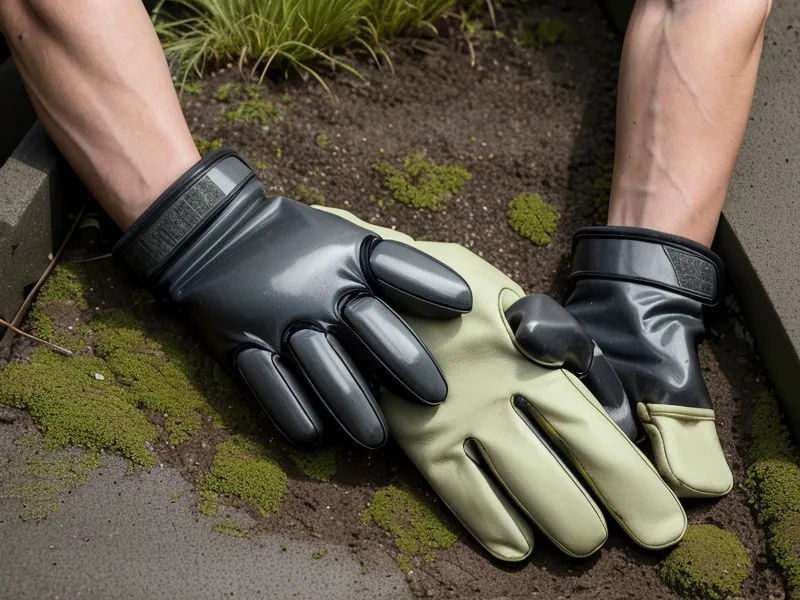
You don't need fancy electronics to check solids, and you definitely don't need to pay someone else to do it for you. What septic pros call a dipstick or core sampler, you can build in an afternoon from stuff a farm supply store sells for pocket change: a rigid ten-foot length of schedule 40 PVC pipe (half-inch or three-quarter-inch, because anything thinner snaps and anything thicker is a pain to handle), a few feet of white cotton — an old terrycloth towel cut into strips works, so does cotton athletic tape — heavy-duty zip ties, elbow-length rubber gloves, a tape measure, and a flashlight that still has batteries in it.
Wrap the bottom three or four feet of the pipe tightly in that white cotton and zip-tie the edges flush so nothing unravels. That's really the whole trick. Sludge is dense and gritty, and when the stick sinks through the bottom layer, those particles grind into the pale cotton like chalk dust, leaving a dark stain exactly where the sludge line sits. Pull it back up through the clear liquid zone and that stain doesn't wash off or blur — it just sits there, a precise, readable waterline you can hold up to the light. It's not so different from measuring well water depth manually with a weighted line — no electronics, no subscription, just a stick and some patience.
These days the whole rig leans in a corner of our mudroom, under the hand-sketched map of every pipe and valve on the property, next to the pressure gauges I've finally trained myself to actually glance at instead of ignoring.
Why You Can't Trust a Quick Peek Down the Riser
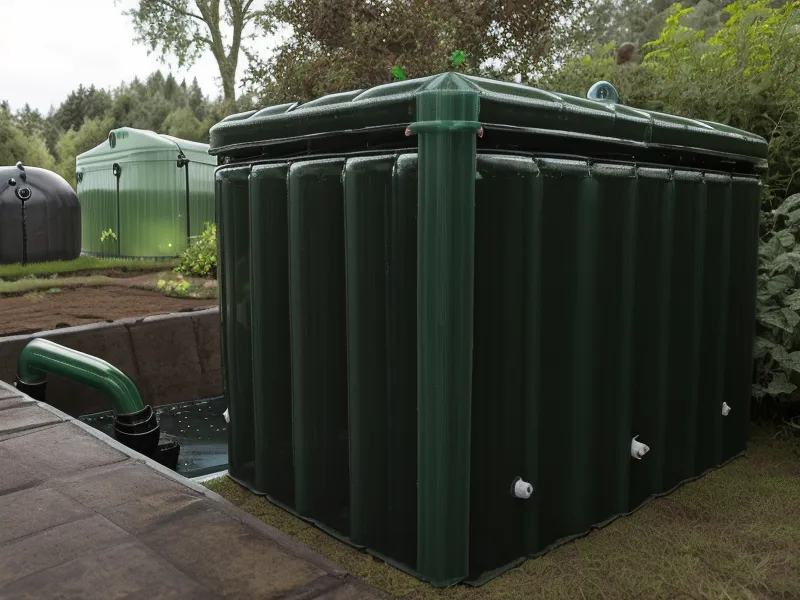
Here's the part most generic home-improvement forums skip entirely: just peering down through the inspection riser is a terrible way to judge your tank, and it fools people constantly — sending them into premature panic-pumping, or worse, letting a genuinely failing drainfield slide by unnoticed. The riser sits almost directly above the inlet or outlet baffle, which is the single most chaotic spot in the whole tank. Grease and biological mats pile up around that baffle over time, creating a false high reading right under the hatch, like the tank is choked solid when the rest of the liquid chamber still has plenty of room to spare.
It cuts the other way too. I've heard from readers who popped the lid, saw clear water right under the baffle, decided everything looked fine, and had no idea three feet of sludge was sitting on the floor waiting to wash into the leach lines on the next big laundry day. You cannot eyeball a septic system and know anything useful about it. You have to get a real measurement of the whole profile, the same way a whole-house sediment filter matters for new well owners long before anyone notices fine silt chewing through a pressure switch — the damage that counts is always the kind you can't see from the surface.
Unsealing the Lid Without Getting Gassed

Before anyone grabs a pry bar: I am not a licensed septic contractor, wastewater engineer, or plumber — just a homesteader who's gotten stubbornly comfortable with the subterranean side of rural plumbing because there's no landlord left to call. If your plumbing is actively backing up through a shower drain or pooling across the yard right now, skip all of this and call a certified septic service immediately. What follows is for routine seasonal checks, not emergencies.
Pull on the rubber gloves, clear away the sod or gravel over your access port, and work a pry bar gently around the lid's perimeter instead of levering it from one spot, while the dogs sniff hopefully at the hole and the hens pick through the exposed dirt like it's a buffet. The smell that escapes when the seal breaks — sharp, cold, a little sulfurous — is your body's best early-warning system, and it means exactly what you think it means. Step back and let the chamber air out for a couple of minutes before leaning anywhere near it. Septic gases like hydrogen sulfide and methane are heavy and genuinely dangerous in concentration, so never put your face directly over an open riser, no matter how curious you are.
Measuring the Scum Cap and the Sludge Bed
Rest the stick flat on top of the floating scum layer and mark where it lines up with the top of the riser. Push down through the crust until you feel it give way into liquid, then pull back up slowly until the stick's edge catches against the underside of that floating mat, and mark that spot too. The gap between your two marks is the scum thickness — and if the bottom of that layer sits within three inches of the outlet baffle, that's your signal that grease is close enough to the exit to actually cause trouble.
For the sludge, take the cotton-wrapped end and push it straight down through the liquid until it meets the soft resistance of the settled layer, then keep pushing until it taps the solid concrete floor. Hold it there for half a minute so the fibers actually pick up grit, mark the pipe where it meets the riser opening, and pull the whole thing straight up. Lay it out in daylight and you'll see a sharp line where dark sludge stained the white cotton — measure from the pipe's tip to the top of that stain, and that's your total sludge depth.
What Your Numbers Actually Mean for Septic Maintenance
Most guidelines — including EPA and Oregon environmental standards — agree that a residential tank needs pumping once sludge climbs within twelve inches of the outlet baffle, or once scum and sludge combined take up more than a third of the tank's liquid capacity. When I finally measured ours, the sludge mark sat barely five inches off the bottom, nowhere near that line, and the scum was maybe three inches thick. My shoulders dropped probably six inches themselves.
I wish I could say my track record with homestead maintenance is generally this good. It is not. I'm the same person who once wrapped our exposed pipes in old bath towels instead of buying proper foam insulation, convinced it would hold through winter — it did not, and fixing what that decision cost me took a very unpleasant afternoon. My friend Priscilla, who's got twenty cursed acres of her own near Roseburg, says septic-tank panic is basically a rural rite of passage; she texts me a photo of something broken at her place about once a month, and I return the favor. Most of what keeps a system healthy long-term isn't a single dramatic fix anyway — it's the boring, recurring stuff, the kind of ongoing maintenance nobody posts pictures of.
Checking Frequency and When to Call a Professional
Once a year is plenty for most households, and I do mine in late spring and then again before the gravel path down to our well head turns into a mud pit sometime around November — not because the tank cares what season it is, but because hauling a ten-foot pipe through calf-deep mud is its own special kind of miserable. A reader named Corinne emails me more than almost anyone else about exactly this kind of underground anxiety; her well runs shallow and her nerves run deep, and even though her water problems are never quite like mine — she's two time zones east — half her questions start the same way mine used to: is this normal, or is this the beginning of the end?
Usually it's normal. Call a professional the moment you see soggy, sweet-smelling patches out in the actual drainfield, or the moment your sludge measurement creeps near that twelve-inch line — don't wait, don't try to stretch it another season. But a clean lid, a tank reading well within its margins, and a weird gurgle that turns out to be a hairball in the P-trap instead of a drainfield collapse? That's just rural living. Figuring out your own infrastructure instead of waiting on someone else's schedule is, honestly, most of what changed for us out here — the same shift I went through the hard way during our first drought-stricken summer with the well, long before any of this started making sense.