
Bleach kills whatever's swimming in your well the moment you pour it down the casing. A UV barrier kills the same thing every single day, quietly, without you ever smelling it happen. That's the real choice hiding behind most bacterial-contamination scares on a rural Oregon well, and it's the one nobody explains clearly before you're standing at the sink wondering if the water is even safe enough for your coffee. Well-water safety is an ongoing maintenance job on a homestead, not a one-time fix, and these two approaches handle it in completely different ways.
Quick disclosure before we get into it: some of the links below are affiliate links, and if you buy through them I earn a small commission at no extra cost to you. I only mention things we've actually run on our own place, usually after trying something cheaper first and regretting it. I'm not a water engineer. I'm just someone with a pipe wrench and strong opinions about not getting sick from my own tap.
Well-Water Safety Isn't Optional Once You Own the Well
Nobody hands you a manual when you buy rural property, so most of what I know about well maintenance came from doing it wrong first. We ran the pump dry once, back in our first year out here, and that memory alone was enough to make a swampy smell at the tap feel urgent instead of easy to ignore. Oregon Health Authority guidance is straightforward: private well owners should test for bacteria and nitrates every twelve months, and I'd let that slide longer than I want to admit, because two dogs and a garden eat up every spare hour in the day.
Total coliform bacteria are the 'indicator' organisms labs actually check for; they're not necessarily dangerous on their own, but finding them means something worse could be getting into the system too, and after a heavy spring thaw soaked the ground around the wellhead, that possibility stopped feeling abstract.
Is a Jug of Bleach Enough?
Shock chlorination is the default answer every neighbor gives you within minutes of hearing 'well water smells off,' and it's not wrong exactly. Pouring bleach into the casing overwhelms whatever's growing in there fast, and it's cheap enough that almost anyone can try it the same afternoon. What it doesn't do is stay gone; the smell in our well backed off for a little while after I shocked it, then crept right back, which told me I'd bought a pause, not a solution.
A reader named Corinne, who's emailed me regularly since my dry-pump post with more well questions than I can usually keep straight, asked flat out whether a jug of bleach should be enough for her shallow well too, and that question is basically why this whole comparison exists. Corinne overthinks every valve and every reading before she touches anything, which I've come around to finding kind of comforting in an inbox that otherwise skews toward outright panic. For a recurring problem instead of a one-time flood or repair, you want something that keeps working between tests, which is what sent me looking into David's Shield in the first place.
The Trade-Off Nobody Mentions With UV
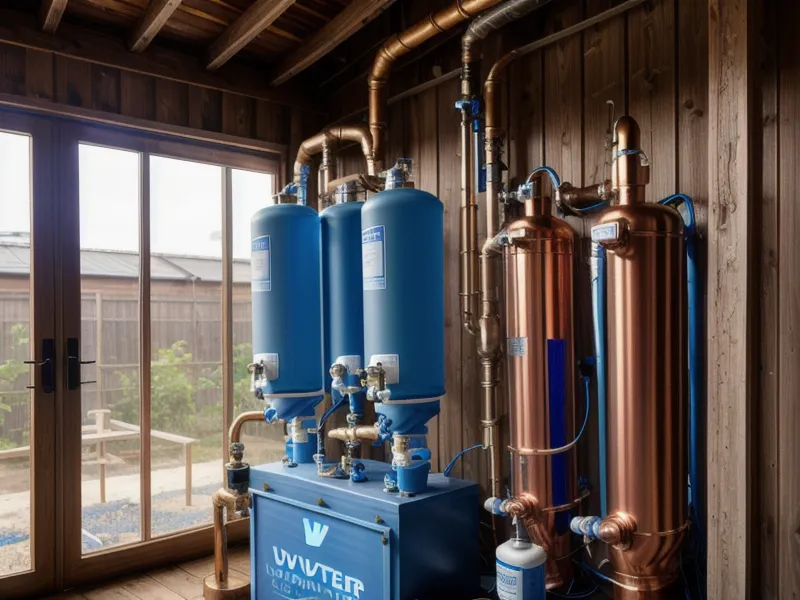
UV only works if the water reaching the bulb is actually clear. Sediment gives bacteria somewhere to hide, not unlike trying to get a tan while standing behind a tree, so most setups want a filter ahead of the unit instead of leaning on the light by itself. It also needs power running to it around the clock, which matters if you're anywhere near solar or generator territory for your pump. I looked at the SmartWaterBox around the same time, mostly for keeping an eye on tank levels and overall system health rather than the bacteria question specifically; it's a different tool solving a different worry, and mixing the two up just means you end up disappointed in both.
Preventing the Next Bloom, Not Just This One
Killing whatever's in the water today only solves half the problem. Pipes and fixtures can hold onto a thin layer of biofilm that gives bacteria somewhere to regroup, which is part of why a single treatment rarely holds for good, and running the system so treated water actually reaches every line, not just the point where it enters the house, matters more than whatever's printed on the box. I picked up the Water Freedom System guide around the same time, less for the bacteria question and more for thinking through backup water independence in general, and it paired well with rethinking how water actually moves through our place, which is most of what I cover in Why I Finally Stopped Fighting Gravity: Lessons from My First Real Rain Barrel Setup.
Not every fix needs to be permanent to be worth trying, either. I ran a cheap garden hose as a temporary line between the wellhead and the barn one fall, telling myself I'd get to real pipe before winter, and it split wide open in the first hard frost, which is its own lesson about which shortcuts are worth taking and which ones just wait around to punish you later. On the pressure side, I've gotten paranoid enough that I ran the washer, the dishwasher, and an outside hose bib all at once one afternoon just to watch the gauge, and it never dropped, which is a weirdly boring kind of relief when a system finally does what it's supposed to.
The Water Finally Tested Clean
When the results finally came back from the county lab, they read zero coliform detected, which is exactly what a passing result is supposed to look like; there's no tolerance for coliform bacteria in drinking water, full stop. Getting that email felt bigger than it probably should have, mostly because I'd spent a good stretch half-convinced I was still gambling with it every time I brushed my teeth.
Installing the unit wasn't glamorous. I dripped solder somewhere I shouldn't have and lost a fight with a sharkbite fitting for longer than I'll admit. But none of it required skills I didn't already have. Anyone weighing the actual step-by-step of putting one in should read My Honest Review of David's Shield for Chemical Free Water Treatment before buying anything, since the setup details matter more than the marketing copy.
Choosing Between a Quick Fix and a Permanent One
The right choice depends on your well's conditions. If your well tests clean most of the year and only spikes right after heavy rain or a spring thaw, a round of shock chlorination and an actual habit of testing on schedule might genuinely be enough; cheap, fast, and fine as long as you keep up with it. If you're seeing repeat contamination, dealing with a shallow well exposed to runoff, or you're simply done treating your family's water like a recurring emergency, a standing barrier like David's Shield is the one that lets you stop thinking about it between tests.
Our chickens, for what it's worth, could not care less which system we chose; they spent the whole stretch I was researching this figuring out yet another way to sneak into the garage instead. The biggest shift out here isn't that I became particularly handy. It's that I stopped treating water safety like a problem I'd get around to eventually.