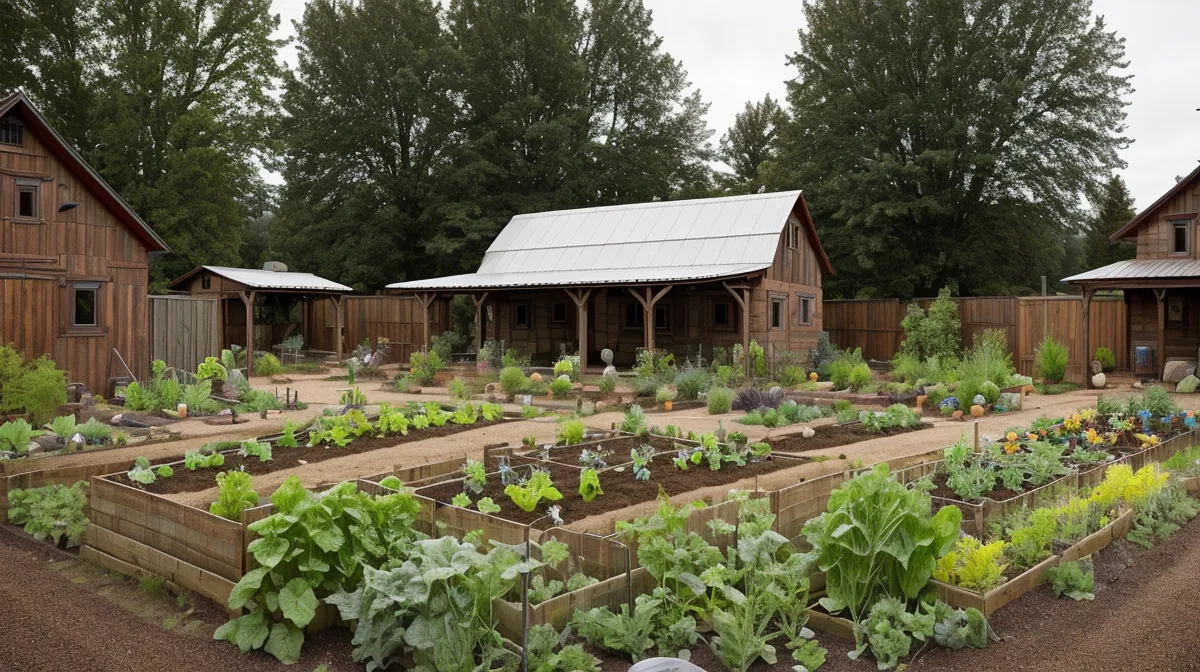
The biggest, loudest pump at the farm supply store often turns out to be the worst possible choice for watering a vegetable garden. I didn't understand the answer to that until I'd already burned one out and spent most of a summer figuring out what should have been obvious from day one. Off-grid water systems on a homestead come down to a string of these backwards lessons, and choosing a garden irrigation pump might be the trickiest one of all, because the instinct that works everywhere else in life, bigger power solves bigger problems, is exactly wrong here. Water pumps for a small garden setup don't reward muscle. They reward restraint, and that's a homesteading skill nobody warns you about until you've already melted a hose fitting finding it out.
Two Approaches to Watering an Off-Grid Garden
There are really only two philosophies when it comes to pushing water uphill or across a yard with no utility company involved. Case one says go big: buy the pump with the most horsepower and the highest flow rating you can find, wire it to whatever power you've got, and let brute force handle the rest. Case two says go small: pick the lowest-wattage pump that can technically do the job, pair it with gravity or a storage tank, and let patience handle the rest. Both cases have played out on our five acres in the Douglas County foothills, and only one of them survived past its first season.
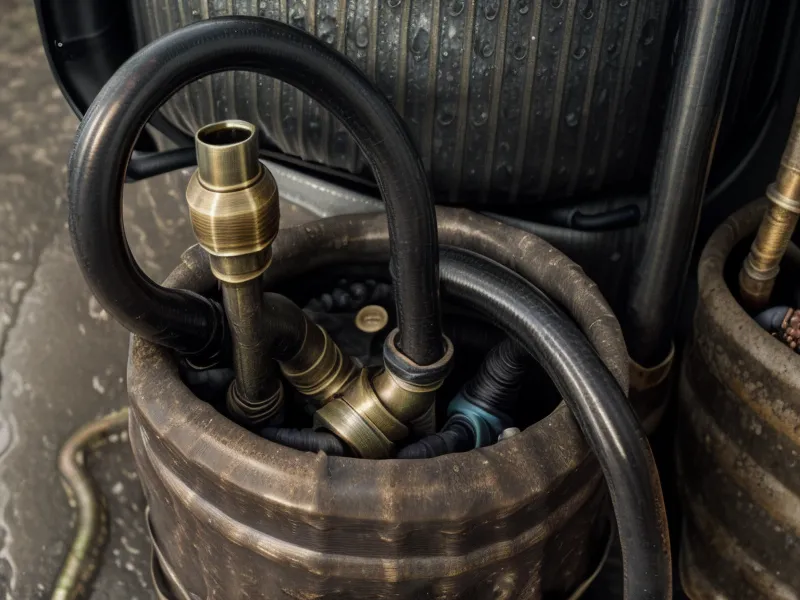
Before the garden pump saga even started, we'd already had a scare with our domestic well, a submersible unit three hundred feet down that nearly fried itself the summer we tried running the whole property, showers and laundry and chicken coop and twenty raised beds, off one single source. The ugly details of that one live in a separate story, what happened when our Oregon well sputtered and we scrambled for backup water, but the short version is it scared us into a hard rule: the drinking well never touches the vegetable garden, period. Around that same stretch we also had the county health lab test the well water, got a results sheet back in the mail, and then did exactly nothing with it beyond sticking it in a kitchen drawer for months — a separate failure entirely, but proof that good information doesn't help you if you never act on it.
Once the garden was cut loose from the well, it needed its own case. Rainwater, seasonal pond storage, and whatever off-grid power we could scrape together. That's where I made the case-one mistake almost everyone makes first: I bought the biggest, baddest AC transfer pump the farm store had on the shelf.
The Big Pump That Blew Up Our Summer
Early summer looked perfect for it. I had an IBC tote full of spring runoff and a genuinely impressive 120-volt cast-iron utility pump. Plugged it into a heavy-duty inverter wired to our modest solar battery bank, hooked up a garden hose, and flipped the switch. It roared like an angry lawnmower. It shot a fire-hose stream thirty feet across the yard, blasted mulch clean out of the garlic bed, and sent our Rhode Island Reds into a full panic — two hens flew straight onto the barn roof and refused to come down until dusk. Roughly seven minutes later, the solar charge controller screamed, and the power just DIED.
The smell hit right after: hot electrical winding, melting plastic, a pump housing cooking against the inside of an empty poly tank in full sun. I'd blown through the inverter's surge capacity, melted a cheap hose connector, and run the pump dry when it emptied the tote faster than I could back off the nozzle. Case one, in other words, had already lost loudly, expensively, and in front of the chickens.
Quick disclaimer before I keep going: I'm not an engineer, an electrician, or a licensed plumber. I'm an ex-city dweller holding a water system together with Teflon tape and stubbornness. If you're wiring a real solar array or touching a main electrical panel, that's a job for a certified professional, full stop. Everything past this point is just what the trial and error taught me on a small garden setup, not an engineering manual.
Diaphragm, Centrifugal, or Submersible: Which One Fits Your Case?
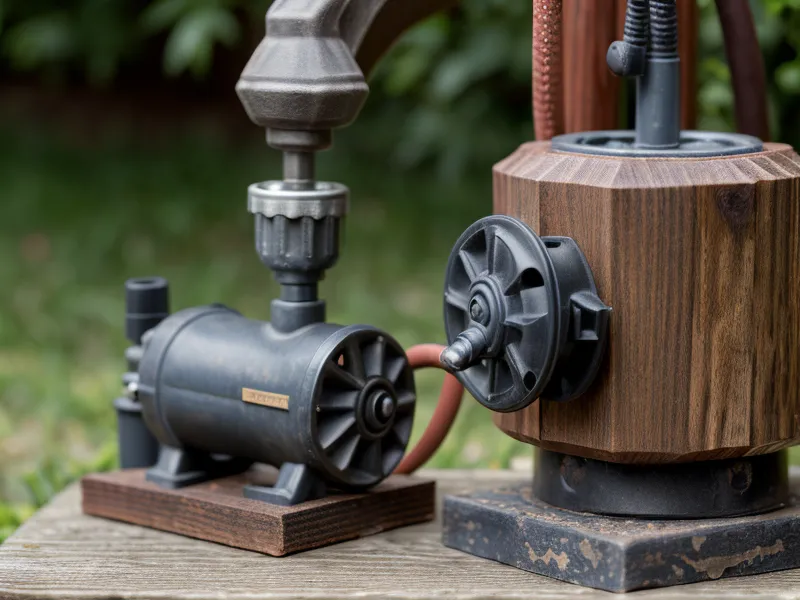
Picking a side in the big-pump-versus-small-pump argument means actually understanding what the different pump mechanisms do, because they are nowhere close to interchangeable. Submersible fountain and sump pumps sit at the bottom of a pond or tote and push water up rather than pulling it. They move a lot of volume fast but generate almost no pressure, so the second you attach a hose or spray gun, the flow dies to a sad trickle — fine for draining a flooded ditch, useless for a drip line. Surface centrifugal pumps spin an impeller to throw water outward and can move decent volume too, but they despise air; one bubble in the intake line and the pump loses its prime, spinning uselessly while the impeller cooks. Unless installing foot valves and hand-priming suction lines in the heat sounds like a fun afternoon, that's not a small-garden pump either.
Then there's the positive-displacement diaphragm pump, and this is where case two actually wins. These use small rubber diaphragms flexing back and forth to create a mechanical vacuum, almost always rated for 12-volt DC power, meaning they run straight off a deep-cycle battery with no energy-hungry inverter in the loop. They're self-priming, so a little air in the line doesn't stall them, and they shut themselves off automatically the moment the garden nozzle closes. For a small-to-medium off-grid garden, a 12V DC diaphragm demand pump is the quiet, unglamorous answer almost every time — it sips power, tolerates imperfection, and doesn't wake the neighbors.
The Math That Decides Which Case Wins: PSI and Head
None of this matters, though, if you skip the math, and that lesson arrived during a heatwave that baked our clay soil into something close to concrete. Every time I hooked up the drip lines, either half the emitters refused to drip or the fittings blew apart like little plastic geysers. Two numbers explain almost all of it. Standard drip irrigation wants 15 to 25 PSI — go below that and the emitters at the far end of the bed never open, go above it and you'll spend your morning chasing blown-off drip tape fittings while the dogs try to bite the spray. The other number is static head: every 2.31 feet of vertical lift costs you 1 PSI of pressure, so a tank down by the coop feeding a garden terrace ten feet higher is already down roughly 4.3 PSI before the water even reaches the hose.
A retired irrigation engineer named Bert Yamamoto, three properties over, introduced himself the week he noticed my trench line running distinctly uphill — an honest rookie mistake. He's the type who keeps a notebook of every fix ever made on his own place, and he spent twenty minutes asking questions about mine without giving a single direct answer, which somehow fixed the problem anyway, the way a good teacher does. The lesson underneath his questions matched the math exactly: elevation and friction aren't optional line items, they're the whole budget. Treat pressure like a household budget — every foot of lift and every extra length of hose is a withdrawal, and a pump advertising "high flow" on the box can still arrive at the tomatoes as nothing but a limp dribble once that budget runs dry.
Why High-Flow Solar Pumps Lose to the Slow Trickle Case
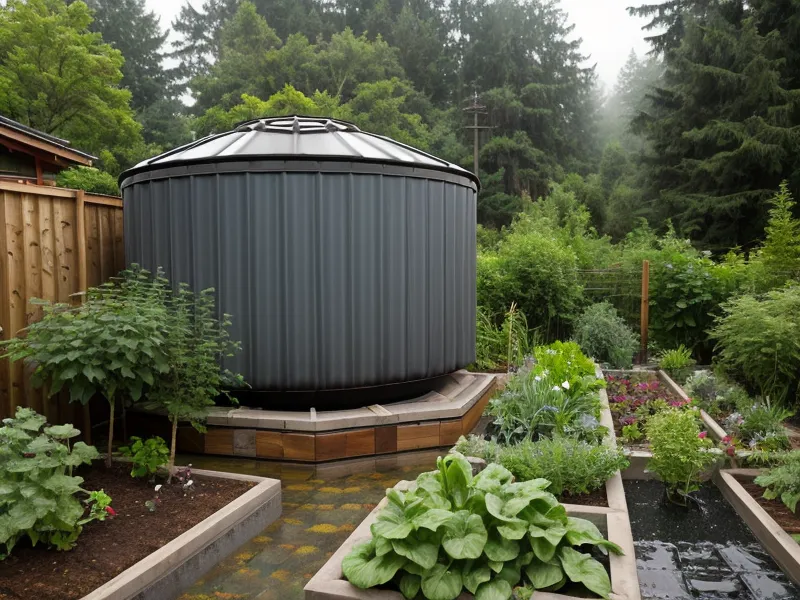
Search any off-grid gardening forum and you'll find people pushing high-output solar pumps, the kind advertised to move something like twenty gallons a minute straight from a pond whenever the sun's out. On paper that sounds like the obvious case-one win. In practice, during a run of cloudy days, a direct-solar high-flow pump barely crawls, and drip irrigation never wanted twenty gallons a minute in the first place — it wants two or three, delivered steadily. Push high volume straight into drip lines and the motor cycles on and off every few seconds, which kills pressure switches faster than almost anything else on the homestead.
What actually works is case two again: a tiny, low-wattage 12V DC pump trickling water uphill from the lower collection barrels into a secondary tank perched on blocks above the garden, then gravity doing the heavy lifting from there, or a small on-demand booster that only draws power while the emitters run. It draws so little that one modest solar panel and an old battery keep it happy through gray stretches. The solar side of this gets its own honest write-up too, including a look at portable solar generators for running pumps off-grid, if power is the piece you're still stuck on. There's a whole separate conversation to be had about gravity-fed distribution once that tank is elevated, and another about how much storage capacity it actually needs to carry a garden through a dry week, but those are rabbit holes for another day.
Where Is Your Water Sitting Relative to the Garden?
Before spending a dime, walk the property and answer this honestly. If the water source sits higher than the garden beds, gravity alone gives roughly 0.43 PSI per foot of fall, and part of the job might not need a pump at all. Pull water from a sunken cistern, an inground tank, or a downhill pond, though, and a self-priming pump with a suction-lift rating that actually exceeds the water's depth becomes non-negotiable — a spec that's easy to miss on a label and expensive to discover was missed after the fact.
How Are You Actually Watering the Plants?
A hose and spray nozzle wants something like 5 to 7 gallons per minute at 40 PSI to feel like ordinary city water pressure. Drip irrigation with microtubing and soaker hoses wants far less, 2 to 4 GPM, but it has to stay inside that 15 to 25 PSI window or the fittings blow again. Knowing which of these two jobs is actually happening decides half the pump argument before power even enters the conversation.
What Power Source Are You Really Working With?
Is there already a heavy inverter running AC to a cabin or shed, or is this a standalone battery sitting out by itself? Without existing AC power, skip 120-volt pumps entirely — running an inverter continuously just to feed an irrigation pump bleeds watt-hours through standby conversion losses alone. Native 12V DC equipment, wired through an inline fuse, is the honest answer for almost every off-grid garden setup, and it's the same logic that eventually earned a small 12-volt pump enough trust to run the chicken waterer too — the first time that trough stayed topped up all day without a bucket run on my part.
How Long Does the Pump Actually Need to Run?
Check the duty cycle on the spec sheet before checking anything else. Plenty of cheap recreational diaphragm pumps are rated for intermittent use only, meaning twenty minutes on, twenty minutes to cool down, which is fine for a quick top-off and a disaster for a garden that needs two straight hours of soaking every morning. That calls for a continuous-duty pump or nothing, unless a repeat of that hot-plastic smell sounds appealing.
Choosing Between the Two Cases
So which case actually fits your garden? Already got AC power running to a shed or barn, a water source with real elevation to spare, and beds that want one long steady soak each morning? The small-pump-into-an-elevated-tank case wins every single time, and it isn't close — skip the high-flow marketing entirely. Working off pure battery power with no elevation anywhere on the property, though, and a garden that genuinely needs an occasional fast flood rather than a slow trickle? That's the rare situation where a bigger surface or submersible pump earns its keep, as long as the extra watts are budgeted for and the flow expectations stay realistic going in. Most off-grid gardens, this one included, land solidly in the first case. The win was never the pump with the biggest number on the box. It's the one that matches what the garden actually asks for, respects the battery bank, and keeps running quietly whether the sun shows up that morning or not.